

Bed Frame Dimensions Every UK Size Explained (cm, inches & feet)
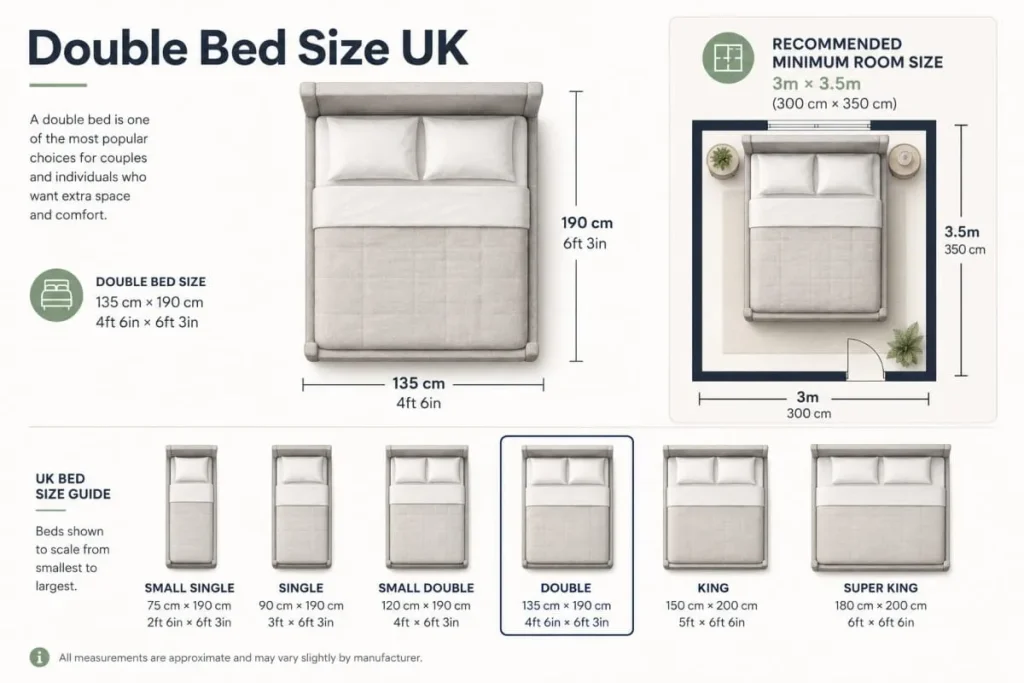
A king size bed frame in the UK measures 150cm wide by 200cm long (5ft × 6ft 6in), that’s the frame’s external footprint, not just…
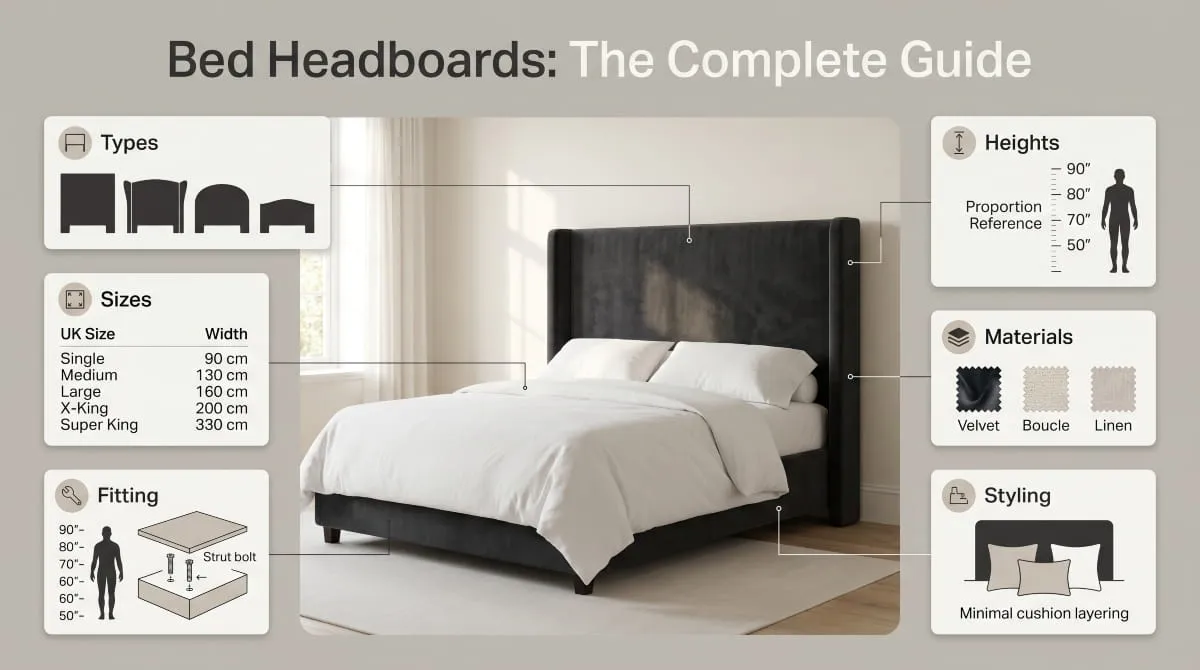
A bed headboard is the vertical panel fixed to the top of a bed frame, sitting behind your pillows to frame the sleeping area and visually anchor the room. What started as a practical barrier against cold stone walls has become one of the most impactful design decisions in any bedroom, the difference between a bed that looks finished and one that simply exists in a space.
The headboard market reflects this. Upholstered styles now account for the majority of bed sales in the UK, with fabric-covered designs, particularly velvet and boucle, consistently outperforming wooden and metal alternatives as buyers prioritise texture, warmth, and visual weight over utilitarian form.
This guide covers everything worth knowing before you choose: the full range of headboard types and what each delivers, how UK sizing works across single through to super king, storage options built into the headboard itself, how to fit a headboard to both a bed frame and a divan base, and how to style around your choice once it’s in place. Whether you’re replacing a headboard on an existing bed or speccing an entirely new setup from scratch, the answers are here.
A bed headboard is a structural or decorative panel attached to the top end of a bed, positioned vertically behind the pillows. It defines the head of the sleeping space, gives the bed a sense of scale, and, depending on the style, adds meaningful function beyond aesthetics alone.
Headboards do more work than most people credit them for. On the comfort side, they give you something to lean against when reading, watching television, or scrolling before sleep; a padded upholstered headboard in particular makes that a noticeably better experience than propping yourself against a bare wall. They also act as a draught barrier, blocking the cold air that tends to settle at the top of a bed near exterior walls, a practical detail that pre-dates modern central heating but remains relevant in older UK homes.
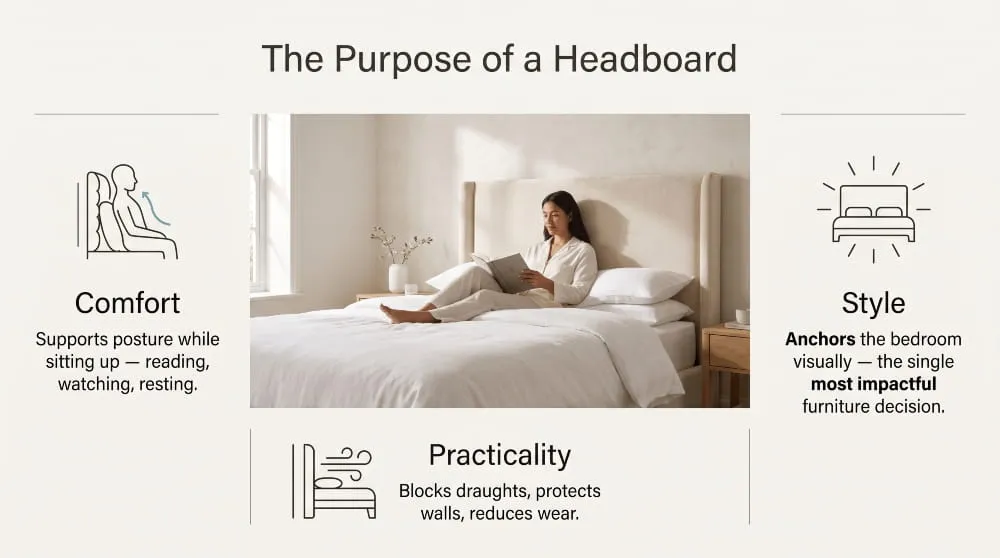
Visually, a headboard is the focal point of any bedroom. It sets the proportions of the entire room, draws the eye upward, and gives the bed the sense of being a considered piece of furniture rather than a mattress on a base. A tall, statement headboard in a well-chosen fabric can do more for a bedroom than any other single purchase, more than new bedding, more than a feature wall, more than additional furniture.
On the practical side, headboards protect the wall behind the bed from scuff marks, oil transfer, and general wear, a minor but real benefit, especially in rentals or recently decorated rooms.
The case for a headboard is strong, but beds without headboards have their place, particularly in smaller rooms where visual simplicity is the goal, or in minimalist interiors where negative space is a deliberate design choice.
A bed with a headboard offers a finished, anchored look, structural support for leaning, draught protection, and in many cases additional storage at head height. The trade-off is cost, visual weight, and, in tight spaces, the sense that the room is being filled rather than furnished.
A bed without a headboard sits lower in the visual field, which can make a room feel larger and less enclosed. It also offers more flexibility: wall art, a floating shelf, or even a large-format textile can serve as a visual anchor without the commitment of a fixed headboard. The practical downsides are real, though: no support for sitting up, no wall protection, and a bed that can feel visually incomplete in a larger room, where it needs presence to hold its own.
For most bedrooms and most buyers, a headboard is worth having. The question is which type, at what height, and in what finish.
Yes, most bed frames are sold with or without a headboard, and the two components are typically separate. Many upholstered bed frame designs come standard without a headboard, with the headboard ordered separately or added later. This is particularly common with divan bases, which are almost always sold as base-only units with a headboard chosen separately and fitted via strut bolts at the rear of the base.
If you buy a bed frame with headboard brackets built in, you can leave those brackets unused and run the bed without a headboard indefinitely; it won’t affect the frame’s structure or stability. Some buyers do exactly this while deciding on a headboard style or waiting for a made-to-order piece to arrive. Others simply prefer the look permanently and style around the absence with wall-mounted alternatives instead.
Bed headboards fall into several distinct categories, each with a different visual character, spatial impact, and practical purpose. Understanding the differences makes it significantly easier to match a headboard to your room, your bed size, and how you actually use your bedroom.
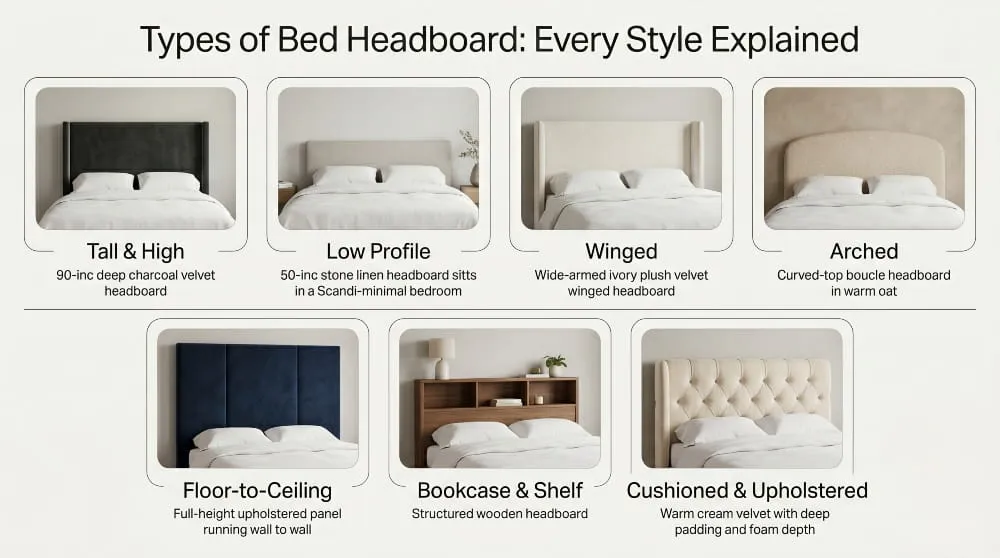
A tall headboard, typically anything from 60 inches floor-to-top and above, is the single most effective way to give a bedroom a sense of luxury and intention. The additional height draws the eye upward, makes ceilings feel higher, and gives the bed a presence that anchors even a large room without additional furniture doing the heavy lifting.
High headboards work best in rooms with ceilings 2.4 metres or higher, where the proportions allow the headboard to breathe rather than overwhelm. In an upholstered fabric, particularly velvet, a tall headboard becomes the visual centrepiece of the entire space, reducing the need for wall art, statement lighting, or additional decorative layers to complete the room.
They are also the most practical choice for anyone who spends time sitting up in bed. The additional height means your back and shoulders are supported regardless of how many pillows you stack, which is something a standard-height headboard simply cannot offer.
Low headboards, generally measuring 50 to 55 inches floor-to-top, suit interiors where restraint is the design language. Scandi-influenced bedrooms, Japanese minimalist schemes, and rooms where the architecture itself is the feature all benefit from a headboard that completes the bed without competing with the surroundings.
Beyond aesthetics, low headboards are a practical solution for rooms with sloped ceilings, alcove bed placements, or windows positioned close to the head of the bed. Where a tall headboard would clash with the architecture, a low-profile headboard fits cleanly and keeps the room feeling open rather than enclosed.
They are also worth considering in smaller bedrooms where visual weight needs to be kept low. A bed that sits closer to the floor with a modest headboard takes up less of the room’s visual field, which makes the space feel larger than it measures.
A winged headboard extends panels outward from the central upholstered section, wrapping partially around the sides of the sleeping area. The effect is part practical: the wings cradle the bed and block side draughts, and part visual, giving the headboard a sense of enclosure that makes the sleeping area feel deliberately designed rather than simply furnished.
Winged styles suit both traditional and contemporary interiors depending on the fabric and finish chosen. In a deep plush velvet with a high wing, they read as opulent and theatrical. In a neutral linen with a modest wing angle, they sit quietly and add subtle structure without dominating the room.
From a comfort perspective, the wings provide lateral support that a flat-panel headboard cannot, which is useful if you tend to read or watch television at an angle rather than sitting directly upright.
An arched headboard follows a curved line across the top edge rather than a straight horizontal cut, introducing movement and softness into what is otherwise a geometric piece of furniture. The effect is one of visual warmth; curved lines read as more approachable and less austere than sharp angles, which makes arched headboards particularly well-suited to traditional, romantic, or eclectic interior schemes.
Curved headboards have seen a significant revival in recent years as interior design has moved away from hard-edged modernism toward softer, more organic forms. Boucle and textured fabrics pair especially well with the arched silhouette, reinforcing the tactile, considered quality that makes this style so effective in a bedroom setting.
They work across most room sizes but are particularly well-proportioned in medium- to large-sized bedrooms, where the curve has enough space to read clearly from the doorway.
A floor-to-ceiling headboard runs from the base of the bed to, or close to, the ceiling line, treating the entire wall behind the bed as a single upholstered surface. The effect is dramatic, immersive, and unmistakably intentional; this is a design decision rather than a default choice.
In practical terms, a full-height headboard eliminates the awkward visual gap between the top of a standard headboard and the ceiling, a common issue in rooms with high ceilings and standard-height beds. It also provides total wall protection and maximum insulation at the head of the bed.
Floor-to-ceiling panels work best in rooms where the bed is the centrepiece and the surrounding decor is kept deliberately calm: neutral walls, unfussy bedding, minimal additional furniture. Competing with a statement headboard of this scale requires the rest of the room to step back.
A bookcase or shelf headboard replaces the solid upholstered panel with a structured unit incorporating shelving, compartments, or recesses built into the headboard itself. The result is a sleeping space that accommodates bedside storage for books, lamps, phones, glasses, and water, without requiring bedside tables, which is a meaningful advantage in smaller rooms where floor space is limited.
Shelf headboards are most commonly found in wooden or painted MDF construction, though upholstered variations with recessed niches do exist. They suit children’s rooms and compact adult bedrooms particularly well. They are worth considering in any setup where the standard bedside table arrangement feels awkward due to room layout or door placement.
The trade-off is aesthetic: a bookcase headboard prioritises function over visual drama, and will rarely make the same impact as a tall upholstered statement piece. In a room where the goal is practicality over presentation, that is exactly the right call.
An upholstered headboard is fabric-covered and padded, typically with foam, fibre, or a combination of both, giving it a soft surface that is noticeably more comfortable to lean against than wood, metal, or bare MDF. This is the dominant headboard category in the UK market, and for good reason: it combines comfort, visual warmth, and design versatility in a way no other headboard type can match.
The fabric choice drives both the aesthetic and the practical character of the piece. Plush velvet reads as luxurious and absorbs light, adding depth to the room. Boucle and textured weaves add tactile interest and suit natural, layered schemes. Linen and Naples fabrics sit more quietly, working across a wider range of interior styles without pulling focus.
Padding depth matters too. A deeply padded headboard with high-density foam holds its shape over years of use and provides genuine support, not just a soft surface, but a stable one. This is where the difference between a well-made upholstered headboard and a budget alternative becomes most apparent over time.
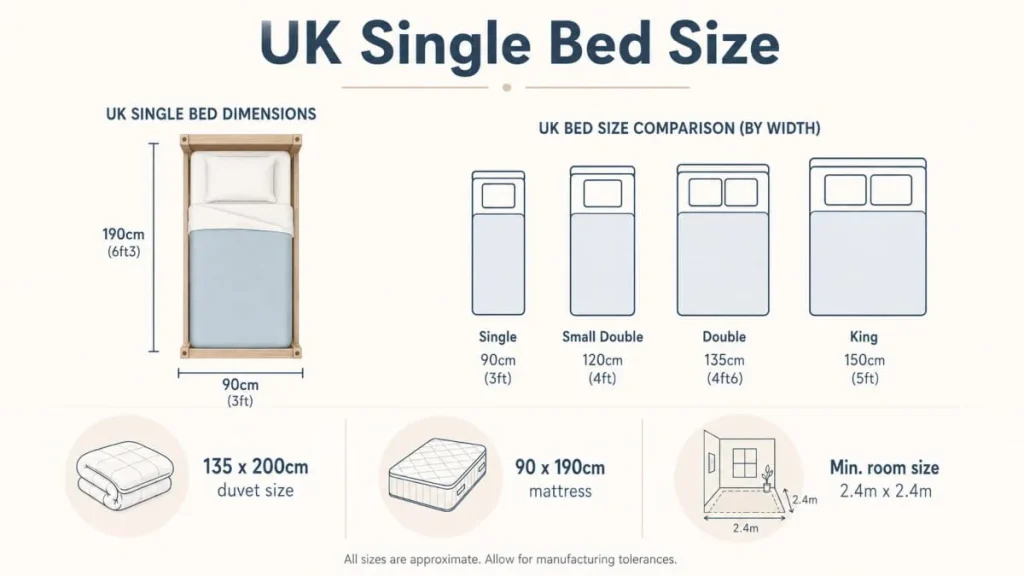
A headboard should match the width of your bed frame exactly, not approximate it, not slightly exceed it. Getting the width right is straightforward once you know the UK standard bed sizes; getting the height right requires a little more thought, because that decision is as much about the room as it is about the bed.
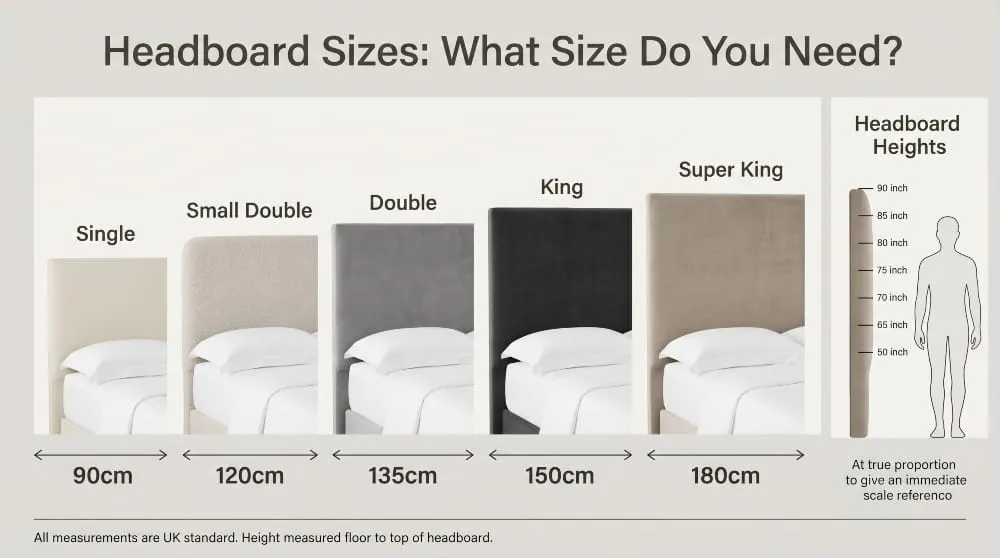
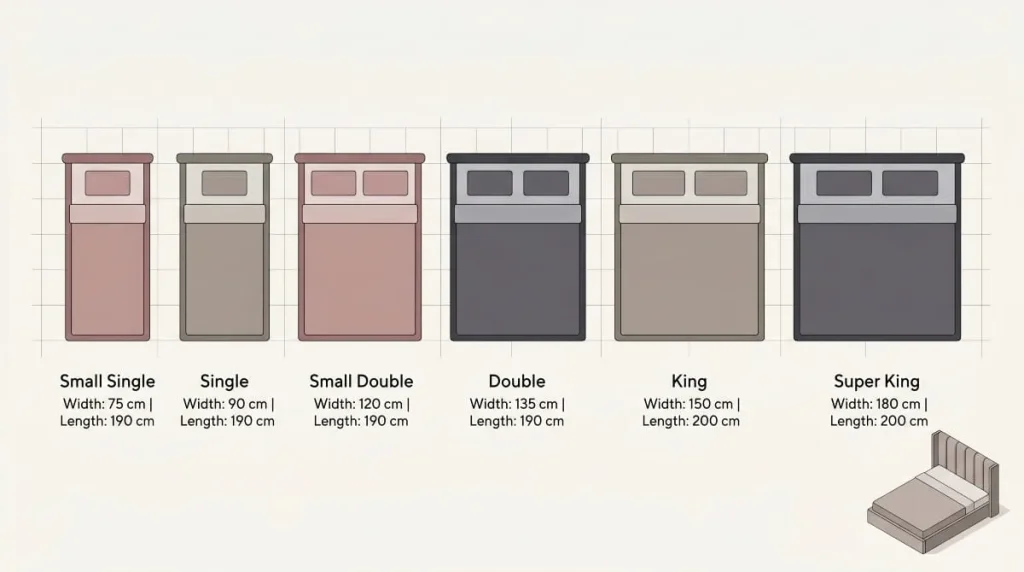
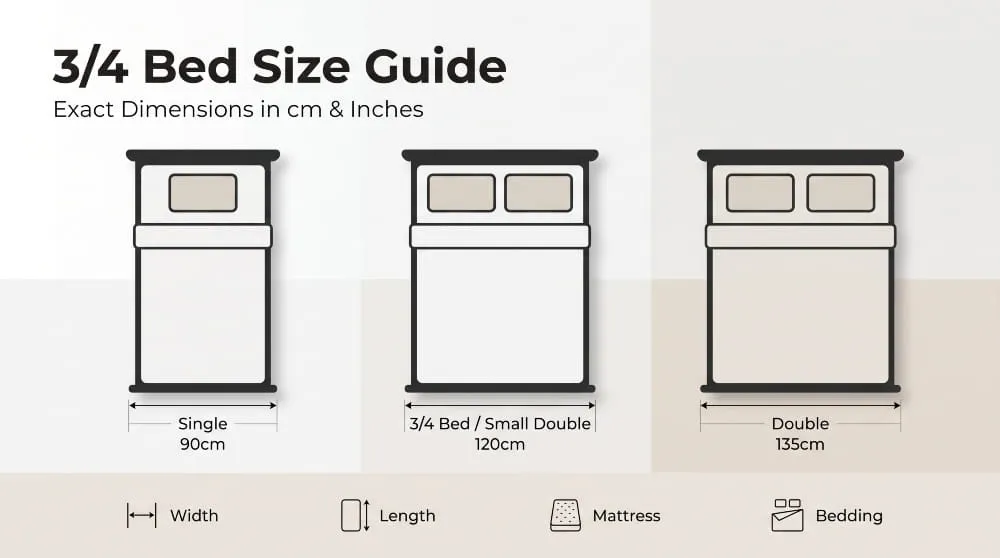
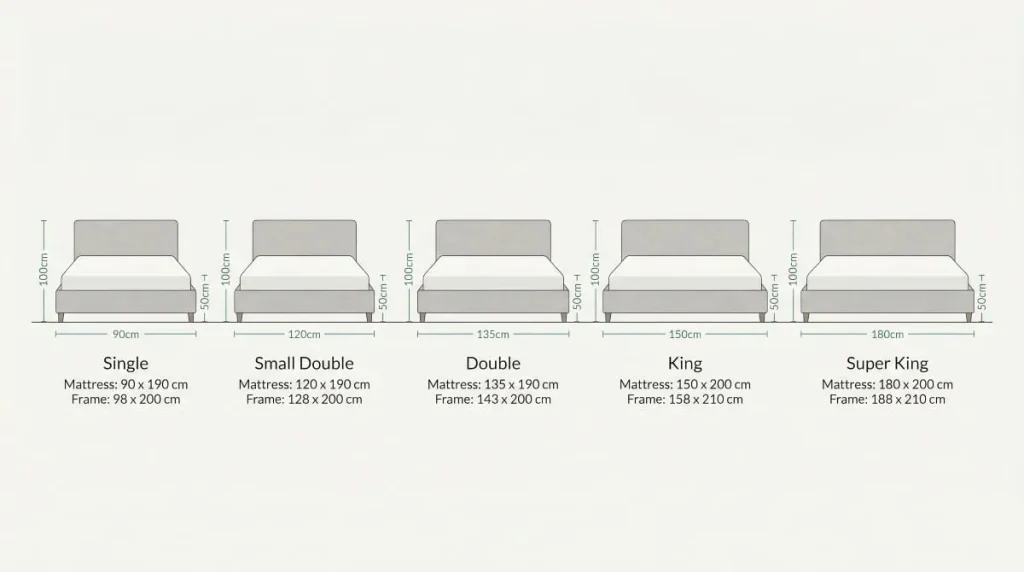
A single bed in the UK measures 90cm wide, and a single headboard should match that width precisely. Single headboards are the most compact in the range, which means height becomes a more important variable; a taller headboard on a single bed adds presence and prevents the bed from looking undersized in a room, particularly in a box room or smaller guest bedroom where the bed is the only substantial piece of furniture.
Single headboards are available across the full height range from 50 inches to 90 inches floor-to-top, and the choice between them is largely a matter of proportion. In a standard single room, a headboard in the 54–60-inch range tends to work well: tall enough to be noticed, yet modest enough not to overwhelm a compact space. If the room has good ceiling height and you want the bed to feel more considered, a 65–70 inch headboard lifts the whole setup considerably.
A small double bed measures 120cm wide, making its headboard noticeably broader than a single but meaningfully narrower than a standard double. This size is often underestimated; it suits one adult sleeping comfortably, fits well in rooms that cannot accommodate a full double, and, when paired with the right headboard, looks intentional rather than a compromise.
The 120cm width means a small double headboard works well in narrower rooms where a full double would feel pinched at the sides. Height selection follows the same principles as any other size; the room’s ceiling height and the visual weight you want the bed to carry should drive the decision more than the bed width does.
The UK standard double bed is 135cm wide, and a double headboard runs to that width. This is the most commonly sold bed size in the UK; research consistently shows the double accounts for a higher share of bed purchases than any other size, which means double headboards are available in the widest range of fabrics, heights, and styles.
At 135cm, a double headboard has enough width to make a genuine visual statement without the scale requirements of a king or super king. It suits the majority of UK bedrooms comfortably. At mid-to-tall headboard heights, 60 inches and above, a double upholstered headboard can anchor even a generously sized room without feeling outpaced by the space around it.
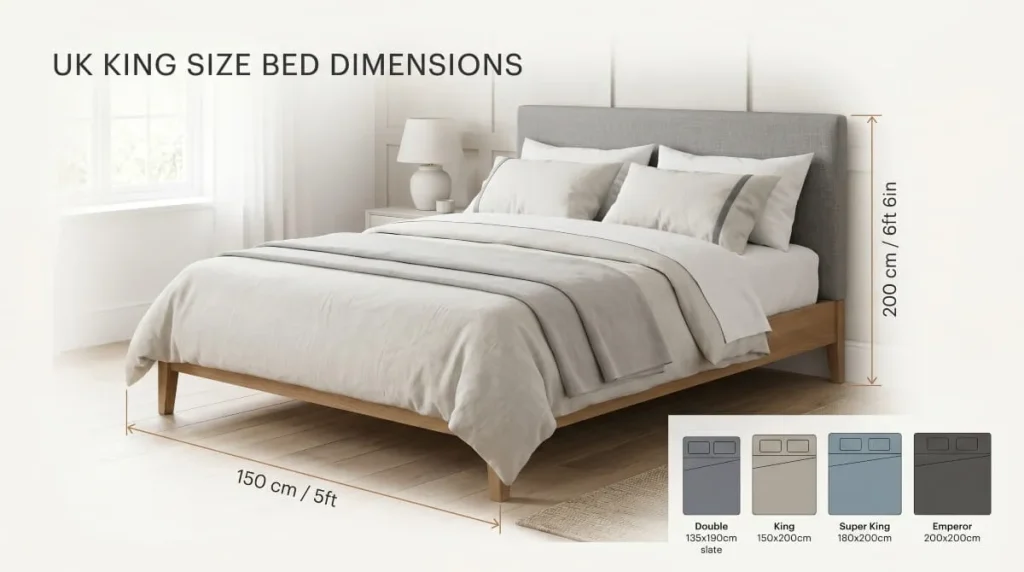
A king size bed in the UK measures 150cm wide, and the headboard follows that dimension. The additional 15cm over a standard double is meaningful in visual terms; a king headboard has a breadth that reads differently in a room, giving the bed a more expansive, hotel-like quality that suits larger master bedrooms particularly well.
King size is where taller headboard heights, 70 inches and above, start to come into their own. The wider the headboard, the taller it needs to be to remain proportionally balanced. A low headboard on a king size bed can look flat and underscaled; a tall headboard on the same base looks intentional and complete. If you are buying a king-size bed and are undecided on headboard height, err on the taller side.
A super king bed measures 180cm wide, 6 feet across, making its headboard the most substantial in the standard UK range. At this width, a super king headboard is a significant piece of furniture in its own right, and both the height and fabric choice need to be carefully considered to ensure the result is commanding rather than overpowering.
The practical consideration most buyers overlook is access to doorways and staircases. A super king headboard at full height can be challenging to manoeuvre into position in older UK homes with narrow hallways or tight stair turns. If you are ordering a tall super king headboard, it is worth confirming with your retailer how the piece arrives and whether on-site assembly is available. This is one situation where a professional delivery and assembly service pays for itself.
In terms of styling, a super king headboard at 70 inches or above in a deep velvet or textured boucle is the most impactful single furniture decision you can make in a bedroom. Done well, it reduces the room to an audience for the bed.
Headboard height in the UK is measured from floor to the top of the headboard, not from the mattress surface. This matters because the visible portion of the headboard, the section above the pillows, is what actually registers in the room. That visible height depends on your bed base height and mattress depth as much as the headboard measurement itself.
The range at Style Beds runs from 50 inches to 90 inches in nine increments, and each step up delivers a meaningfully different result.
At 50 inches, the headboard sits just above pillow height on a standard divan base, modest, tidy, and well-suited to rooms where you want the bed to sit quietly. At 54 and 60 inches, the headboard begins to register as a deliberate design element, with enough height to frame the pillows and create visual structure without dominating the room. The 65- and 70-inch options are where most buyers who want a statement piece tend to land: tall enough to be immediately noticed and proportionate across all four standard bed sizes.
From 75 inches upward, the headboard becomes the room. These heights suit larger bedrooms with ceilings 2.6 metres or higher, and they reward bold fabric choices. A 90-inch headboard in a flat, neutral fabric can feel underdone, whereas the same height in a deep velvet or tufted boucle earns every inch of its presence. At the 90-inch maximum, you are approaching floor-to-ceiling territory in many UK bedrooms, and the effect is closer to an architectural feature than a piece of bedroom furniture.
A headboard with storage adds functional space to the one part of the bed that would otherwise serve purely aesthetic purposes. For bedrooms where floor space is limited or bedside tables feel like an awkward afterthought, it is often the most practical upgrade available without changing the room layout.
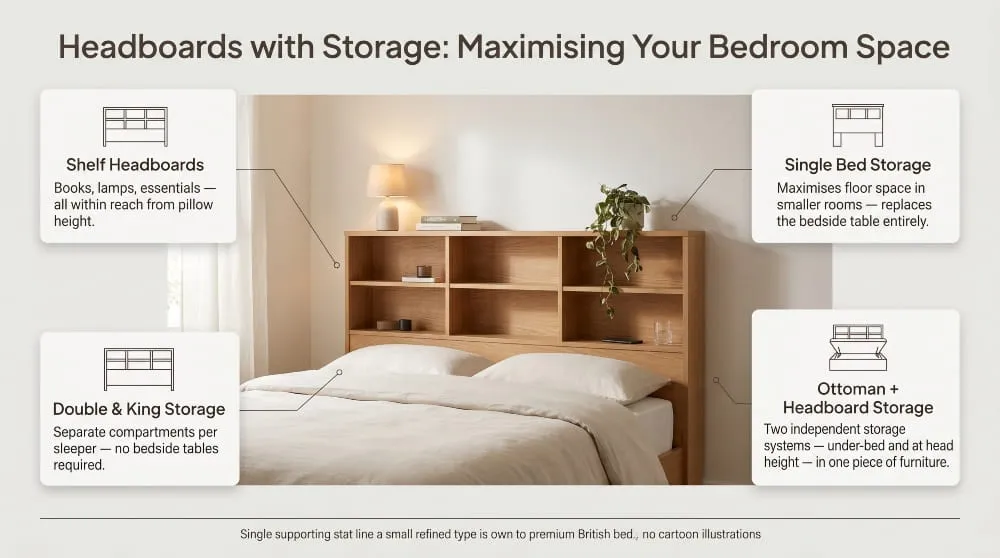
A shelf headboard incorporates one or more horizontal recesses or open compartments into the headboard structure, putting storage at exactly the height where most people need it most, within arm’s reach from a lying or sitting position. Books, reading glasses, a phone, a glass of water, a small lamp: the things that normally colonise a bedside table can move to the headboard itself, freeing up floor space on one or both sides of the bed entirely.
The most functional shelf headboards combine open shelving for everyday items with a recessed section with integrated or plug-in lighting, eliminating the need for a separate bedside lamp. This kind of consolidated approach to bedroom storage is particularly effective in rooms where the bed sits between two windows, against a chimney breast, or in any configuration where standard bedside tables simply do not fit neatly.
Aesthetically, shelf headboards tend toward clean, structured designs rather than the soft upholstered silhouettes of purely decorative headboards. The visual trade-off is real, but in a room where practicality has to lead, a well-designed shelf headboard holds its own without the bedroom feeling purely functional.
Storage headboards matter most at the single bed size, because single bedrooms are almost always the smallest rooms in a home. A child’s bedroom, a box room converted for a teenager, a compact guest room- these spaces typically cannot accommodate a full bedside table without the room feeling immediately cluttered, and a headboard that absorbs that storage need changes the dynamic considerably.
A single bed headboard with built-in compartments gives a smaller room a more considered, cabin-like quality: everything in its place, nothing on the floor. For children’s rooms in particular, the ability to keep books, devices, and small essentials off the floor and within easy reach from the bed has both practical and organisational value that parents tend to appreciate as much as the child does.
When choosing a storage headboard for a single bed, depth of the compartments matters more than the number of them. Shallow recesses look neat in a product photograph but cannot accommodate anything beyond a phone and a pair of glasses. A deeper shelf, 15cm or more, is where the storage becomes genuinely useful rather than decorative.
At double and king sizes, a storage headboard has more width to work with, allowing for a more ambitious storage layout: wider shelving sections, separate compartments on each side of the bed for two sleepers, or a central section flanked by individual recesses each person can use independently. This symmetrical approach suits couples particularly well, effectively replacing two bedside tables with a single integrated unit that does the same job with less visual noise.
The key specification to check on any storage headboard at this size is load-bearing capacity. A shelf headboard at double or king width spans a significant horizontal distance, and without adequate internal support the shelving can bow over time under the weight of books or a lamp base. Solid wood construction or an MDF frame with steel reinforcement at the shelf brackets will hold consistently; thinner particleboard construction at that span length often will not.
Integrated lighting, whether LED strip lighting built into the recess or individual plug-in points for bedside lamps, is the feature that elevates a functional storage headboard into something that genuinely replaces the bedside table entirely. If the headboard can handle the lamp, the book, the phone, and the glass of water, nothing else needs to be on the floor next to the bed.
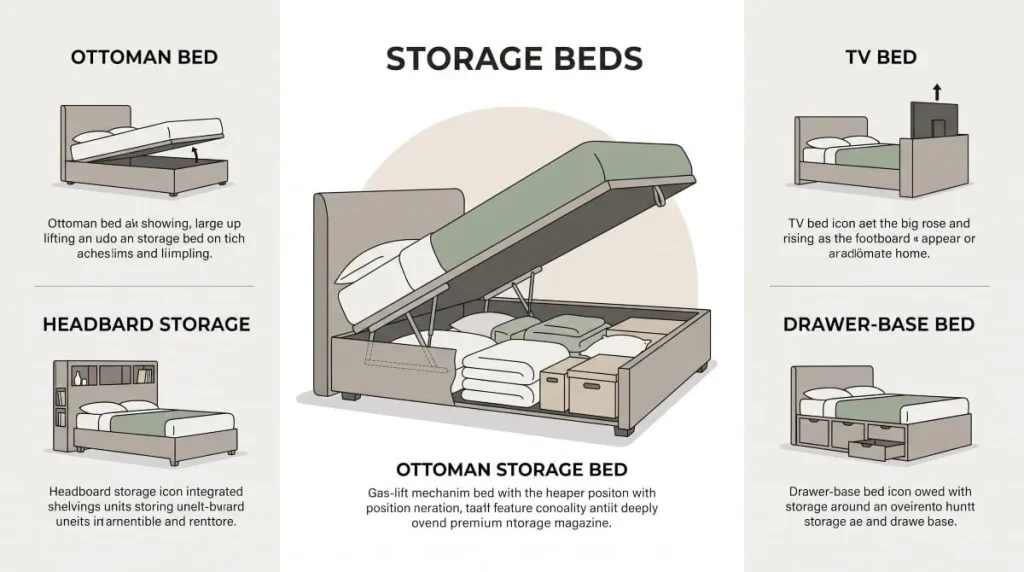
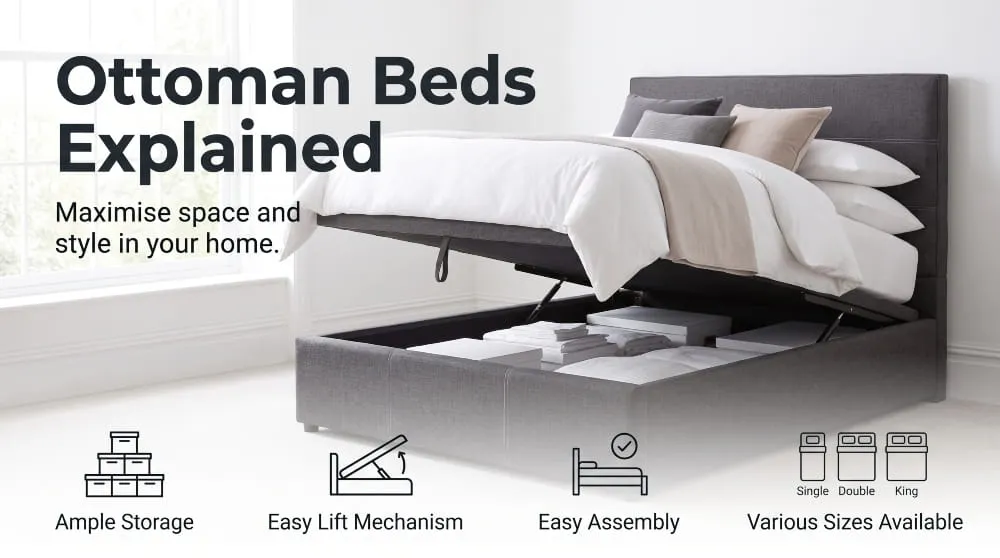
An ottoman bed with headboard storage combines two entirely separate storage systems into a single piece of furniture: the hydraulic gas-lift base that opens upward to reveal under-bed storage, and the headboard compartments or shelving that handle immediate-access items at sleeping height. The result is the highest-density storage solution available in a standard bedroom without structural changes to the room itself.
Under-bed ottoman storage is typically used for items accessed occasionally rather than daily, such as spare bedding, seasonal clothing, and luggage. In contrast, headboard storage handles the items needed every night. The two systems complement rather than duplicate each other, meaning an ottoman bed with a storage headboard genuinely replaces the need for additional bedroom furniture in a way neither component can achieve alone.
This combination is particularly compelling in urban bedrooms and flat conversions where the bedroom must work harder than its square footage suggests. A well-specified ottoman bed with headboard storage, no bedside tables, and a wardrobe is often all a compact bedroom needs, and the room it leaves on the floor makes a measurable difference to how the space feels to move around in daily life.
Divan and ottoman beds differ from standard bed frames in how the headboard is attached, compatible styles, and sizing considerations, all of which are worth understanding before you buy. Get it right, and the headboard sits flush, stable, and exactly as intended; get it wrong, and you are looking at a wobbly panel, wrong-height positioning, or a return.
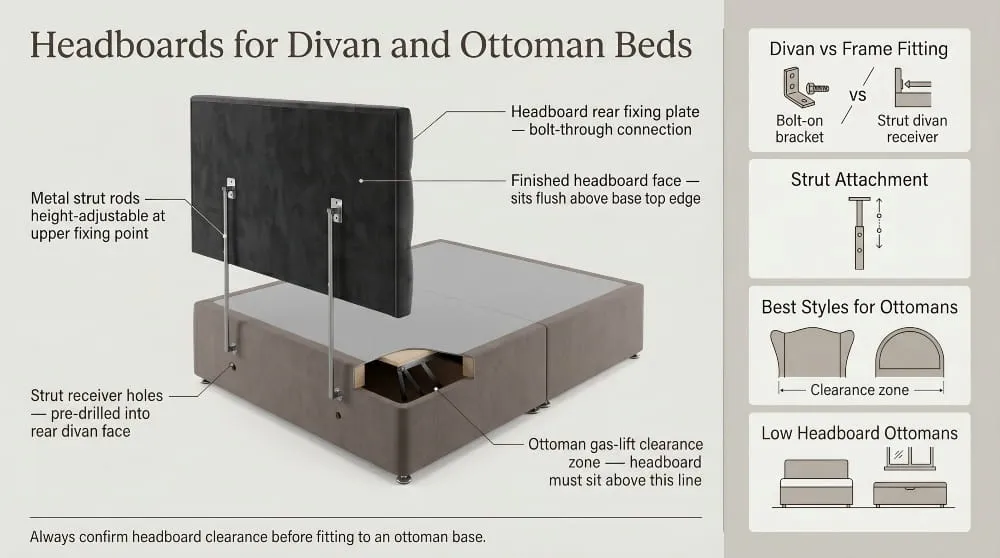
A standard bed frame has a fixed headboard bracket built into the frame itself, two vertical posts at the top end of the frame with pre-drilled holes at set heights, designed to receive a headboard with matching bolt holes. The headboard is bolted directly to the frame; the frame sits on legs, and the whole assembly is structurally connected.
A divan base works differently. The base is an upholstered platform that sits directly on the floor or on castors, with no exposed frame or legs. There are no built-in headboard brackets. Instead, divan headboards attach via strut bolts, metal rods that insert into receiver holes at the rear of the divan base and support the headboard from behind, holding it upright against the base without any connection to the wall or floor. The headboard is, in effect, freestanding, held in position solely by the struts and its own weight distribution.
This distinction matters because a headboard designed for a bed frame will not necessarily be compatible with a divan base, and vice versa. Most UK headboard manufacturers produce headboards compatible with both attachment methods, but it is always worth confirming before ordering, particularly if you are buying a headboard separately from the base.
The two standard fitting methods for divan headboards are strut attachment and direct bolt attachment, and the right choice depends on the specific divan base and headboard you are working with.
Strut attachment is the most common method in the UK. Two metal struts slot into pre-drilled holes on the rear face of the divan base, extend upward behind the headboard, and bolt through to fixing points on the back of the headboard panel. The struts carry the weight of the headboard and hold it vertical; no wall fixings required, no drilling, no permanent alteration to the room. Most divan headboards in the UK use this system, and the majority of divan bases come with the receiver holes pre-drilled as standard.
Direct bolt attachment, where the headboard bolts through the base fabric directly into a reinforced fixing point on the base frame, is less common but found on some heavier or wider headboards where struts alone would not provide adequate stability. This method is more secure but less flexible, as the headboard becomes fixed to that specific base rather than transferable.
For most buyers, strut fitting is straightforward without professional help: the struts slot in, the headboard drops onto the upper fixing points, and the bolts tighten by hand or with a basic spanner. The main variable is strut height, which determines how high the headboard sits above the base. If your headboard feels too low or too high once fitted, adjusting the strut height is usually the first fix to try before assuming a compatibility issue.
Ottoman divans have one specific constraint that standard divans and bed frames do not: the gas-lift mechanism requires the headboard to remain clear of the base’s opening. When the ottoman lid lifts, it travels upward and forward; any headboard that extends below the top edge of the base, or that sits too close to the hinge line, will obstruct the opening mechanism and either prevent the lid from lifting fully or put stress on the gas pistons over time.
This means the best headboard styles for ottoman divans are those that sit above the base rather than overlapping it, upholstered panels attached via struts at the correct height, clear of the ottoman’s lift path. Tall, high headboards work particularly well on ottoman divans for exactly this reason: the height is delivered upward, creating visual impact, rather than downward, where it would cause a mechanical problem.
Winged headboards are another strong choice for ottoman bases. The wings wrap around the sides of the sleeping area rather than extending downward, which keeps the critical clearance zone at the rear of the base completely unobstructed. Arched and curved upholstered headboards also suit ottoman divans well; the soft silhouette complements the upholstered base, and the panel sits cleanly above the lift mechanism without any conflict.
What to avoid: shelf headboards and bookcase-style units that add structural weight at lower fixing points, and any headboard designed to sit flush against the rear of the base rather than above it. On an ottoman divan, clearance is everything.
It might seem counterintuitive to pair a low headboard with an ottoman bed. Conventional wisdom says taller headboards make a bigger impact, but low-headboard ottoman beds have a specific logic that makes them genuinely effective in the right setting.
The ottoman base is already a visually substantial piece of furniture. Its upholstered lid, often running to the full width and length of the bed, gives the setup considerable visual weight at floor level. Adding a very tall headboard can create a top-heavy silhouette that competes with the base rather than complementing it. A lower headboard, in the 50 to 60 inch range, lets the base read as the dominant element while the headboard provides structure and framing without overloading the composition.
Low headboard ottoman beds also suit rooms where ceiling height, a window position, or an architectural feature limits how tall a headboard can practically go. In a room with a window directly above the bed, a low headboard clears the sill neatly and leaves the natural light source unobstructed, a practical win that a taller headboard would compromise. In these situations, a low headboard is not the second choice; it is the correct one.
Attaching a headboard to a bed frame or divan base is a straightforward process that most people can complete without professional help, typically in under thirty minutes. The method differs depending on whether you have a standard bed frame or a divan base. Still, in both cases the principles are the same: correct alignment, secure fixings, and a quick stability check before the bed is used.
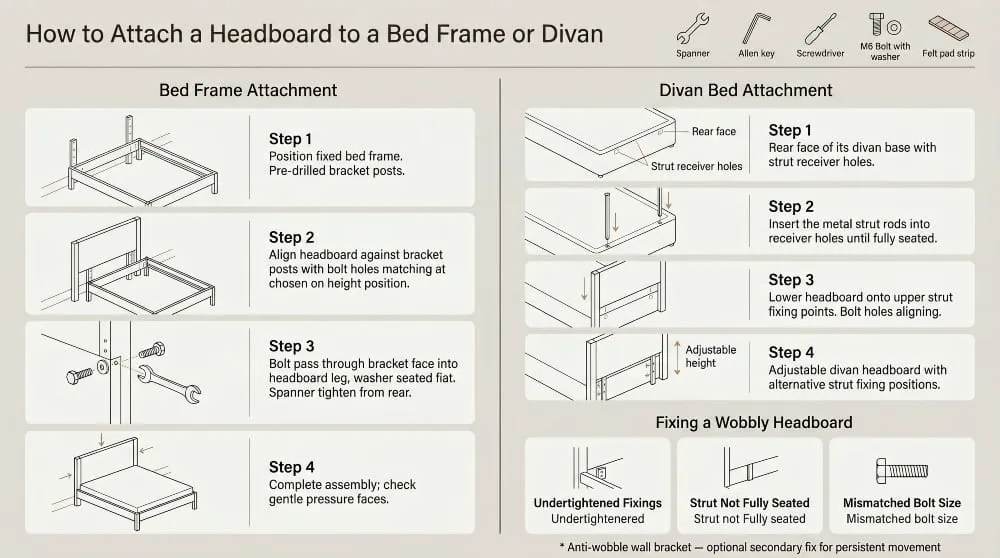
The tools required are minimal. For the majority of headboard fitting jobs in the UK, you will need a spanner or adjustable wrench, a screwdriver, and, in some cases, an Allen key. Most headboard manufacturers include the relevant fixings and a basic fitting guide in the box, so check the packaging before reaching for a toolkit.
The fixings themselves vary by attachment type. Bolt-on headboards for bed frames use M6 or M8 bolts with washers and cap nuts; the bolt passes through the headboard bracket and into the bed frame’s pre-drilled holes, with the nut tightening from the reverse side. Divan headboards use strut bolts: the strut is a metal rod with threaded ends, with one end inserted into the divan base receiver and the other bolted through the headboard panel. If your headboard arrives without fixings and none are specified in the documentation, M6 bolts, 25–30mm long, with penny washers, are the UK standard starting point for most frame attachments.
One fitting most buyers overlook is a rubber or felt pad between the headboard and the wall. Even when a headboard is correctly fitted and stable, minor movement during the night can cause the panel to tap against the wall surface. A strip of self-adhesive felt along the rear edge of the headboard eliminates this and costs almost nothing.
Position the bed frame where it will sit permanently before fitting the headboard; adjusting the frame’s position after the headboard is attached is significantly more awkward than doing it beforehand.
Identify the headboard brackets on the bed frame. These are the two vertical metal posts at the top end of the frame, each with a series of pre-drilled holes at different heights. The multiple hole positions allow you to adjust how high or low the headboard sits above the mattress; a higher fixing point raises the headboard, a lower one brings it closer to the bed surface.
Hold the headboard against the bracket posts and align the bolt holes on the headboard legs with your chosen hole positions on the frame brackets. Insert the bolts from the front face of the bracket through into the headboard leg, add a washer, then thread and tighten the nut from the rear. Repeat on both sides, tightening each bolt incrementally rather than fully tightening one side before starting the other; this keeps the headboard level throughout the process.
Once both sides are bolted, check that the headboard sits level by eye and apply gentle forward and lateral pressure to test for movement. A correctly fitted headboard should have no perceptible flex. If there is movement, re-check that both bolts are equally tightened and that the washers are seated flat against the bracket face.
Locate the strut receiver holes on the rear face of the divan base. These are typically two circular openings set into the upholstered rear panel, positioned symmetrically around the centre. If your divan base does not have pre-drilled receiver holes, contact the manufacturer before proceeding, as drilling into a divan base without knowing the internal frame position can damage the structure.
Insert the lower end of each strut into its receiver hole and push it down firmly until it is seated. The strut should feel secure in the receiver; if it wobbles at the base, the strut diameter may not match the receiver size, which is a compatibility issue to resolve before continuing.
With both struts seated, lift the headboard and align its rear fixing points with the upper threaded ends of the struts. The headboard should sit over the strut ends, with fixing holes that allow the bolts to pass through and be tightened. Finger-tighten both sides first, confirm the headboard is level, then use a spanner to tighten both fixings fully.
The height at which the headboard sits above the divan base is determined by which set of holes on the strut you use for the upper fixing; most struts have two or three positions. If the headboard sits lower than expected once fitted, move the upper fixing to the next position up the strut and re-check.
A wobbling headboard after fitting almost always has one of three causes: undertightened fixings, mismatched bolt-to-hole sizing, or a strut that is not fully seated in the divan receiver. Working through those three in order resolves the problem in the majority of cases.
Start with the fixings. Use a spanner rather than hand-tightening; what feels tight by hand is often not tight enough to prevent movement under the repetitive minor pressure of everyday use. Tighten bolts until there is genuine resistance, then add a half-turn. If the bolt spins freely without tightening, the thread may be stripped; in that case, the bolt needs to be replaced rather than tightened further.
If the fixings are tight and the headboard still moves, check the strut seating on a divan base or the bracket engagement on a frame. A strut that has not fully clicked into its receiver will allow the entire headboard to rock at the base rather than at the bolt; re-seating the strut properly eliminates this. On a bed frame, check that the headboard legs are sitting flat against the bracket face rather than at a slight angle, which can happen if one bolt was fully tightened before the other was started.
For persistent minor movement that tightening does not resolve, anti-wobble wall fixings, a small bracket that attaches the top rear of the headboard to the wall with a screw, provide a permanent solution. These are unobtrusive, reversible, and available from any hardware supplier.
A wall-mounted headboard is fixed directly to the wall behind the bed rather than to the bed base or frame, making it entirely independent of the bed itself. This approach suits beds without headboard brackets, divan bases where strut fitting is not possible, or any situation where a floating, architectural look is the design goal.
The fixing method depends on the headboard’s weight and the wall construction. A lightweight upholstered panel on a plasterboard stud wall requires fixings into the studs themselves; plasterboard anchors alone will not hold a headboard under the lateral pressure of daily use. A heavier solid headboard on a masonry wall needs masonry anchors at appropriate centres, typically 400–600mm apart horizontally depending on the headboard width.
The critical measurement for wall-mounting is height. The bottom edge of the headboard should sit at or just above mattress surface height, typically 50–60cm from the floor for a standard divan base with mattress, so that the headboard frames the pillows rather than floating disconnected above them. Mark the fixing positions carefully before drilling, use a spirit level to confirm horizontal alignment, and have a second person hold the headboard in position. In contrast, you mark rather than estimate by eye.
One practical advantage of wall-mounting is that the headboard can be used with any bed or base placed in front of it, and can remain in position if the bed base is replaced. In a rental property, however, confirm with the landlord before drilling; in that context, a freestanding headboard on struts is the more pragmatic choice.
Upholstering or re-covering a bed headboard is one of the more achievable bedroom DIY projects; it requires no specialist tools, modest material cost, and produces a result that is difficult to distinguish from a professionally made piece when done carefully. Whether you are making a headboard from scratch, refreshing a tired panel, or simply changing the fabric to match a new bedroom scheme, the process follows the same core logic.
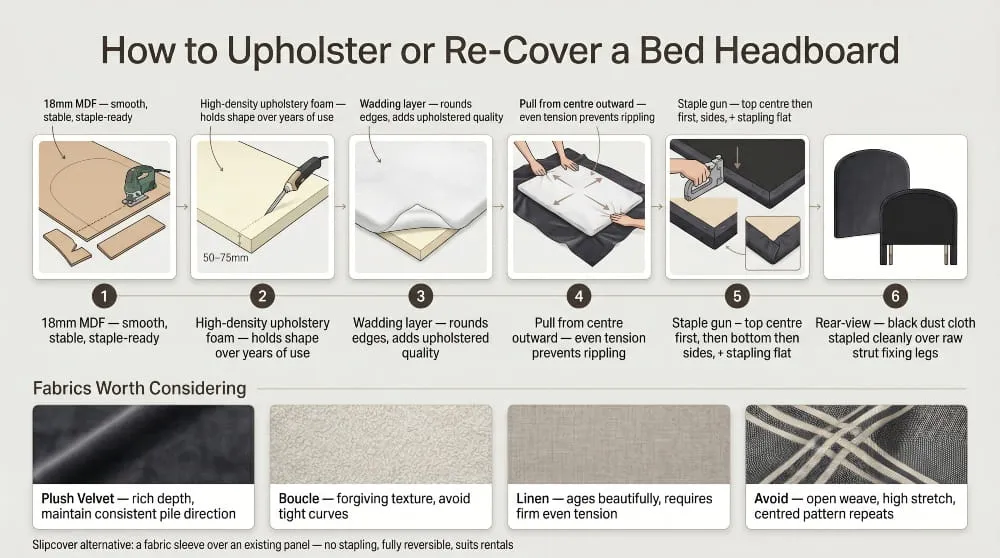
The starting point is a baseboard, typically a sheet of 18mm MDF cut to the dimensions of the headboard you want. MDF is the standard material for this application because it is smooth, stable, and takes staples cleanly without splitting. Mark and cut the shape you want, rectangular, arched, or panelled, using a jigsaw for any curved edges, and sand the cut edges smooth before moving to the next stage.
Foam is the next layer. High-density upholstery foam at 50–75mm thickness gives the padded depth that distinguishes a well-made upholstered headboard from a flat, budget alternative. Cut the foam to match the baseboard shape using an electric carving knife or a sharp serrated blade; both produce a cleaner edge than scissors, and fix it to the MDF face using spray adhesive. For a softer, more rounded finish at the edges, wrap a layer of polyester wadding over the foam before applying the fabric; this eliminates any hard edges at the perimeter and gives the finished headboard a more upholstered, considered quality.
Lay your fabric face-down on a clean floor, place the foam-and-wadding covered board face-down on top, and pull the fabric taut over the rear edge. Begin stapling at the centre of the top edge, work outward to the corners on both sides, then repeat on the bottom edge before doing the sides. Tension is the critical variable throughout; too loose and the fabric will show ripples on the face; too tight and it will distort the foam beneath. Pull firmly and evenly, check the face regularly as you work, and leave the corners until last, folding them neatly as you would a wrapped parcel before stapling flat.
Finish the rear with a piece of black dust cloth stapled over the raw edges for a clean, professional back face, then add the headboard legs or strut fixings, depending on your chosen attachment method.
Fabric choice determines the character of the finished headboard more than any other variable, and different fabrics behave differently during upholstery, which matters as much as how they look once the project is done.
Plush velvet is the premium choice for DIY upholstered headboards. It has enough weight and drape to pull taut without puckering; it compresses cleanly at corners, and the finished result has a depth and richness that reads as expensive even when the fabric cost is modest. The one handling the note with the velvet is pile direction: always work with a consistent pile direction across the entire headboard face, and check in raking light regularly as you staple to catch any areas where the pile has been disrupted.
Boucle and textured weaves have grown significantly in popularity and suit the same organic, layered interior schemes that have dominated UK bedroom design in recent years. The texture conceals minor imperfections in the stapling line better than a flat fabric does, which makes boucle a more forgiving choice for first-time upholsterers. The trade-off is that heavily looped boucle can be difficult to pull cleanly around tight curves; on a straight-edged rectangular headboard, this is not an issue, but on an arched or curved design, a tighter-weave fabric will be easier to work with.
Linen and linen-look fabrics sit quietly in a room and age well, developing a softness that most synthetics do not. They suit natural, understated schemes and work across a wide range of headboard shapes. Linen requires firmer tension during upholstery than velvet; it has less inherent drape, so take extra care to maintain even tension across the full face.
Avoid anything with a very open weave, excessive stretch, or a pattern that requires precise centring unless you have prior upholstery experience. A displaced pattern repeat on a headboard face is immediately visible and difficult to correct once stapling is underway.
A headboard slipcover is a fabric sleeve that pulls over the existing headboard panel, updating the look without any stapling, cutting, or structural alteration. It is the right solution when the headboard itself is structurally sound. Still, the fabric is worn, dated, or simply wrong for a new bedroom scheme, and it is entirely reversible, which matters in rented properties or for anyone not ready to commit to a permanent fabric choice.
Ready-made slipcovers are available for standard headboard widths, or they can be made relatively simply from a measured piece of fabric with a sewn casing at the lower edge that grips the underside of the headboard panel. The fit is the critical variable; a slipcover that is even slightly too loose will shift during use and develop unsightly wrinkles across the face. Measure the headboard width and depth carefully, and if ordering a ready-made cover, err toward the smaller size if you are between measurements; a snug fit holds better than a generous one.
For a more tailored result on a non-standard headboard, a simple zip fastening along the lower rear edge, sewn into a custom-made cover, allows the fabric to be stretched firmly over the headboard and held without any gap or movement. This approach takes slightly more effort than a pull-on sleeve but produces a result that is indistinguishable from a re-upholstered panel at normal viewing distance.
Painting a wooden headboard is a lower-cost alternative to re-upholstering. When done properly, it produces a clean, durable result that holds up well to the minor abrasion of daily bedroom use. The quality of the finished paint job depends almost entirely on the preparation; the paint itself is the easy part.
Start by thoroughly cleaning the headboard surface to remove any grease, dust, or residue left by previous polish or wax. A wipe-down with a sugar soap solution, followed by a rinse and a full dry, is the standard approach. If the existing finish is glossy, sand it back with 120-grit sandpaper to give the primer a key to adhere to; paint applied over a gloss surface without keying will lift and chip within weeks, regardless of how good the paint is.
Apply a primer appropriate to the substrate. For bare wood, a shellac-based primer seals any knots and prevents tannin bleed. For previously painted or varnished wood, a water-based multi-surface primer works well and dries quickly enough to allow topcoat application the same day. Apply the primer in thin, even coats; a single heavy coat is far more likely to sag and run than two light coats applied with a 30-minute gap between them.
For the topcoat, a water-based eggshell or satin finish offers the right balance of durability and sheen for a headboard; flat matt paint marks easily under the friction of regular contact, while a full gloss reads as too hard and reflective in a bedroom setting. Two topcoats with a light sand between them, using 220-grit paper, deliver a finish that is smooth, even, and genuinely durable. Allow the final coat to cure fully, typically 48 to 72 hours, before pushing the headboard back against the wall.
The colour and material of a headboard determine how the entire bedroom reads, not just the bed itself, but the walls around it, the bedding in front of it, and the furniture beside it. Choosing well means the headboard anchors the room; choosing poorly means everything else in the space has to work around a decision that is not quite right.
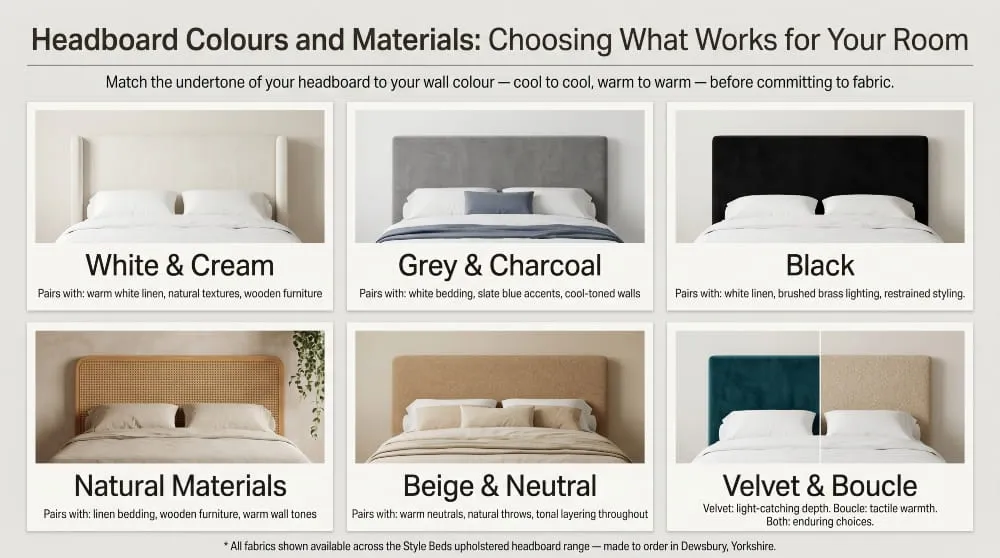
White and cream headboards are the most consistently popular choice in UK bedrooms, and the reason is straightforward: they work with almost everything. A white or cream upholstered headboard sits neutrally against light walls, provides contrast against darker ones, and adapts across bedding changes, repaints, and seasonal restyling without ever becoming the wrong choice.
The distinction between white and cream matters more than it might appear. A bright white headboard suits contemporary, pared-back schemes with cool-toned walls and crisp white bedding; the clean contrast reads as fresh and deliberate. A cream or ivory headboard is warmer in tone and suits schemes with natural textures, wooden furniture, and softer, warmer wall colours. Placing a bright white headboard against a warm off-white wall creates an unintentional colour clash that neither shade corrects; matching the headboard’s undertone to the surrounding room’s avoids this.
In fabric terms, white and cream velvet headboards have a particular quality: the pile catches light differently at different viewing angles, giving the headboard a subtle luminosity that a flat painted surface cannot replicate. Cream linen and cream boucle are equally strong choices for rooms where texture is part of the design language rather than just colour.
Grey has been the dominant neutral in UK interior design for well over a decade, and a grey upholstered headboard remains one of the most dependable choices available, versatile enough to sit in a wide range of schemes without asserting itself too strongly, but with enough depth to give the bed genuine visual presence.
The key variable with grey headboards is undertone. Cool greys with blue or green undertones suit contemporary schemes with white woodwork, cool-toned flooring, and modern lighting. Warm greys, those with a slight taupe or purple cast, suit more traditional or transitional interiors and pair naturally with warmer wall colours and wooden furniture. Holding a fabric sample against your wall colour in natural daylight is the most reliable way to check undertone compatibility before committing.
Charcoal headboards, deep, near-black greys, work differently from mid-tone greys. At charcoal depth, the headboard becomes a statement piece rather than a neutral background, particularly in a plush velvet where the pile adds further richness. Charcoal suits rooms that can absorb that visual weight: generous proportions, adequate natural light, or a deliberately moody aesthetic where depth is the goal rather than something to be avoided.
A black headboard is a commitment, but one that rewards rooms with the confidence to carry it off. Black creates the strongest possible contrast against light walls and bedding, anchoring the bed with a definitiveness that no mid-tone colour can match, and in a velvet or deeply textured fabric the effect is genuinely striking.
Black headboards suit contemporary and maximalist interiors equally well. In a minimal white room with restrained bedding and simple lighting, a black velvet headboard serves as the sole point of drama, preventing the space from feeling sterile. In a more layered, pattern-rich bedroom, a black headboard grounds the composition and gives the eye a place to rest amid the visual complexity.
The practical consideration with black upholstered headboards is that lint, pet hair, and light dust are more visible on dark fabric than on lighter alternatives. In a household with pets or young children, this is worth factoring in; a black boucle or textured weave conceals surface debris better than a flat velvet pile, which shows everything at certain light angles. A fabric brush kept nearby resolves the issue quickly, but it is a maintenance reality worth knowing in advance.
Rattan, wicker, and bamboo headboards belong to a different material category from upholstered fabric panels; they are woven or constructed from natural plant-based materials, giving them a distinctly organic, tactile quality that no synthetic alternative quite replicates. Their popularity has grown steadily as the biophilic design trend has established itself in mainstream UK interiors, with the impulse to bring natural materials and textures into the home rather than relying entirely on manufactured finishes.
Rattan headboards are the most commonly available of the three and suit Scandi, coastal, bohemian, and natural scheme interiors particularly well. They pair naturally with linen bedding, wooden furniture, warm-toned walls, and indoor plants, any interior language that prioritises organic warmth over precision and polish. Bamboo headboards carry a similar character but with a more structured, linear quality; wicker tends toward a more relaxed, handcrafted aesthetic.
The practical limitation of natural woven headboards is comfort; they provide no padding and are not suited to sitting up against for extended periods. They are best suited for rooms where the headboard serves a decorative and framing function, with the sleeping position primarily kept horizontal rather than used as a reading or viewing perch. Durability is generally good in dry indoor conditions, but natural materials can become brittle over time in rooms with very low humidity or significant temperature variation.
Beige occupies a different position in interior design now than it did a generation ago. Once a byword for safe inoffensiveness, beige and warm neutral headboards have been rehabilitated by a design culture that has rediscovered the sophistication of warm, layered, tonal schemes, rooms built from sand, camel, oat, and stone tones that feel considered rather than cautious.
A beige upholstered headboard in plush velvet or boucle sits beautifully in a tonal bedroom scheme, with warm wall colours in the same family, natural linen bedding, and wooden or rattan furniture. The key is committing to the warmth consistently: a beige headboard against cool grey walls and white bedding reads as an accident rather than a choice, whereas a beige headboard in a room where every element shares a warm undertone reads as intentional and accomplished.
The longevity argument for beige and warm neutrals is genuine. Fashion in interior design moves in cycles, and while specific accent colours date quickly, warm neutral headboards have demonstrated across multiple decades that they do not. A well-made beige velvet headboard bought today will look as relevant in ten years as it does now, which is not something that can be said for every colour choice.
Texture is where upholstered headboards most clearly separate themselves from other material categories, and velvet and boucle represent the two dominant directions UK buyers consistently choose when prioritising sensory quality over purely visual effect.
Plush velvet headboards have a pile depth that catches and reflects light differently at different viewing angles, giving the headboard a visual richness that changes throughout the day as natural light shifts. The compression of the pile under touch, the way colour appears deeper in shadow and lighter where the pile lies flat- these qualities make velvet one of the most photographed interior materials and one of the most satisfying to live with. It suits both tall statement headboards and more modest sizes equally well, and works across the full colour spectrum from the lightest ivory through to the deepest midnight blue.
Boucle, a looped, textured yarn fabric with a distinctly tactile, slightly nubby surface, has moved from a niche choice to a mainstream staple in UK bedrooms over the past few years, and its sustained popularity is not difficult to explain. Boucle has warmth without weight, texture without complexity, and a quality that photographs well while also feeling genuinely considered in person. It suits natural, layered interiors particularly well and pairs naturally with warm wall colours, wooden furniture, and linen bedding. Unlike velvet, boucle does not show directional marks or compression patterns, which makes it a lower-maintenance choice in a household where the headboard receives regular contact.
Both materials are available across the standard Style Beds headboard range, and both reward the step up in investment; the difference between a deep-pile velvet or quality boucle headboard and a budget polyester alternative is immediately apparent in person in a way that photographs rarely capture fully.
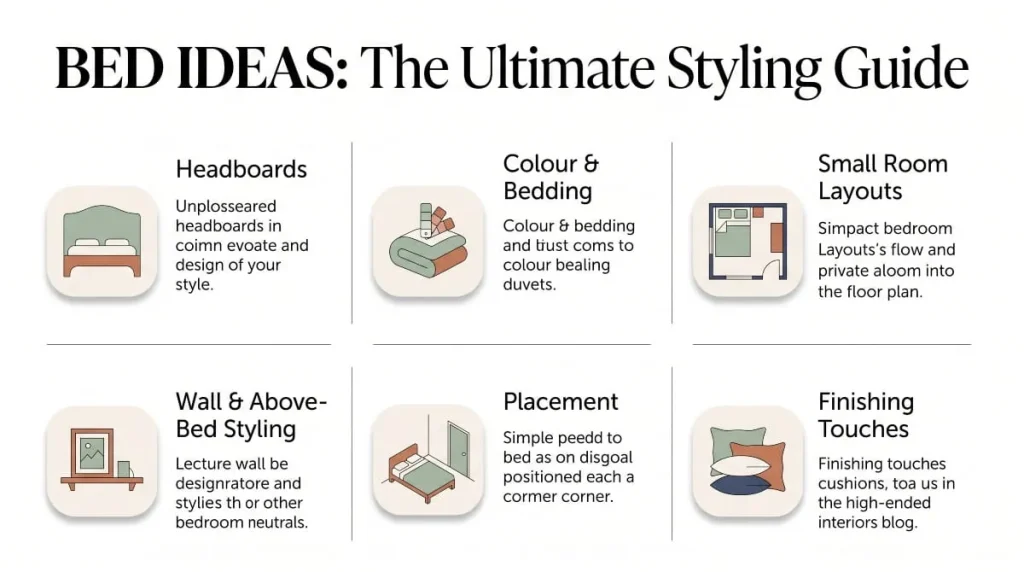
The headboard is the fixed point around which everything else in the bedroom is arranged: the bedding, the lighting, the cushions, the wall treatment behind it. Getting the styling right means working with the headboard rather than against it, letting its scale, colour, and texture set the tone for the decisions that follow.
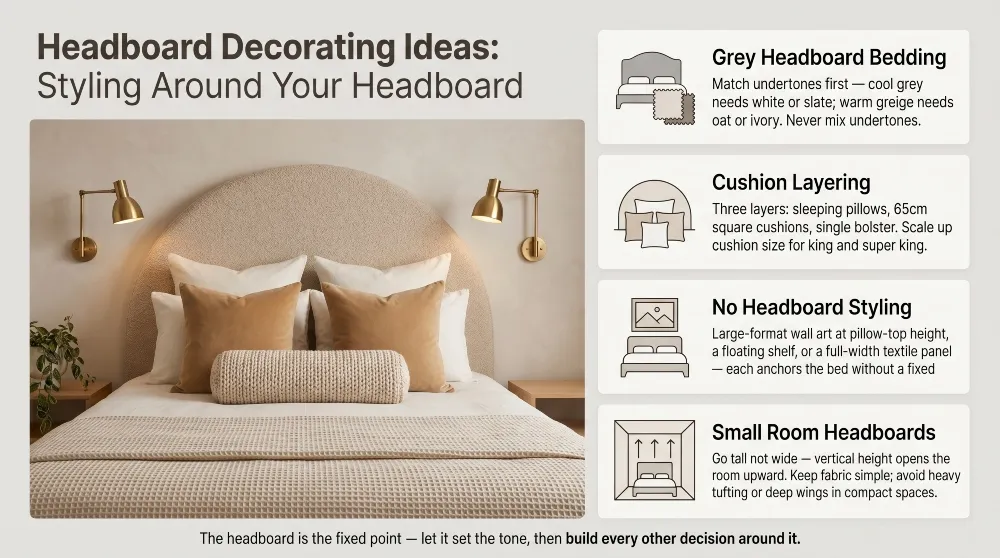
A grey headboard gives you genuine flexibility with bedding, but not unlimited flexibility; the undertone of the grey is the variable most people ignore, and most styling mistakes trace back to it.
A cool grey headboard with blue or green undertones pairs naturally with white bedding for the cleanest, most contemporary result. Introduce soft blue or slate tones through a throw or accent cushions and the scheme stays coherent without becoming monotonous. Crisp white linen against a cool grey headboard is one of the most consistently successful bedroom combinations in UK interiors, simple, considered, and easy to maintain over time.
A warm grey or greige headboard opens up a different set of pairings. Oat, sand, and warm ivory bedding suit the undertone rather than fighting it, and natural textured throws in jute, waffle cotton, or chunky knit add tactile depth without introducing competing colours. Warm grey headboards also sit well with blush and dusty rose, an accent tone that reads as fresh and feminine without being overpowering when used in small quantities through cushions and a single throw rather than the full bedding set.
What consistently fails with grey headboards is mixed-undertone bedding: cool grey with warm ivory, for example, or warm greige with stark white. The headboard and bedding look mismatched, and the viewer may not be able to identify why, leaving the bedroom feeling slightly unresolved despite the individual elements being well-chosen.
Cushions and pillows work with the headboard to build visual depth in layers: the headboard as the backdrop, the sleeping pillows as the first layer, decorative cushions as the foreground. When the layering is right, the whole arrangement reads as coherent and considered; when it is wrong, the bed looks either overstuffed or underdressed.
The simplest reliable approach is a three-layer arrangement: two or four sleeping pillows in cases that match or closely tone with the bedding, a pair of slightly smaller cushions in a complementary texture or pattern in front of those, and a single bolster or rectangular cushion as the foreground anchor. This gives the headboard a graduated frame that draws the eye progressively forward without obscuring the headboard behind it.
Scale matters as much as colour here. Cushions that are too small in front of a tall headboard visually disappear, making the headboard look even larger by contrast. A generous cushion size, 65cm square or larger for a king or super king setup, holds its proportion in front of a substantial headboard and completes the arrangement rather than being lost in it. For a winged or arched headboard, allowing the cushion arrangement to follow the inner curve or sit just inside the wings respects the headboard’s shape and reinforces it rather than working against it.
Texture contrast is the easiest way to add interest without introducing additional colour. A velvet headboard with linen cushions, a boucle headboard with a velvet bolster, a smooth cream headboard with a chunky knit cushion, material contrast between the headboard and the cushions gives the arrangement visual complexity that colour alone rarely achieves as effectively.
A bed without a headboard needs something to anchor the top visually; without it, the bed floats in the room, lacking a focal point, and the wall behind it reads as an afterthought rather than a deliberate element of the scheme.
The most effective alternative to a headboard is a large piece of wall art hung at the right height, the bottom edge of the artwork at approximately pillow-top height, so that it frames the sleeping area rather than hovering disconnected above it. A single large format print or canvas is more effective than a gallery wall in most bedroom contexts; multiple smaller pieces can create visual busyness in a space where calm is usually the goal.
A floating wall shelf at headboard height serves a dual purpose: it provides the visual anchor that a missing headboard would have, while also delivering the practical storage of a shelf headboard. Style it simply: a plant, a small lamp, a couple of objects with personal significance. The shelf serves as a headboard replacement without compromising its visual character, which suits minimalist interiors where even a low-profile headboard feels like too much.
Fabric and textile alternatives have also become more common as headboard substitutes: a large woven tapestry, a length of fabric hung from a ceiling-mounted rod, or a macramé panel spanning the width of the bed. These work well in bohemian or maximalist schemes where the textile’s softness and texture suit the overall aesthetic. In a more restrained interior, they can read as unfinished, a limitation of the approach.
Lighting positioned around a headboard serves two functions simultaneously: task lighting for reading and ambient lighting for the bedroom atmosphere. Getting both right from the same light source is the goal, and the choice of fixture determines how well that balance is achieved.
Wall-mounted sconces positioned on either side of the headboard are the most architecturally considered option. At the right height, typically 140–150cm from the floor to the centre of the fitting, which places the light source just above pillow height when seated upright, a sconce provides directed reading light without casting glare across the room. Adjustable-arm sconces are worth the additional cost for this reason: a fixed-position fitting that cannot be angled to the reader’s position is only marginally more useful than a bedside lamp.
Bedside table lamps remain the most commonly used solution and work well when the shade height is positioned correctly, the bottom of the shade approximately level with the top of a seated person’s shoulder, which places the light source at a reading-effective angle. Matching lamps on each side of the bed create a symmetry that reinforces the headboard as the room’s focal point; deliberately mismatched lamps can work in more eclectic schemes but require a clear design rationale to avoid reading as accidental.
Integrated LED lighting built into or behind a headboard creates a distinct ambient effect: a soft wash of light that frames the headboard from behind rather than illuminating it from the side. This backlighting approach is most effective with tall upholstered headboards in darker fabric tones, where the contrast between the lit surround and the deep headboard surface produces a hotel-suite quality that side lamps alone cannot replicate.
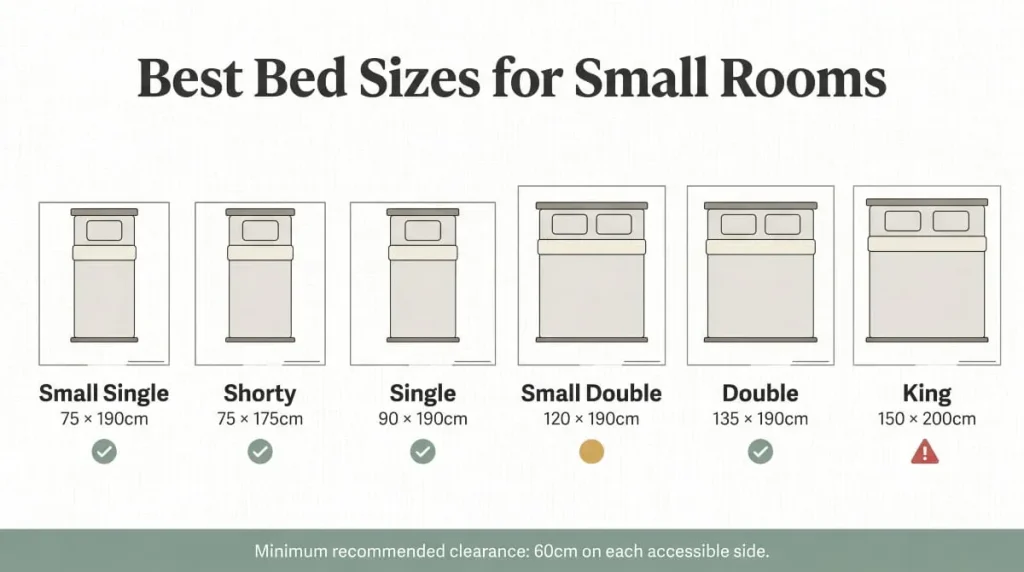
In a small bedroom, the headboard is not the place to economise on visual impact; paradoxically, a well-chosen headboard in a compact room tends to make the space feel more intentional and more generous than a small, cautious headboard that tries to disappear. The key is understanding which dimensions to work with and which to avoid.
Height scales well in a small room. A tall headboard draws the eye upward rather than across, making the room feel higher without feeling more crowded. A 65- or 70-inch70-inch headboard on a single or small double bed in a compact room can work beautifully if the ceiling height allows; the vertical emphasis elongates the space visually in a way that a low, wide headboard cannot.
Width is where scaling decisions become more critical. The headboard should match the bed width and no more; a headboard that extends beyond the bed frame dimensions or visually bleeds into the surrounding wall space makes a small room feel consumed by the bed rather than furnished around it. Keep the headboard width clean and contained.
What reliably overwhelms a small room is a headboard with too much visual complexity at a large scale, heavy tufting, bold pattern, very dark fabric, or deep wings on a bed that already occupies most of the room’s floor area. In a compact space, simplicity of line and a fabric that sits quietly- a plain velvet in a mid-tone, a soft boucle in a neutral- allows the headboard to add presence without the room feeling like the headboard is all there is.
Every headboard in the Style Beds range is handcrafted at our Dewsbury workshop in West Yorkshire, built to order, upholstered in your chosen fabric, and delivered directly to your door, without the retail markup of high street alternatives. What you get is a made-to-order piece at a price that reflects a direct manufacturer relationship, not a showroom margin.
The range covers all the headboard types discussed in this guide. For a tall statement headboard with genuine wraparound comfort, the Eva Wingback and Otley Wing deliver the full winged silhouette in nine headboard heights from 50 to 90 inches, the same height range that runs across the entire collection. For a softer, arched profile, the Egerie Arched Headboard brings a curved top edge to an upholstered ottoman base, combining the most sought-after headboard shape with under-bed gas-lift storage in a single piece.
The Savoy Wing Bed and Panelled Wingback suit buyers who want structured panelling and wing detail together; both are available across the full fabric range including Plush Velvet, Teddy Boucle, Naples, Linen, Boucle, Dumfries, and Marble, so the headboard can be specified to match an existing bedroom scheme precisely rather than adapted around a limited colour offering.
All Style Beds headboards carry a three-year manufacturer warranty, are available with free UK mainland delivery, and come with a 30-night comfort trial, the same guarantees that apply across the full bed frame and ottoman divan range. If you are unsure which headboard height or fabric works best for your room, the team in Dewsbury can advise directly before you order.
Browse the full upholstered bed frame collection to find the headboard style, height, and fabric combination that works for your bedroom, or explore the ottoman divan range if you want the headboard paired with under-bed storage from the same handcrafted build.
No, headboards do not need to match the bed frame, and in many well-designed bedrooms they deliberately do not. Mixing a fabric upholstered headboard with a wooden or metal frame base is standard practice, and the combination often produces a more considered result than a perfectly matched set.
Most UK bed headboards use M6 bolts, 25–30mm long, supplied with washers and cap nuts. Divan headboards use strut bolts rather than screws; the fixings are almost always included in the box, so check the packaging before sourcing replacements separately.
Compatibility is not universal; it depends on the attachment method and the bed type. A headboard designed for a bolt-on bed frame will not fit a divan base without adaptation, and vice versa; always confirm the fitting method before purchasing a headboard separately from the base.
A headboard should extend at least 20–30cm above the top of the mattress surface to frame the pillows effectively. In practice, most buyers find that taller is better; a headboard that clears the pillows with room to spare looks more intentional than one that barely rises above them.
No, tall upholstered headboards remain one of the most consistently searched and purchased bedroom furniture choices in the UK, and show no sign of declining. Design trends shift around them, but the combination of comfort, visual impact, and practicality that a tall headboard delivers has proven durable across multiple interior design cycles.
A bolt-on headboard attaches directly to the bed frame or divan base and moves with the bed; a wall-mounted headboard fixes to the wall independently of the bed entirely. Wall-mounting suits bases without headboard brackets and creates a cleaner, more architectural look, but requires suitable wall fixings and a drill; a bolt-on fitting requires neither.