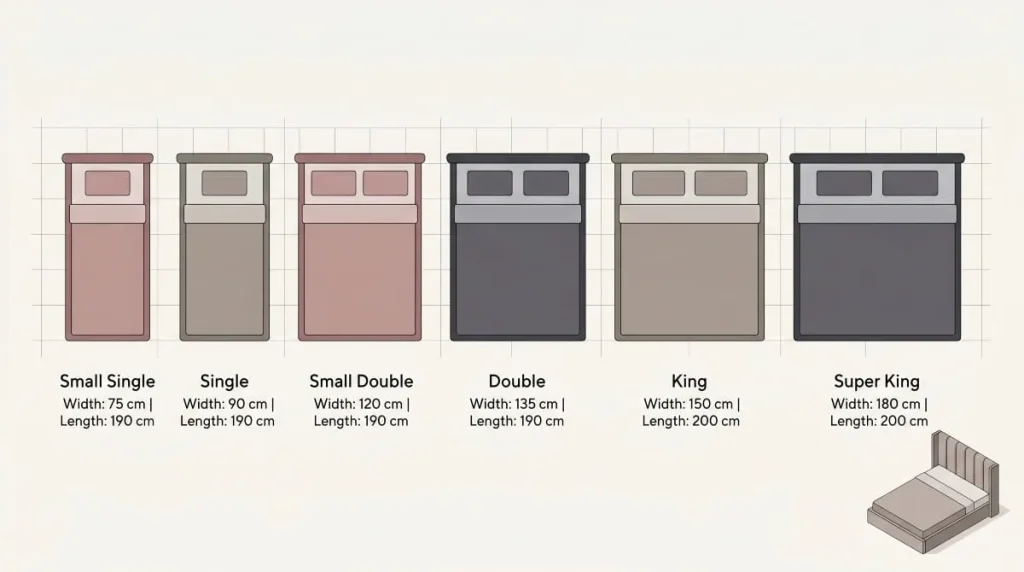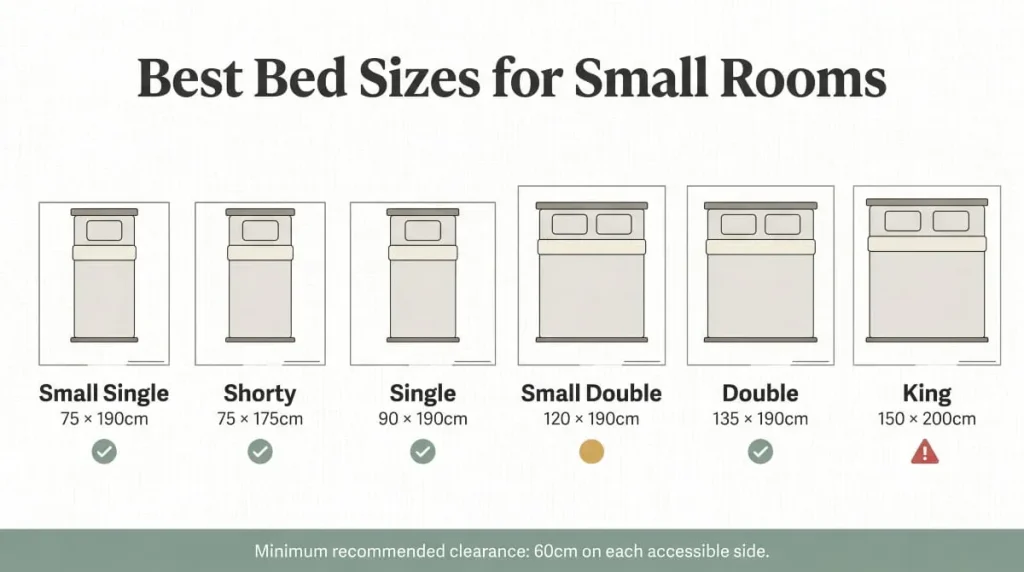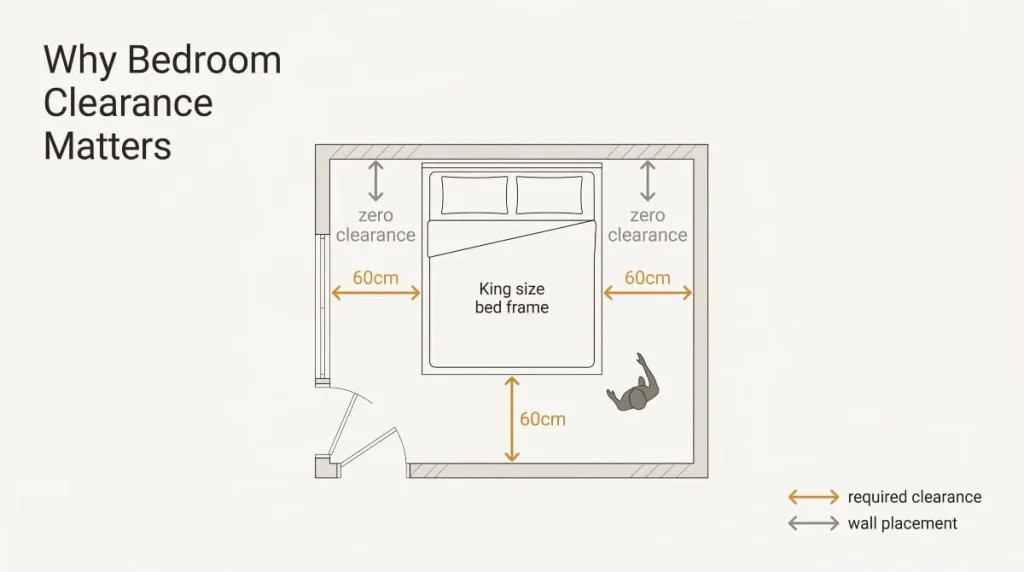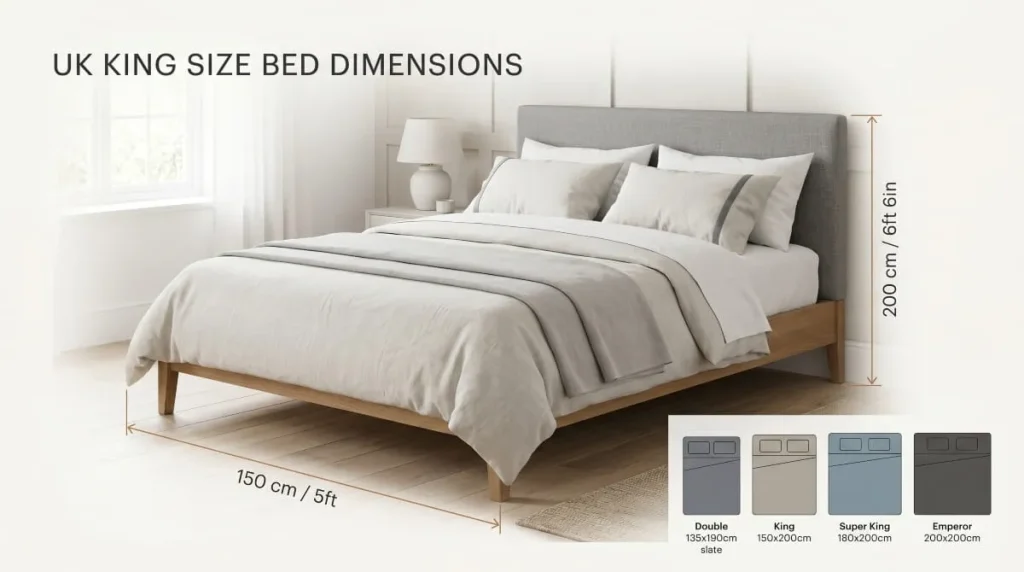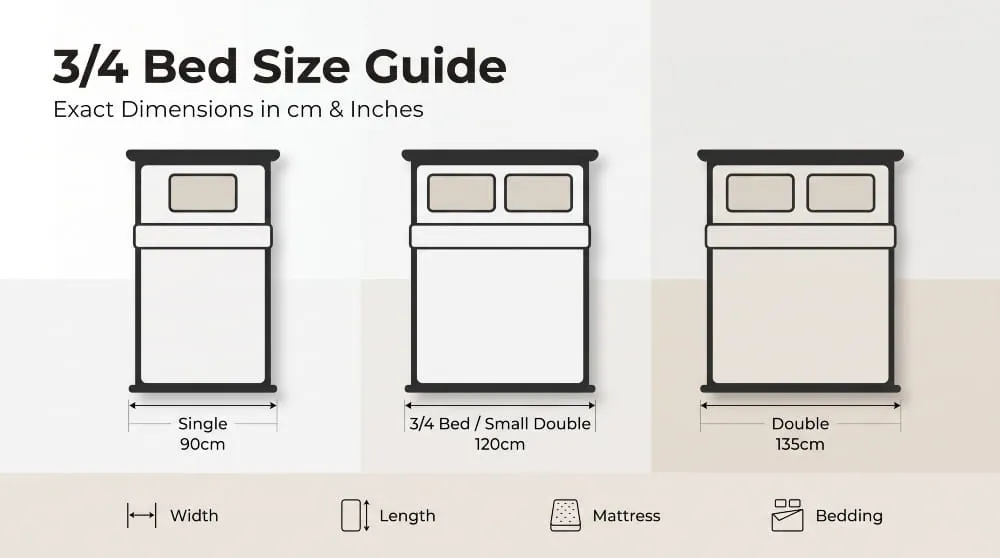


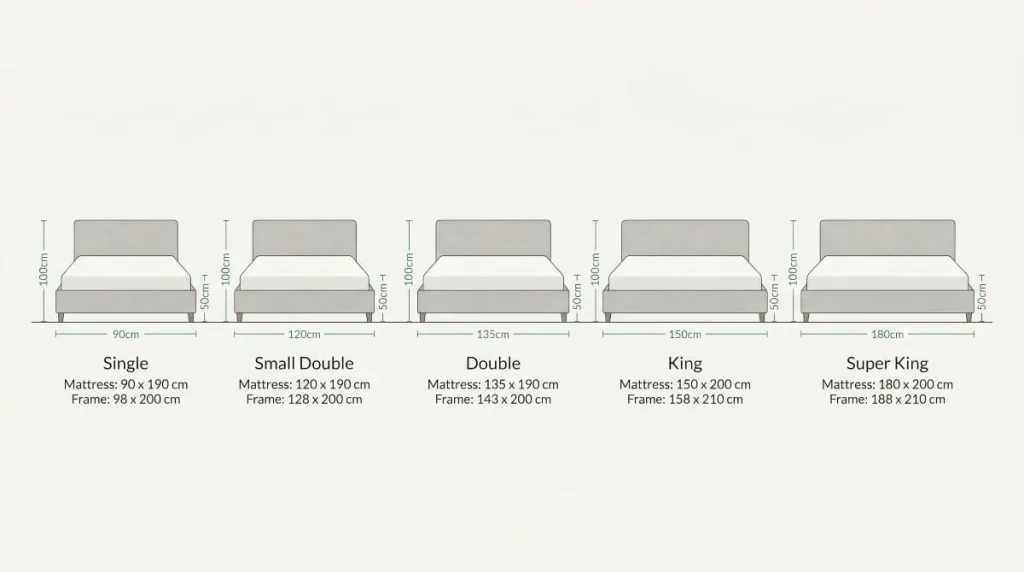
Bed Frame Dimensions Every UK Size Explained (cm, inches & feet)
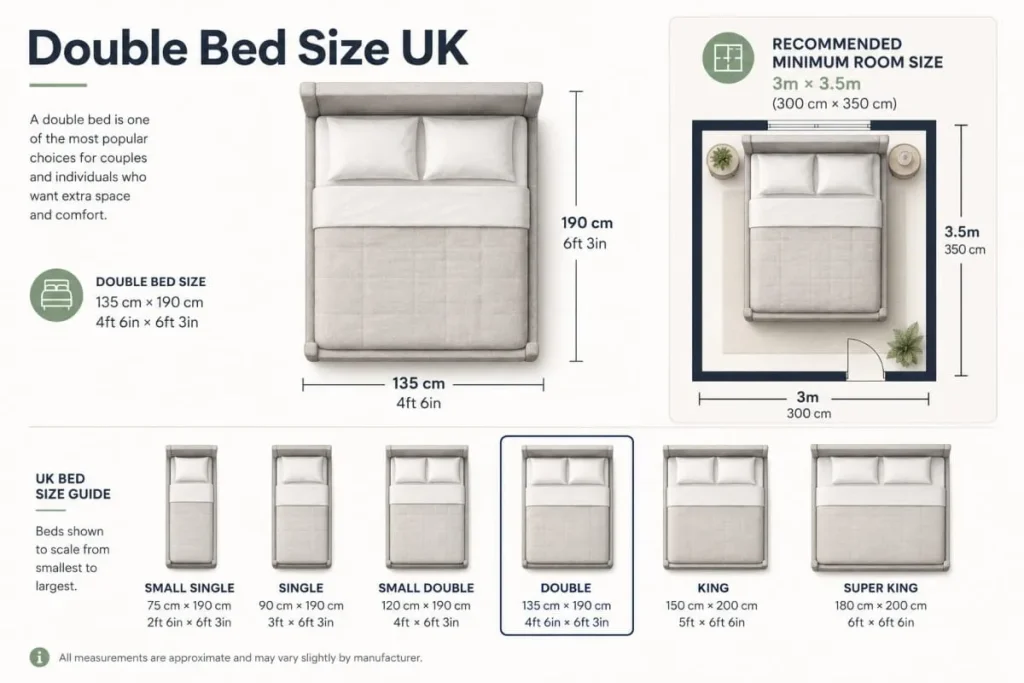
A king size bed frame in the UK measures 150cm wide by 200cm long (5ft × 6ft 6in), that’s the frame’s external footprint, not just…

A chenille bed is a bed frame, divan or ottoman storage base upholstered in chenille, a soft, velvety woven fabric prized for its deep texture and warmth. It’s one of the most searched upholstery finishes for beds in the UK right now, and this guide covers what it is, how it compares to other bed types, which sizes and colours are available, and how to tell if it’s the right fit for your bedroom.
Chenille takes its name from the French word for “caterpillar”, a nod to the fabric’s fuzzy, tufted pile, which is woven so the yarn stands slightly proud of the surface rather than lying flat like velvet. On a bed frame, that texture reads as soft and tactile from across the room, and it tends to hide light surface marks better than smoother weaves because the pile scatters light rather than reflecting it evenly. Shoppers are drawn to chenille beds for three reasons: the deep, cosy texture, the warmth it adds to a bedroom’s palette, and a reputation for holding up well to daily use compared with thinner upholstery fabrics. A well-made chenille upholstery weave typically survives 40,000 or more rub cycles on the Martindale abrasion test, the industry benchmark for how long a fabric resists wear, comfortably above the 25,000-cycle threshold considered durable enough for daily household furniture use.
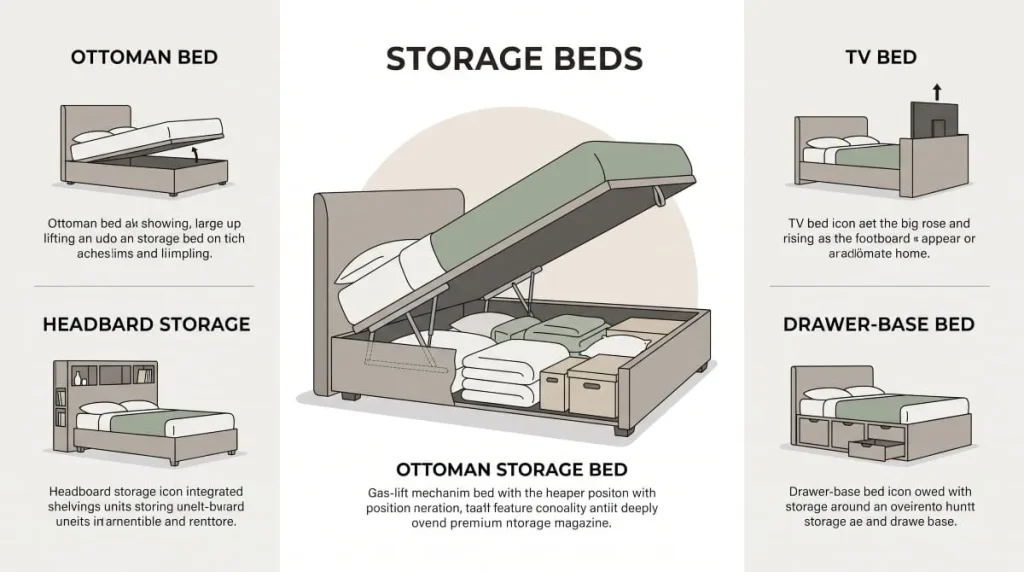
“Chenille bed” covers three distinct base types, and picking the right one matters more than the fabric itself once you’re comparing options. A bed frame is a slatted base with a fixed headboard, built for airflow and a classic look. A divan is a solid, upholstered box base that sits directly on the floor, usually paired with a separate headboard, and gives a lower-profile, more traditional silhouette. An ottoman storage bed uses the same upholstered box shape as a divan but the top lifts on a gas-lift mechanism, turning the entire base into hidden storage, the practical choice for smaller bedrooms that need somewhere to put spare bedding or out-of-season clothes without adding furniture.
An ottoman storage bed keeps a bedroom without clutter, the entire sleeping platform lifts to reveal a full-width storage cavity, which is why it’s become the default pick for flats and box rooms where a chest of drawers simply won’t fit.
A divan base is upholstered on all visible sides, so the fabric, chenille included, becomes the main visual feature of the bed rather than a headboard accent, which is why colour choice matters more on a divan than on a frame.
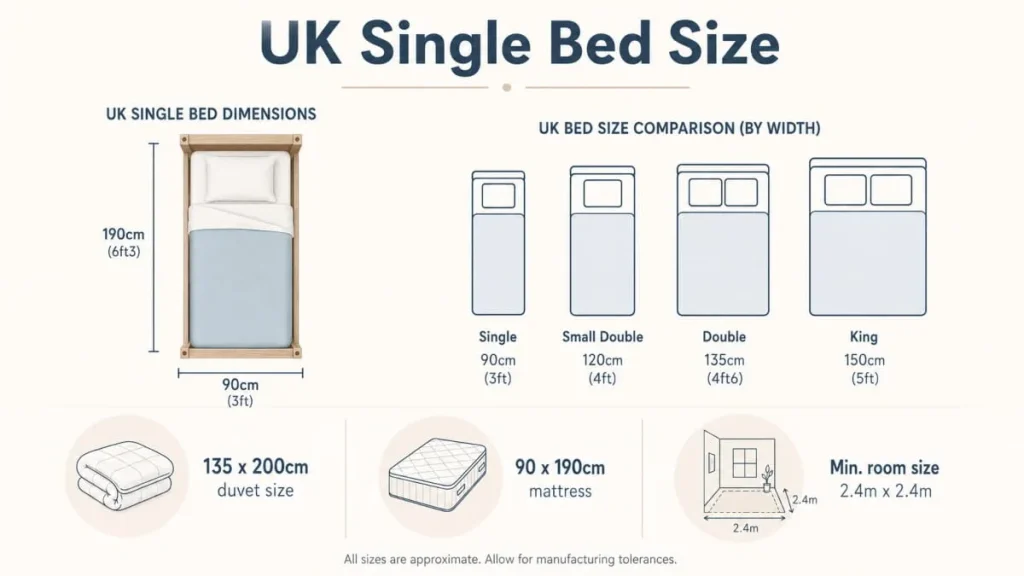
Chenille bed frames, divans and ottomans are typically available across the same size range as any upholstered bed: Single, Double and King, with dimensions that follow standard UK bed sizing regardless of fabric. Getting the size right matters more for chenille specifically because its raised pile can make a base look visually larger in a room than a flat-weave equivalent of the same footprint, so measuring the space first avoids ordering a size that overwhelms it. For exact measurements before you choose, our Single, Double and King size guides break down the full dimensions for each.
A King size base needs the most floor-to-wardrobe clearance of the three, so it’s worth checking the room dimensions against our King size guide before assuming a King chenille bed will fit comfortably alongside existing furniture.
A Single chenille bed suits box rooms, guest rooms and children’s rooms where floor space is tight, and the smaller footprint means the fabric’s texture reads as a feature rather than dominating the room.
Chenille’s raised pile catches light differently to flat fabrics, which is why the same colour name can look noticeably different in chenille than in velvet or linen, grey chenille, for example, often reads warmer and more textured than a flat-woven grey. Neutral shades dominate demand: grey, charcoal, mink and cream account for the large majority of chenille bed searches, reflecting how these tones work across almost any bedroom scheme without dating quickly. Black and silver chenille sit at the more statement end of the spectrum, while blue chenille, most often searched on divan bases, is typically chosen as a deliberate accent colour rather than a neutral base.
Grey is the highest-demand chenille colourway by a clear margin, likely because it pairs with both warm and cool bedroom palettes and doesn’t compete with existing wood tones or metal fixtures.
Mink and cream chenille sit closer to the warm end of the neutral spectrum, and both tend to show less visible texture change over time than darker shades, since surface fading is less noticeable on lighter tones.
Chenille is generally easy to live with day-to-day: light debris and dust sit on top of the pile rather than working into it, so a weekly vacuum with an upholstery attachment keeps most chenille beds looking fresh, and spot-cleaning with a damp cloth handles most everyday marks. The main thing to watch is pilling, the small fibre balls that form on any woven fabric through friction, which chenille is rated as moderately resistant to compared with thinner weaves, and any pilling that does appear is easily removed with a fabric shaver rather than being a sign of poor quality. As with any upholstered fabric, direct sunlight over months will gradually affect colour depth, so positioning a chenille bed away from a south-facing window that gets full sun all day will keep the colour truer for longer.
Chenille doesn’t attract dust more than other upholstery weaves, but its raised pile does make trapped dust more visible until it’s vacuumed, and its pilling resistance sits in the moderate range, better than flat cotton weaves, behind tightly looped boucle.
If you’re drawn to chenille for its texture rather than the name specifically, Teddy Boucle is the closest match in our own fabric range, both are looped, tactile weaves that create depth rather than a flat surface, and both read as warm, cosy finishes in a bedroom. Plush Velvet gives a smoother, denser pile with more sheen and a more formal finish than chenille’s fuzzier texture, while our Naples weave sits at the flatter, more tailored end and suits a cleaner, less textured look. For anyone comparing chenille against what’s actually available to order, Teddy Boucle is the practical starting point rather than a compromise, it delivers the same “sink into it” tactile quality that draws people to chenille in the first place.
Both fabrics are built from looped or raised yarn rather than a flat weave, which is what gives chenille its texture, Teddy Boucle achieves the same tactile depth using a tighter, more uniform loop.
Start with the base type your room needs, storage first if space is tight, a divan for a low, streamlined look, or a frame if you want a more defined headboard silhouette, then narrow the colour to whichever neutral matches your existing wood tones and soft furnishings, since chenille’s texture works best when it isn’t fighting other patterns in the room. Every bed we handcraft in Dewsbury, West Yorkshire comes with a 3-year warranty, a 30-night trial, and free UK delivery, so if the texture or colour doesn’t sit right once it’s in the room, there’s room to change your mind without being stuck with the decision.
Yes, chenille’s raised pile is durable under regular contact, typically rated well above the 25,000-cycle Martindale threshold considered suitable for daily-use furniture, and it hides light surface marks better than flatter weaves.
Like most upholstery fabrics, chenille will gradually lose colour depth with sustained direct sunlight over months or years, but out of direct sun exposure it holds colour well; darker shades show fading more visibly than light neutrals.
Velvet has a smoother, denser pile with more sheen and a more formal look, while chenille’s pile is fuzzier and less reflective, giving a more casual, textured finish, Plush Velvet in our range is the nearest equivalent if you want that smoother sheen instead.