)
&description=&image=https://stylebeds.co.uk/wp-content/uploads/2026/07/Bed-Ideas--1024x572.webp)
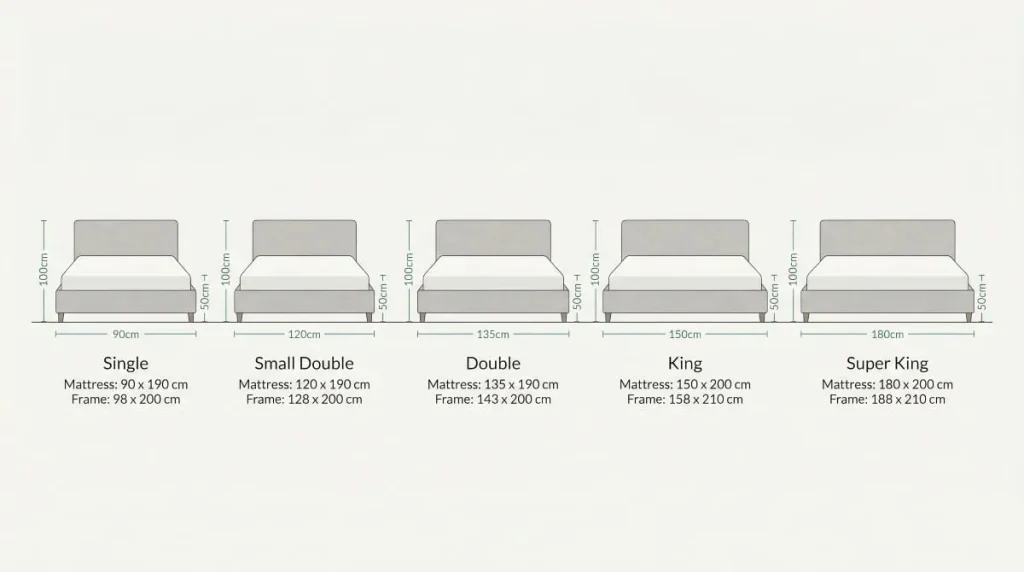
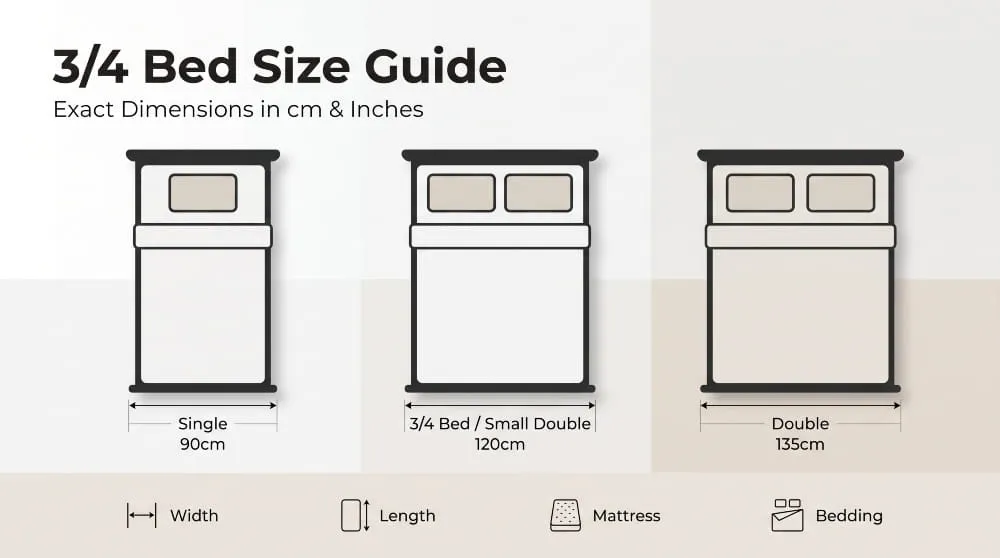
Bed Frame Dimensions Every UK Size Explained (cm, inches & feet)
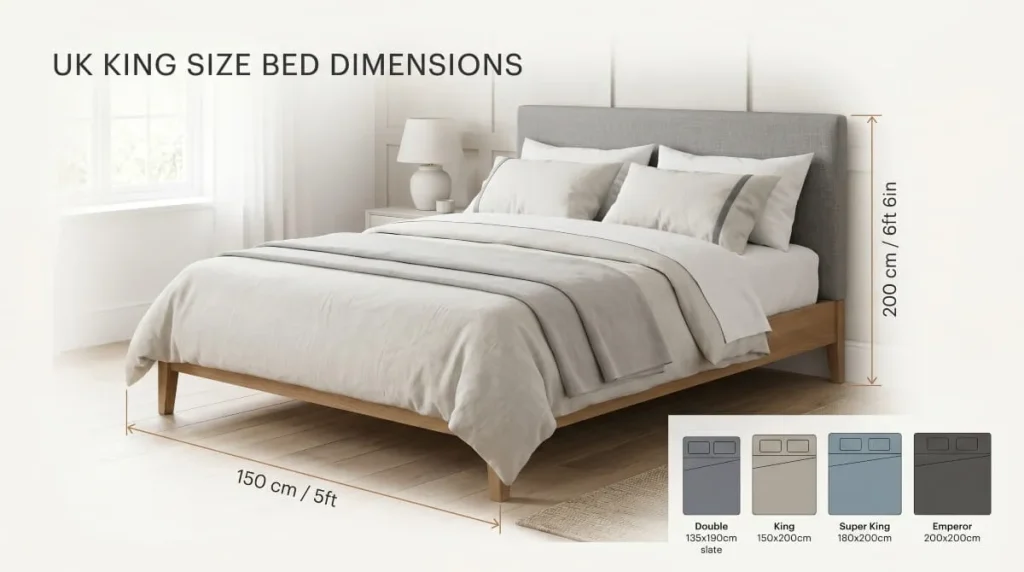
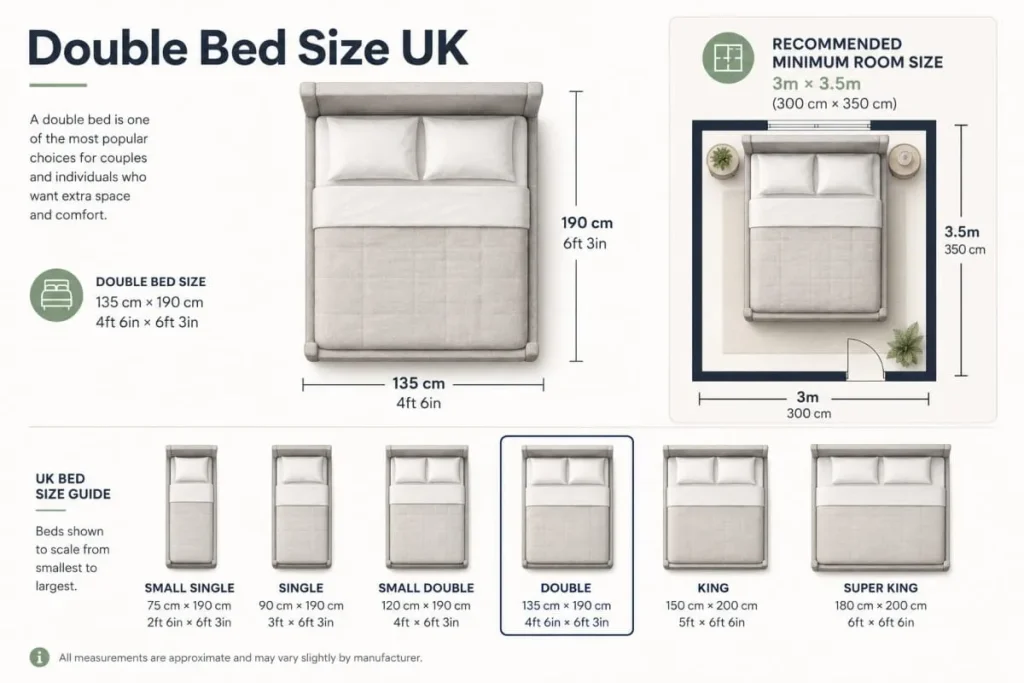
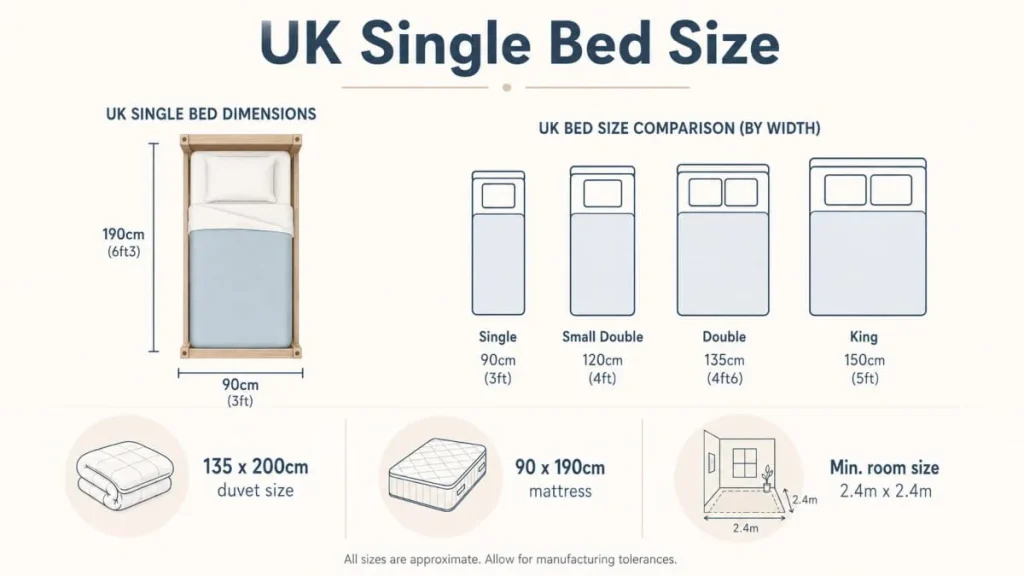
A king size bed frame in the UK measures 150cm wide by 200cm long (5ft × 6ft 6in), that’s the frame’s external footprint, not just…
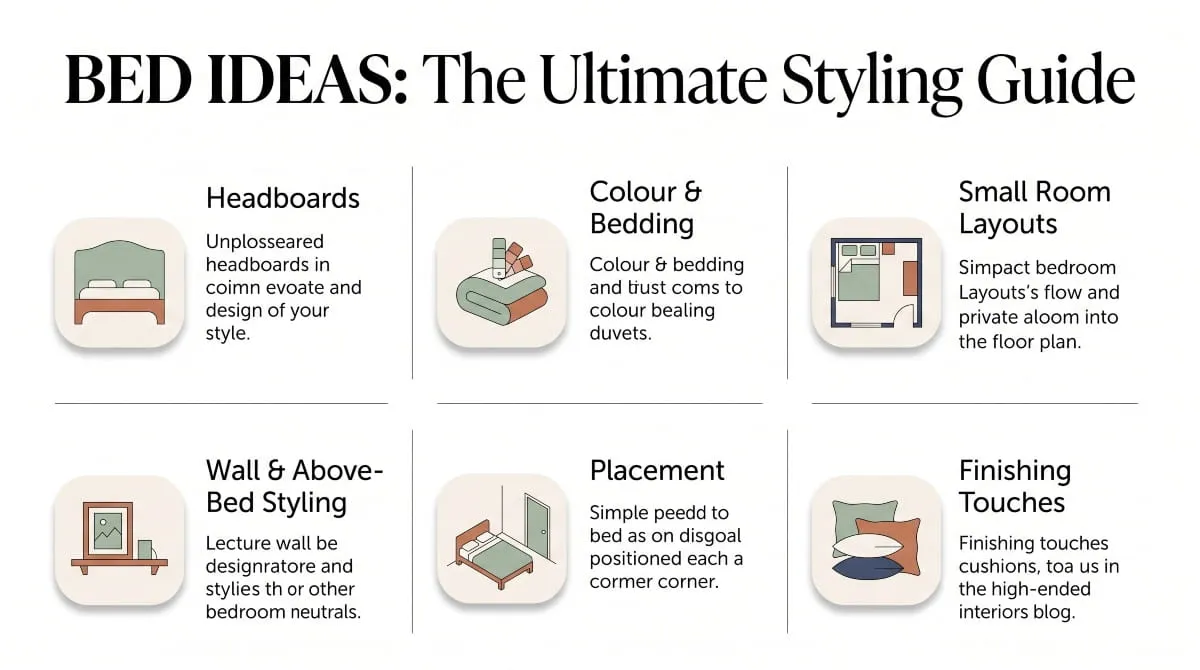
Bed ideas work best when they solve a real problem first: how to make a small room feel bigger, how to dress a bed without a headboard, how to bring colour into a neutral scheme, rather than chasing a single “look.” Whether you’re planning a full bedroom refresh or just want to update a headboard, this guide breaks down bed ideas by style, room size, and budget, so you can find an approach that actually fits your space rather than someone else’s Pinterest board.
UK homeowners refresh their bedroom roughly every 29 months on average, according to a survey of 1,000 UK homeowners, which means most of us are due a change more often than we think, and it’s worth getting the fundamentals right before reaching for a new throw or a fresh coat of paint. That’s exactly what this guide covers: the ideas that make the biggest difference, in the order that actually matters.
A great bed setup balances four things: a headboard or wall treatment that anchors the room, bedding that suits the season and light in the space, smart placement that makes the room feel bigger rather than smaller, and finishing touches, cushions, a throw, a rug, that pull it all together. Get those four right, and almost any bed, in almost any room, will look considered rather than accidental.
The best bed ideas start with placement and headboard choice, since these two elements set the scale and tone of the whole room; bedding and styling should then be chosen to complement them, not the other way around. A bed pushed into an awkward corner with a mismatched headboard will look unfinished no matter how good the cushions are; a well-placed bed with the right headboard can look pulled-together even with the simplest white bedding.
This is also the order interior designers tend to work in: structure first, decoration second. Anna, Interior Designer at Feather & Black, has noted that a bedroom should feel restful rather than visually busy, and that starting with a calm, neutral base makes it far easier to introduce colour and pattern later without the room tipping into clutter. That same logic applies whether you’re furnishing a large main bedroom or working around the constraints of a small box room; the fundamentals don’t change, only the scale of the solutions does.
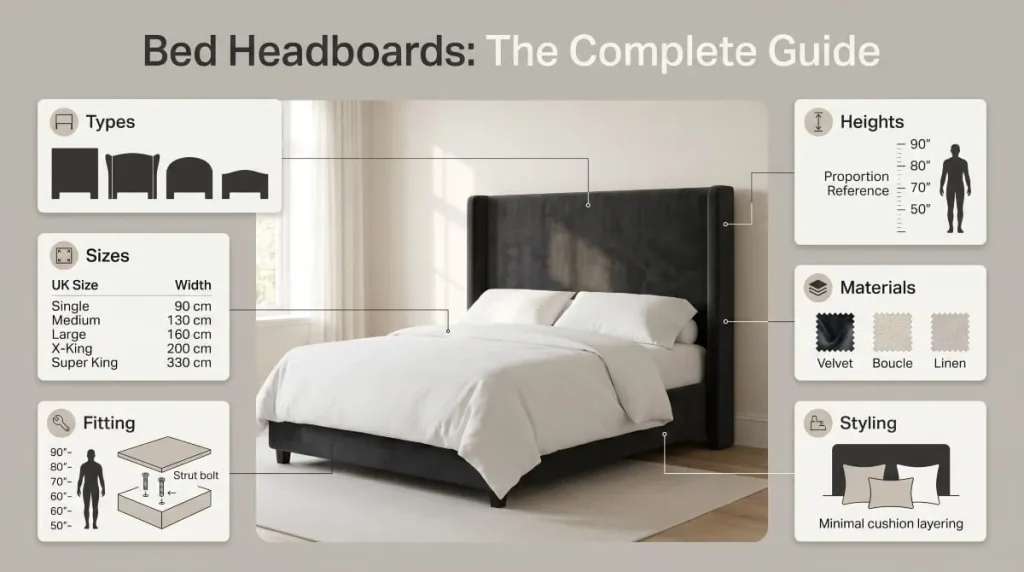
The right headboard does more work than any other single choice in a bedroom;: it sets the room’s scale, texture, and tone before a single cushion or throw is added. Interior buyers are increasingly treating the headboard as the room’s focal point rather than an afterthought: Heal’s senior furniture buyer points to a continued shift away from purely structural bed frames toward upholstered headboards as a defining trend, and several other 2026 trend reports back this up. Whether you choose upholstery, wood, no headboard at all, or something more architectural, the goal is the same: anchor the bed so everything else in the room has something to relate to.
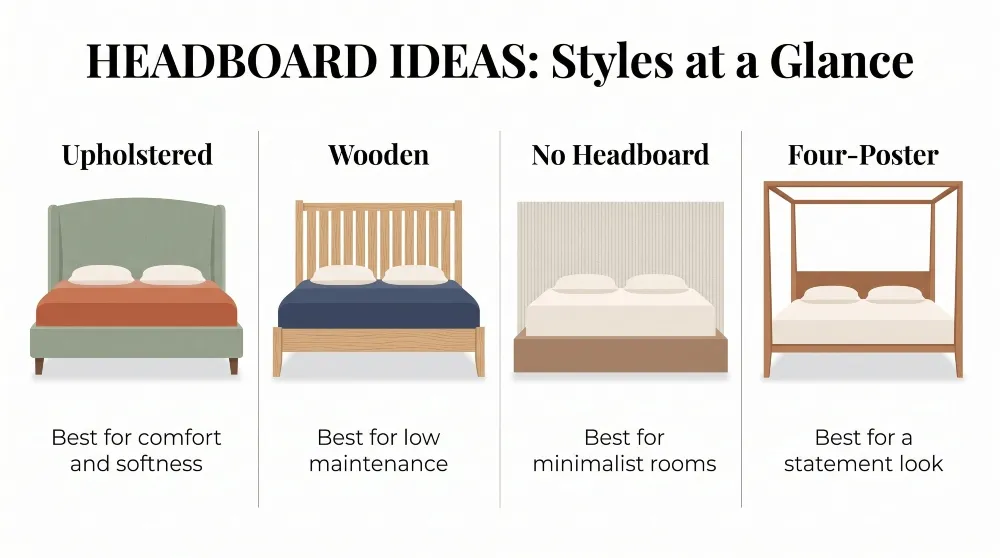
Fabric and wood solve different problems, so the choice usually comes down to how you use the bed rather than pure aesthetics. Upholstered headboards soften the visual impact and provide a soft backrest for sitting up in bed, which matters more than it sounds. UK sleep research shows people spend an average of 7 hours 22 minutes in bed each night, and a large share of that time is spent reading, working, or watching TV rather than sleeping. Velvet, bouclé, and linen-look weaves are the most popular upholstered finishes right now, prized for holding their shape and behaving well in low light. Wooden headboards, by contrast, suit bedrooms where low maintenance and longevity matter more than softness; they’re easier to wipe down, less prone to holding dust, and wood remains a dominant material in UK furniture more broadly. Neither is objectively better; a fabric headboard suits a room built around comfort and layering, while a wooden one suits a calmer, more pared-back scheme.
Going without a headboard isn’t a compromise; for the right room, it’s a deliberate style choice. A low, headboard-free bed works well in minimalist, Japandi, or Scandinavian-inspired schemes, where the wall behind the bed becomes the real design opportunity: panelling, a woven wall hanging, a floating shelf, or layered artwork can all serve as a headboard would. This approach also suits smaller rooms particularly well, since it removes visual bulk and keeps sightlines open. The main thing to get right is proportion: a bed without a headboard needs slightly more attention paid to what sits above and around it, since there’s no single element to carry the eye upward.
At the opposite end of the scale, four-poster and built-in headboards turn the bed into full architecture rather than a single furniture piece. Four-poster frames have moved well beyond their traditional, heavy-set image; slimmer profiles, lighter timbers, and softer fabric wraps have made them workable in ordinary UK bedrooms, not just large period homes. Built-in headboards, meanwhile, are typically upholstered panels fixed directly to the wall rather than the bed frame, which suits fitted or box-room layouts where floor space is tight but wall space isn’t. Both options share the same underlying principle as a standard headboard, just taken further: they turn the head of the bed into the room’s clear focal point, so the rest of the styling can stay simple.
The fastest way to change how a bedroom feels is through bedding and colour, since neither requires permanently touching the bed frame or the walls. A neutral base gives you flexibility, a bold accent gives you personality, and a seasonal swap keeps the room feeling current without a full redecoration. The trick is knowing which of the three your room actually needs.
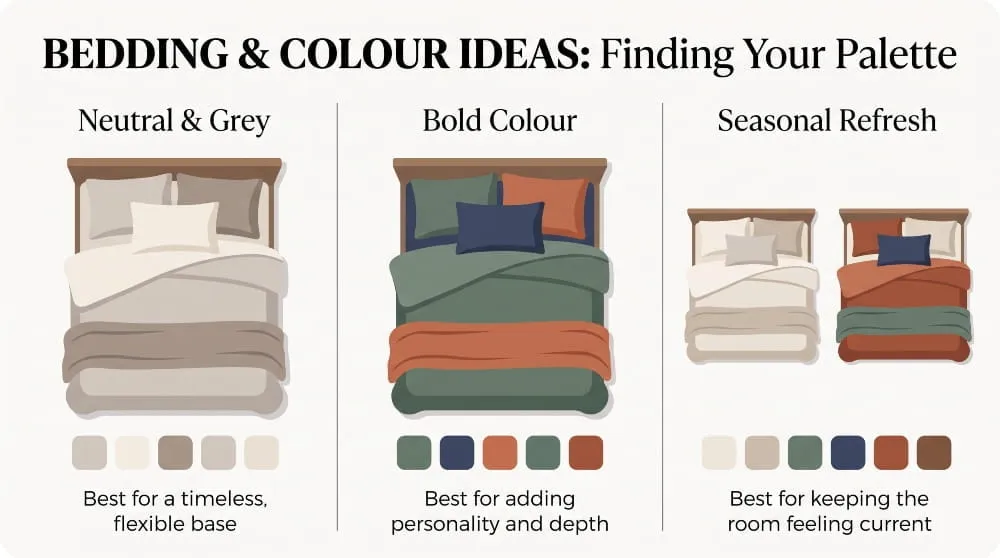
Neutral bedding remains the safest long-term choice because it works with almost any headboard, wall colour, or lighting setup, and it ages well rather than dating quickly. Greige, ivory, and soft taupe tones are particularly strong for 2026, largely because they read as calm rather than cold, and they let texture, waffle weaves, brushed cotton, and bouclé cushions do the visual work instead of colour. Grey bedding specifically pairs well with warmer wood tones, since the coolness of the grey is balanced by the warmth of the frame beneath it; this is one of the few genuinely low-risk combinations in bedroom design, which is exactly why it remains so widely searched.
Colour in the bedroom works best when it’s introduced through bedding and soft furnishings rather than four painted walls, since this gives you room to change your mind each season without repainting. Sage green has held its position as one of the most in-demand bedroom colours for two consecutive years running, valued for the sense of calm and connection to nature it brings to a room, while navy and terracotta have both grown in popularity as UK homeowners look for depth and warmth rather than the brighter, more saturated tones popular a few years ago. Interestingly, colour psychology backs this shift: independent research into bedroom wall colours has found that cooler, muted tones such as soft blues and dusty greens score highest for sleep quality, while bright, high-saturation colours score lowest. Whatever the depth of colour you choose, keeping the accent to the bedding rather than the walls is the safer way to test a bold palette before committing further.
Swapping bedding by season is one of the simplest ways to keep a bedroom feeling intentional year-round without any real cost or commitment. Lighter linen and cotton blends suit spring and summer, particularly in white, sage, or pale clay tones that reflect more light; heavier textures, wool blankets, brushed cotton, deeper jewel or earth tones, carry a room through autumn and winter. This isn’t just an aesthetic exercise: interior designers frequently recommend rotating bedding with the seasons specifically because it’s one of the lowest-effort ways to refresh a bedroom’s mood without repainting or replacing furniture, which matters given how often UK bedrooms actually get a full makeover.
The wall around your bed carries more visual weight than any other surface in the room, simply because it’s the backdrop for wherever your eye lands when you walk in or wake up. Getting it right, through panelling, shelving, art, or lighting, can transform a bedroom without touching the bed itself, which is exactly why it’s one of the most heavily searched bedroom topics in the UK: wall panelling alone now outranks every specific colour or style trend in national search data, and demand for it is still climbing year on year.
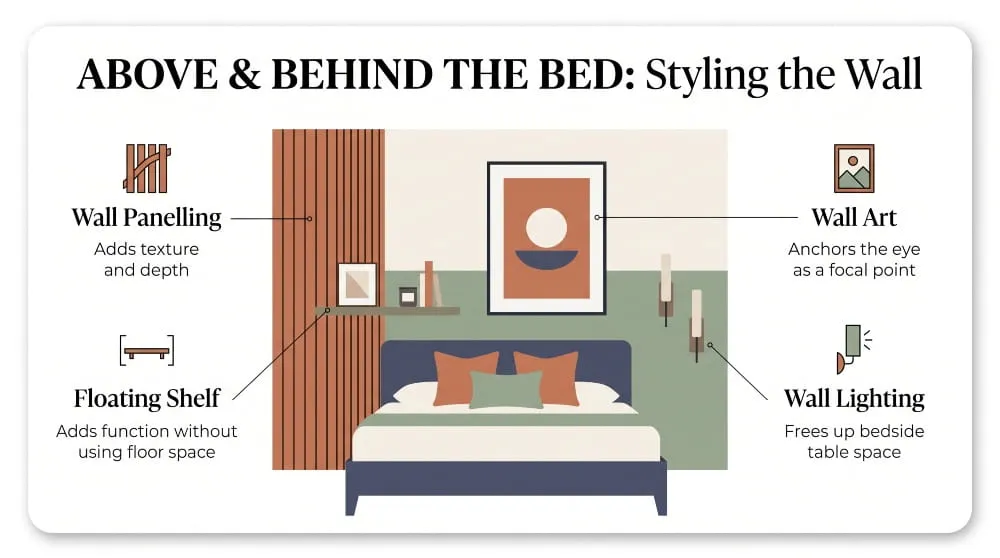
Panelling behind the bed works because it does two jobs at once: it disguises an unremarkable wall and adds architectural detail the room might otherwise lack. Slatted and fluted timber panels remain the most popular styles for bedrooms, specifically, prized for creating a calm, structured backdrop without adding visual clutter. Vertical panelling in particular has the useful side effect of drawing the eye upward, making a room with a lower ceiling feel taller than it is. Shelving above the bed serves a slightly different purpose: rather than framing the wall, it adds function, giving you somewhere for books, a reading lamp, or small decor without needing bedside tables that eat into floor space. The two ideas work well together: panelling for texture, a single floating shelf for practicality, and both suit small bedrooms particularly well, since neither takes up any usable floor area.
Once the wall itself is addressed, art and lighting make the space feel finished rather than simply decorated. A single large-scale print tends to work better above a bed than a cluster of smaller ones, since it reads as a deliberate choice rather than an afterthought, and it should generally sit centred above the headboard rather than off to one side. Lighting matters just as much as the art itself. Wall-mounted sconces or swing-arm lights positioned on either side of the bed free up bedside table space and add a warmer, more layered glow than a single overhead fitting ever can. If you’re working with a bed that has no headboard, this is where the extra attention really pays off: art and lighting effectively take over the headboard’s job of anchoring the eye, so it’s worth choosing both with slightly more intention than you would in a room where the headboard is already doing that work.
Small bedrooms are less about compromise and more about sequencing: get the bed, storage, and layout decisions right in that order, and even a genuinely tight room can feel deliberate rather than cramped. This matters more than ever in the UK, where new-build bedrooms are among the smallest in Western Europe, with many single rooms sitting close to the legal minimum of 6.51 square metres. Working within that kind of footprint calls for a slightly different set of bed ideas than a spacious main bedroom would.
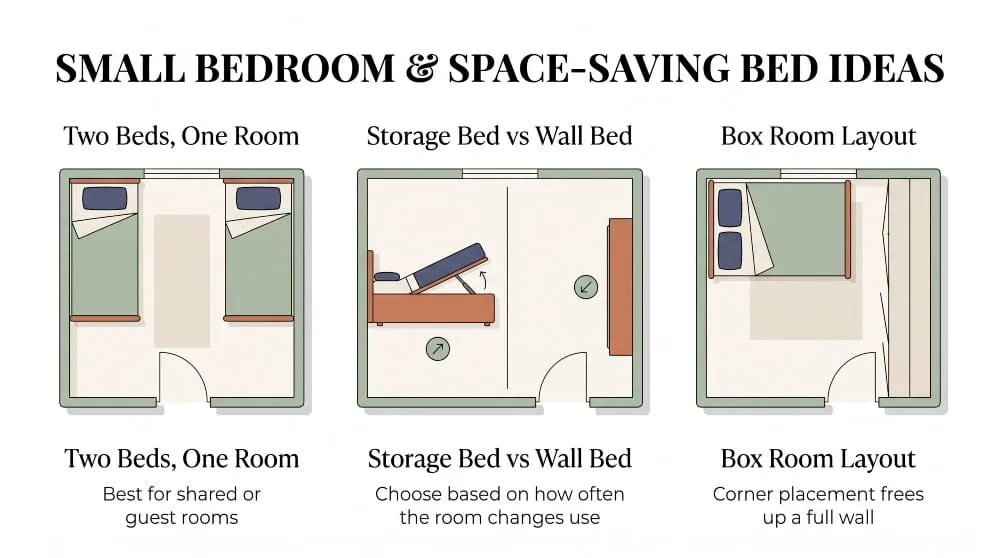
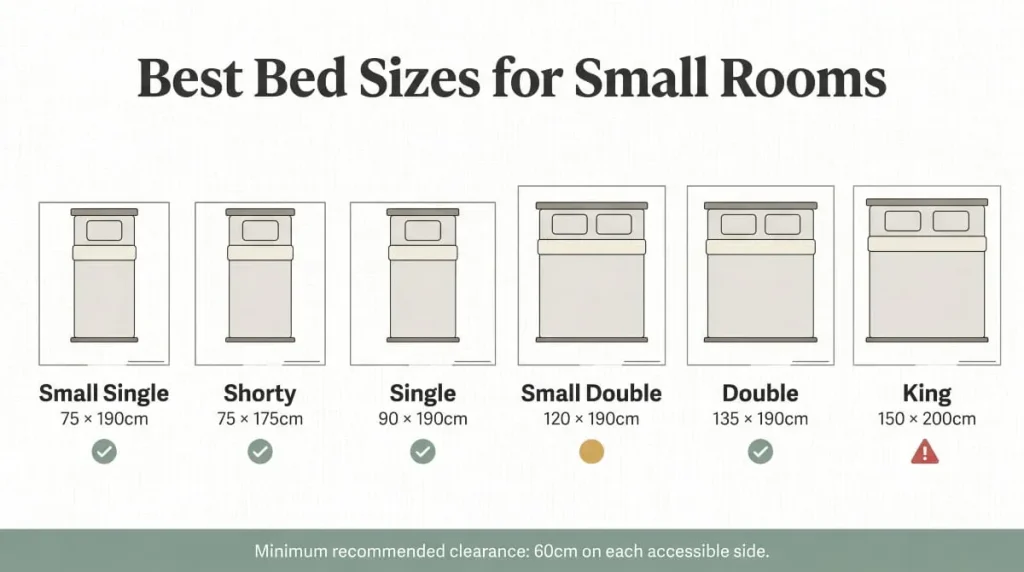
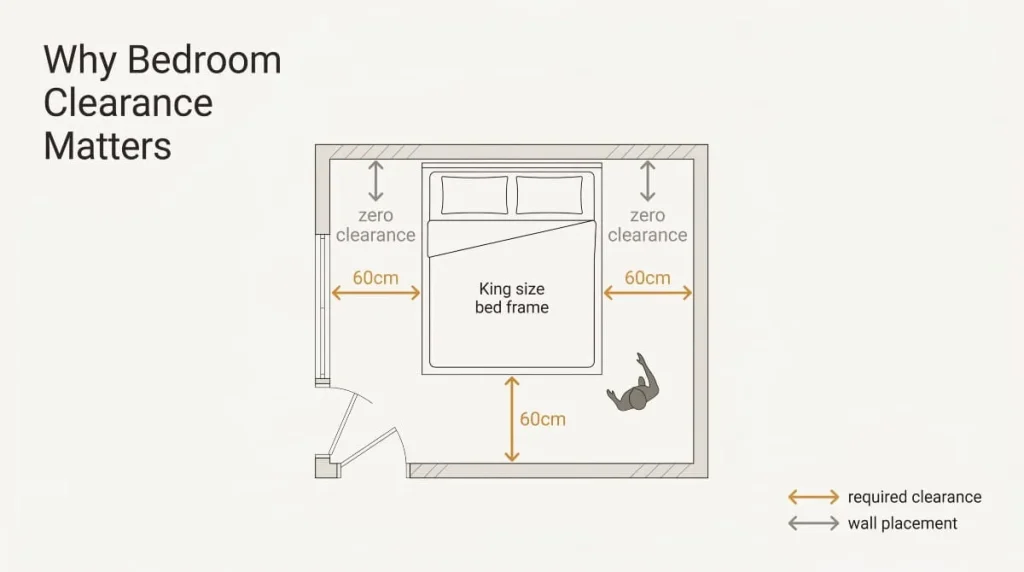
Two beds in one small room is one of the most common layout challenges in UK homes, whether it’s for siblings sharing a room or a guest room that occasionally needs to sleep two. The starting point is almost always the same: work out whether the beds can run parallel along opposite walls, or whether an L-shaped or bunked layout makes better use of the floor. Parallel placement tends to suit rectangular rooms, since it keeps a clear walkway down the centre, while bunk or high-sleeper arrangements free up significant floor space in square or narrower rooms at the cost of ceiling height. Whichever layout you choose, leaving at least 60–70cm of clearance around each bed keeps the room usable day to day rather than just at bedtime.
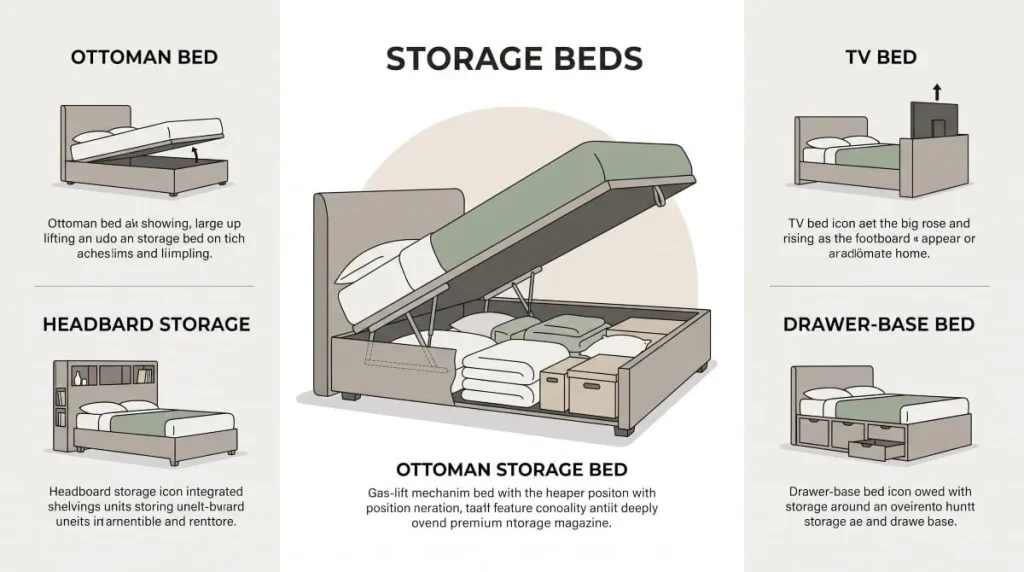
Storage beds and wall beds solve the same underlying problem, a lack of floor space, in fundamentally different ways, and the right choice depends on how often the room needs to flex. A storage bed, such as an ottoman or divan with a gas-lift base, keeps the bed permanently in place while reclaiming the space underneath for bedding, luggage, or out-of-season clothes; it’s the better option for anyone who wants a straightforward bedroom that’s also tidy. A wall bed, which folds up flush against the wall when not in use, goes a step further by reclaiming the floor space the bed itself would normally occupy, making it the stronger choice for a genuinely multi-use room, such as a home office that becomes a guest room. As a general rule, choose storage if the room is always a bedroom, and choose a wall bed if the room is used for something else most of the time.
Box rooms, typically the smallest bedroom in a UK home, often just large enough to legally qualify, need a slightly different approach than simply shrinking a normal bedroom layout. Pushing the bed into a corner rather than centring it against one wall is usually the single biggest space-saver, since it frees up an entire adjacent wall for a narrow wardrobe or desk. Built-in or bespoke furniture that runs floor-to-ceiling makes better use of a box room’s height than freestanding pieces, which tend to leave awkward gaps. And where floor space is at an absolute premium, a bed with integrated storage does double duty that a box room usually can’t afford to lose. It’s rare for a room this size to accommodate a bed, a wardrobe, and a separate chest of drawers as distinct pieces of furniture.
Choosing a bed style isn’t really about picking a trend; it’s about picking the one that matches how you actually want the room to feel, since a style that photographs well but doesn’t suit your daily routine tends not to last. Two styles come up more than any other in UK bedroom searches: clean-lined modern minimalism, and warm, textural rustic or farmhouse looks. They sit at opposite ends of the spectrum, which makes them a useful starting point for narrowing down your own direction.
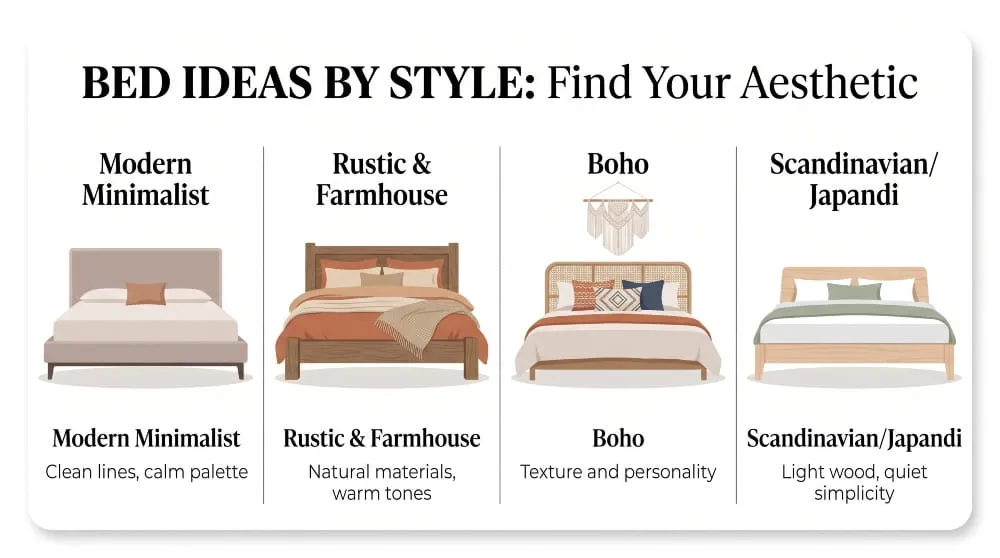
Modern minimalist bedrooms are built around restraint, a low-profile bed, a limited colour palette, and very little visual clutter, so that the few elements in the room can carry real weight. That said, the style has softened noticeably over the past year: rather than the stark, sparse minimalism of a few years ago, 2026’s version leans into what designers are calling “midimalism”, fewer pieces, but each one chosen with more intention, and warmer materials like bouclé and linen replacing hard, cold surfaces. A low platform or upholstered bed frame in a neutral tone remains the anchor of this look, paired with simple, unfussy bedding and one or two considered accent pieces rather than a fully bare room. The result is calm without feeling clinical, which is the balance most people are actually searching for when they type “minimalist bed ideas.”
Rustic and farmhouse bed ideas lean on natural materials, solid or reclaimed wood frames, woven textures, and muted earthy tones to create a bedroom that feels warm, lived-in, and unpretentious. It’s worth knowing that the style is currently in transition: several 2026 design forecasts note that classic farmhouse, particularly the more “shabby chic” barn-door version of it, has started to feel oversaturated, with designers shifting towards a more refined, traditional aesthetic that keeps the warmth but drops some of the overtly rural detailing. That doesn’t mean the underlying look is going away; a wooden bed frame, layered natural-fibre bedding, and warm wood tones still deliver the same cosy, grounded feeling, it just means the strongest rustic bed ideas right now favour a slightly more elevated, less overtly “farmhouse” execution than they might have two or three years ago.
Where you put the bed shapes the whole room more than any single decorating choice, since it determines sightlines, walking space, and how settled the room actually feels. The most consistently recommended starting point, echoed across interior design and feng shui practice alike, is the “commanding position”: placing the bed diagonally opposite the door, against a solid wall, so you can see the entrance without lying directly in line with it. That single principle underpins most of the placement ideas below, regardless of the style or room size you’re working with.
Centring the bed against the main wall is the default for a reason: it works in almost any room shape, keeps access equal on both sides, and gives the headboard a clear, symmetrical backdrop. It’s the better choice whenever the room is wide enough to leave clearance on both sides of the bed, and a couple is sharing it. Corner placement, by contrast, comes into its own in smaller or oddly-shaped rooms, since pushing the bed into a corner frees up an entire wall for storage, a desk, or a wardrobe that a centred bed would otherwise block. The trade-off is access: a corner bed usually means getting in and out from one side only, so it suits a single sleeper, a guest room, or a child’s room better than a shared main bedroom.
Angling a bed diagonally across a corner is a genuinely useful trick when a room’s proportions don’t work with a conventional layout, an awkward alcove, a sloped ceiling, or a door and window positioned so that no clean run of wall remains. It also aligns with the same commanding-position logic used in feng shui, since a diagonal placement naturally keeps the bed facing the door without sitting directly in line with it. The main thing to get right with any unconventional placement is backing: a diagonal bed still needs something solid behind the head, a real wall, a sturdy headboard, or even a well-placed piece of furniture, since a bed left floating without support tends to feel exposed rather than deliberate, however good the angle looks on paper.
The best bed for a room depends entirely on who’s using it and how often, since a bed that works brilliantly for a teenager sharing a small room would be completely wrong for a couple’s main bedroom. Rather than starting with a style you like, it’s worth starting with the person and the room. Teens, guests, and couples all have genuinely different needs, and the right bed idea follows from those, not the other way around.

A teenager’s bedroom has to do more jobs than almost any other room in the house: sleeping, studying, socialising, and storing an ever-growing collection of belongings, often in a room that isn’t much bigger than a box room. This is where space-efficient choices matter most: a bed with built-in storage reclaims space a chest of drawers would otherwise take, and a slightly higher bed frame, or even a mid-sleeper, can free up a genuine desk area underneath. Style-wise, teens’ rooms tend to shift faster than any other bedroom in the house, so it’s worth choosing a bed frame in a neutral tone that can carry a changing colour scheme through bedding and accessories rather than one that’s tied to a specific trend.
Guest rooms occupy an unusual position in UK homes: they’re among the most common spare spaces, yet also among the least used day to day. In fact, recent analysis of Census 2021 data found that nearly seven in ten English households are officially under-occupied, meaning they have at least one bedroom beyond what their household actually needs, which often ends up as an occasional guest room. That infrequency is exactly why flexibility matters more here than in any other bedroom: a well-chosen guest bed should work equally well as a spare room, a home office, or storage the rest of the year, which is why space-saving options like a wall bed, a well-designed sofa bed, or a compact storage divan tend to outperform a permanent, full-size bed frame in this particular room.
A shared bedroom has to balance two people’s preferences rather than one, which usually means prioritising a slightly larger bed size than either person would choose alone, along with equal, symmetrical access on both sides. This is the one room in the house where centred bed placement almost always wins over a corner or space-saving layout, since two people getting in and out of bed daily need clear space on both sides far more than they need the extra floor area a corner placement would free up. Beyond size and placement, the details that matter most in a couple’s bedroom tend to be practical rather than decorative: two bedside tables rather than one, a headboard tall enough to support sitting up comfortably, and enough surface space for two people’s evening routines to coexist without constant negotiation.
Finishing touches are what separate a bed that looks “done” from one that just looks made, and cushions, throws, and layering are the fastest, cheapest way to close that gap. None of it requires new furniture or a repaint; it’s purely about how you arrange what’s already there, which is exactly why these small styling tricks get searched for so often.
Cushions follow one of the most consistently repeated rules in interior design: odd numbers read as more relaxed and visually balanced than even ones, since a symmetrical, even arrangement can start to feel stiff rather than inviting. In practice, that means three, five, or occasionally seven cushions tend to look better layered against a headboard than two or four. However, a simple two-cushion, symmetrical look still works well for anyone who prefers a cleaner, more minimal finish. The layering itself matters as much as the count: start with your largest square cushions at the back, add a medium-sized cushion in front to build depth, and finish with a smaller rectangular or lumbar cushion at the front for a bit of visual interest. One useful shortcut some stylists use is a simple three-part rule: two cushions that echo the duvet colour, two that pick up the sheets, and one or two purely for a pop of pattern or colour, which takes the guesswork out of coordinating a scheme from scratch.
A throw does a slightly different job to a cushion: rather than adding height and layering at the headboard, it adds texture and a sense of “just been styled” at the foot or side of the bed. Folding it into thirds and draping it diagonally across one corner tends to look more considered than laying it flat and square, and a slightly heavier knit or bouclé throw reads as more luxurious than a thin, lightweight one, even at a similar price point. The easiest styling trick of all is simply changing the throw and a couple of cushions with the seasons; it costs very little, takes minutes, and refreshes the whole bed without touching the duvet, the frame, or anything else in the room.
The best bed idea for a small room is one that removes visual bulk rather than adding it, a bed pushed into a corner rather than centred, paired with a storage base that reclaims the space a separate chest of drawers would need. Vertical panelling or a tall, slim headboard also helps, since it draws the eye upward and makes a low-ceilinged or narrow room feel taller than it is.
Dressing a bed without a headboard means letting the wall behind it do the work a headboard normally would, through panelling, a large-scale print, or a floating shelf positioned centrally above where the headboard would sit. Layered bedding and slightly more considered lighting on either side of the bed also help, since there’s no single focal point to carry the eye, so the surrounding elements need a touch more intention.
Most interior designers recommend an odd number of cushions, typically three or five, since odd groupings tend to look more relaxed and visually balanced than even ones. That said, two cushions arranged symmetrically work well for a cleaner, more minimal finish, so the “right” number ultimately comes down to whether you want the bed to feel curated or calm.
The best bed placement is against a solid wall, positioned so you can see the door without lying directly in line with it, a layout designers and feng shui practitioners both refer to as the “commanding position.” In practice, this usually means centring the bed on the main wall in a standard-shaped room, or angling it diagonally across a corner if the room’s proportions or windows don’t allow for a straightforward centred layout.
Swapping bedding, cushions, and a throw is the fastest way to refresh a bed without repainting or replacing furniture. Lighter linens and pale tones for spring and summer; heavier textures and deeper colours for autumn and winter. This kind of seasonal refresh is one of the reasons UK bedrooms are updated more often than most other rooms in the house, typically every 2 to 3 years.