

Bed Frame Dimensions Every UK Size Explained (cm, inches & feet)
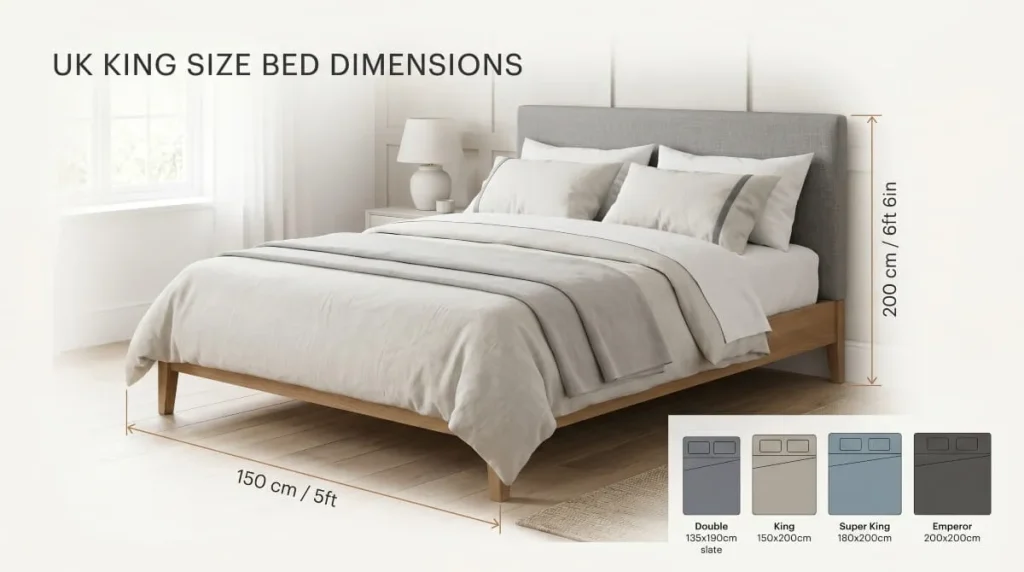
A king size bed frame in the UK measures 150cm wide by 200cm long (5ft × 6ft 6in), that’s the frame’s external footprint, not just…
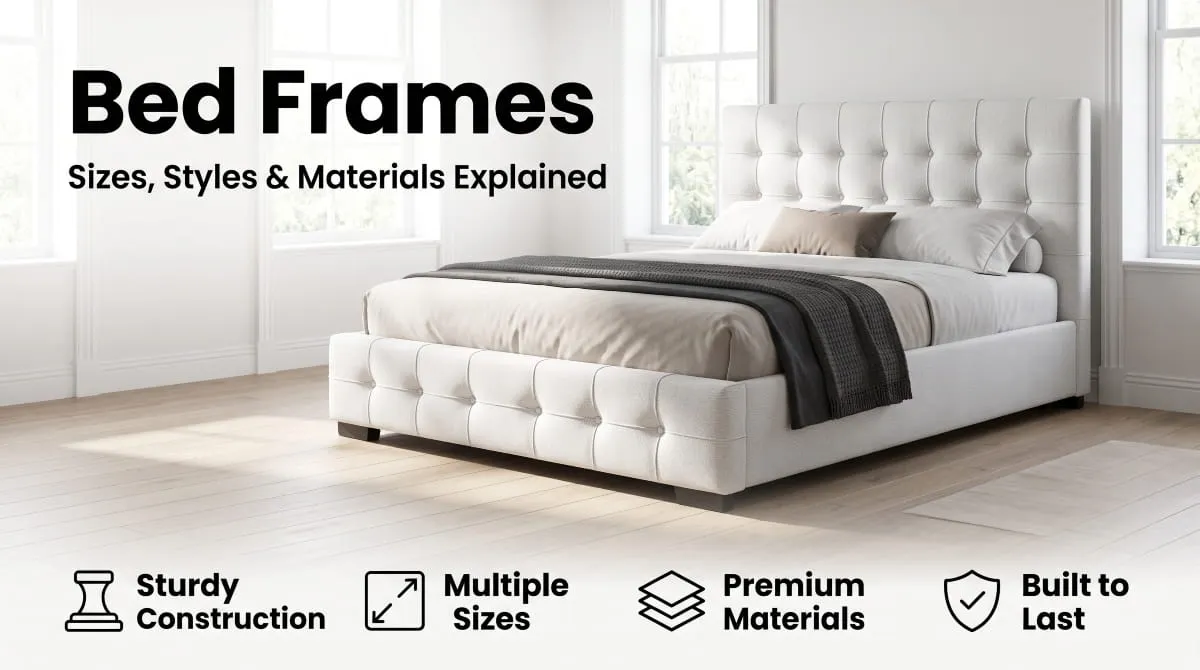
A bed frame is the structural base that supports your mattress and defines the size, height, and style of your bed. Choosing the right one affects everything from how well you sleep to how a room feels day to day. With so many bed frame sizes, styles, and materials on the market, the decision is rarely as simple as picking whatever looks nice in a showroom; it depends on your room dimensions, your mattress type, your budget, and the aesthetic you’re building your bedroom around.
This guide covers everything you need to know before you buy: standard UK bed frame sizes and how to measure for them, the full range of bed frame types from four-poster to ottoman to low-profile designs, the materials and finishes worth considering, and how to avoid common problems like weak joints or a squeaky frame. According to industry sleep research, the average person spends around 26 years of their life in bed, which makes the frame beneath your mattress a far more important investment than most people treat it as.
Every bed frame in this guide is considered through the lens of durability and craftsmanship, the same standard we apply to every bed frame handcrafted in our Yorkshire workshop. If you already know what you’re looking for, you can browse our full range of upholstered bed frames, but if you want to understand your options first, read on.
A bed frame is the freestanding structure that holds your mattress off the floor, providing support, stability, and shape to your bed. Unlike a divan, which combines a solid or upholstered base with built-in storage, a bed frame typically consists of a raised platform or slatted base, side rails, legs, and, in most upholstered designs, a headboard, all engineered to keep the mattress supported and properly ventilated.
Every bed frame is built from a handful of core parts working together. The base is the platform the mattress sits on, usually made from either a solid panel or a series of slats spaced a few centimetres apart to allow airflow beneath the mattress. The slats themselves are typically sprung or rigid wooden strips that flex slightly under weight, helping to reduce pressure points and extend mattress life. Legs raise the frame off the ground, and their height determines how “low” or “high” a bed frame sits, a detail that matters both for the room’s visual proportion and for practical things like robot vacuum clearance or ease of getting in and out of bed. The headboard, where fitted, attaches to the frame at the top and adds both back support for sitting up and a strong style statement, whether that’s a tall wingback design or a low-profile panel.
The strength of a bed frame comes down to its joinery, not just its materials. Metal brackets connect the side rails to the headboard and footboard; bolts secure these brackets under tension; and a centre brace or rail, often paired with a middle leg, supports the base against sagging, particularly on double, king, and super king sizes, where the span is widest. Frames that skip a centre support or use lightweight brackets are the most common cause of a squeaky or unstable bed over time, so this is one area worth paying attention to regardless of how the frame looks on the surface.
Technically, a mattress can sit directly on the floor, but a bed frame does more than lift it off the ground. It improves airflow beneath the mattress, reducing moisture buildup and helping prevent mould and mildew over time. It also protects the mattress from dust, pests, and daily wear, keeps bedding off the floor, and gives a room a finished, intentional look rather than a makeshift one. For anyone investing in a quality mattress, pairing it with a properly built frame is generally what protects that investment and keeps the mattress performing as intended for longer.
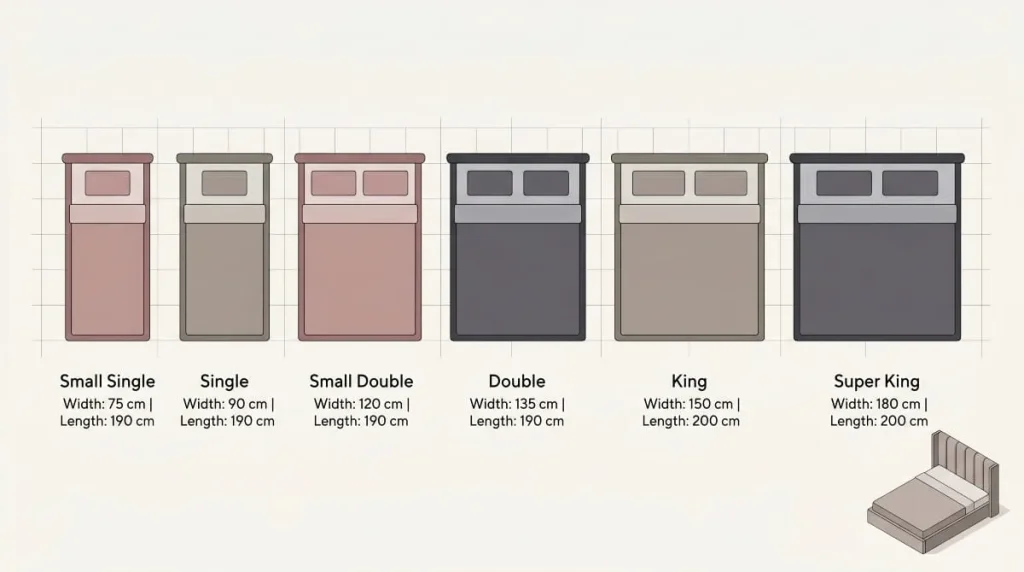
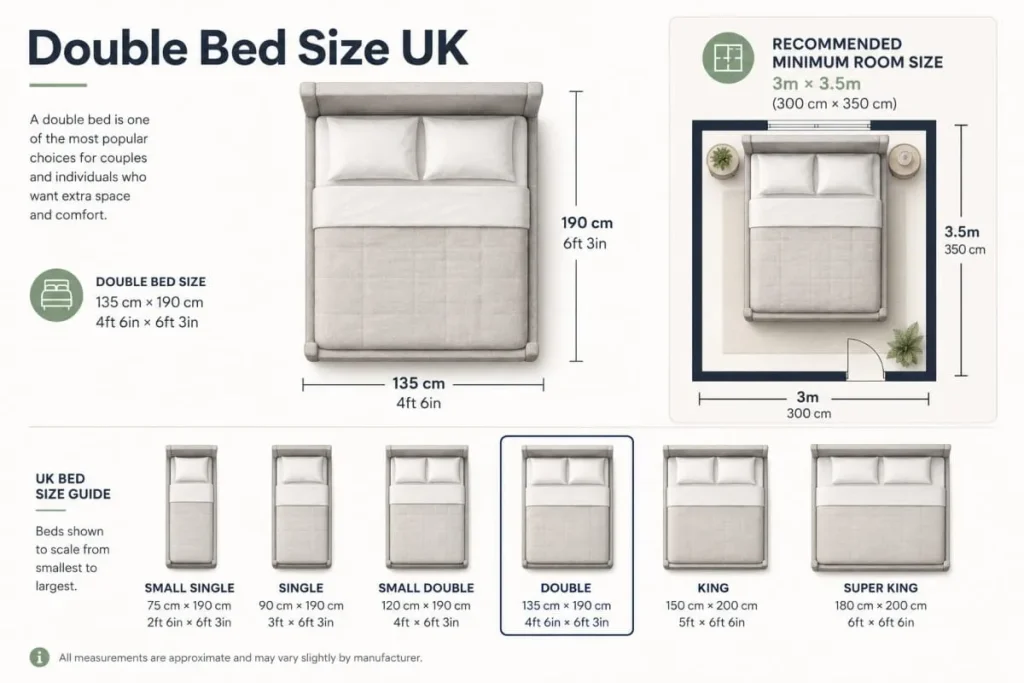
UK bed frame sizes range from a 90cm single up to a 200cm super king, and choosing the right one comes down to room dimensions, how many people are sleeping in the bed, and how much clearance you want around the edges. Bed frame sizing in the UK follows a standard set of measurements. However, the naming and centimetre conversions still catch a lot of people out, especially when shopping across different retailers.
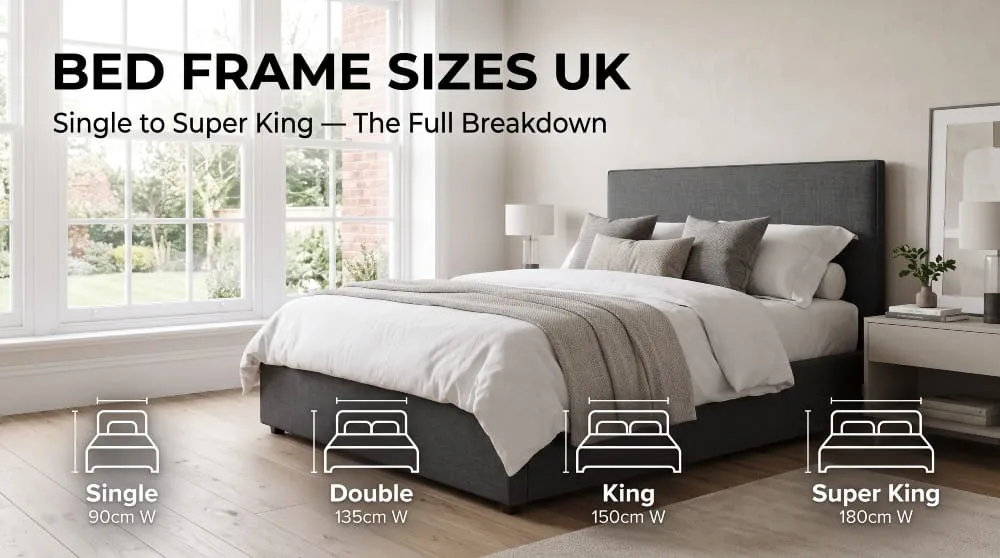
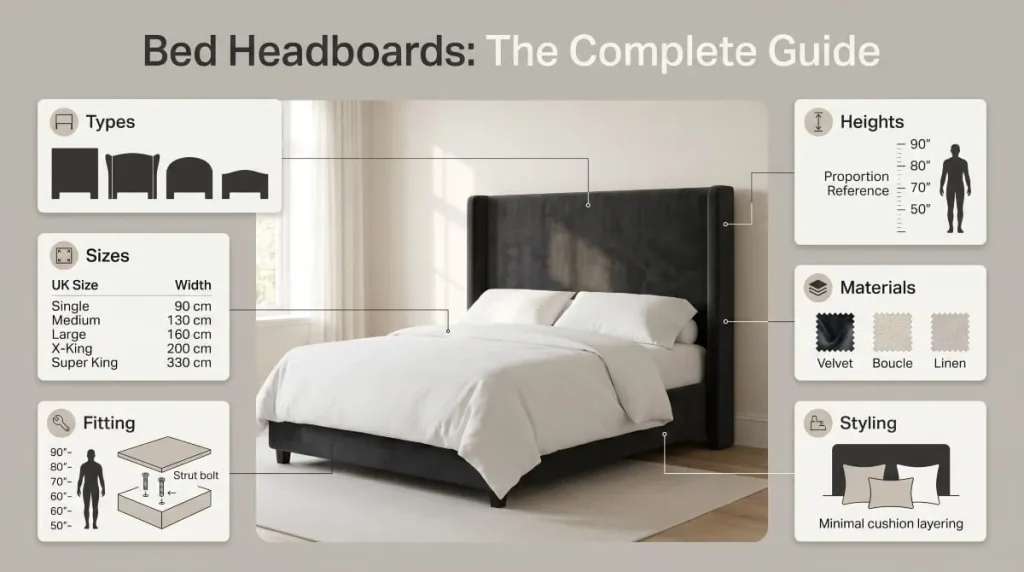
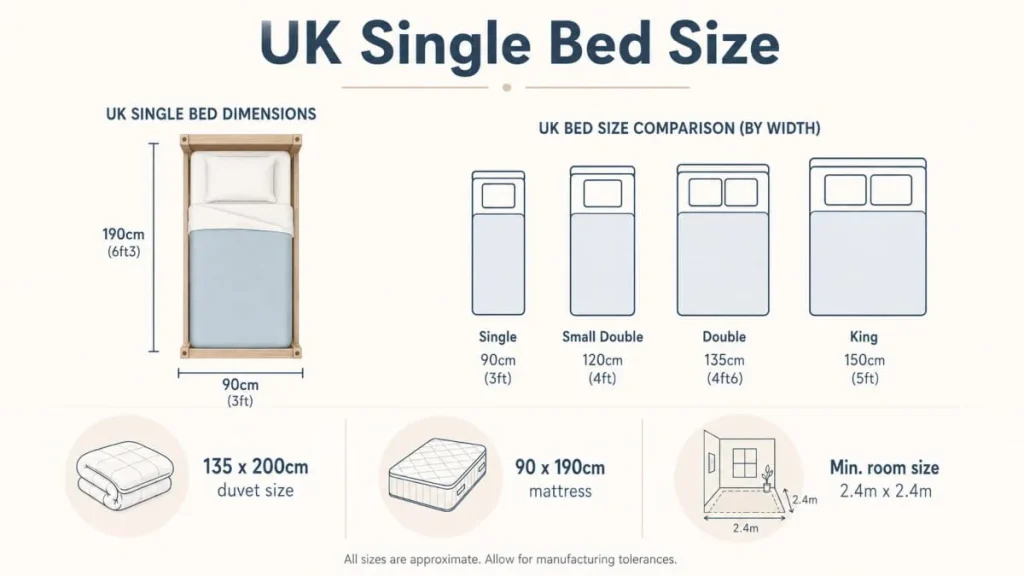
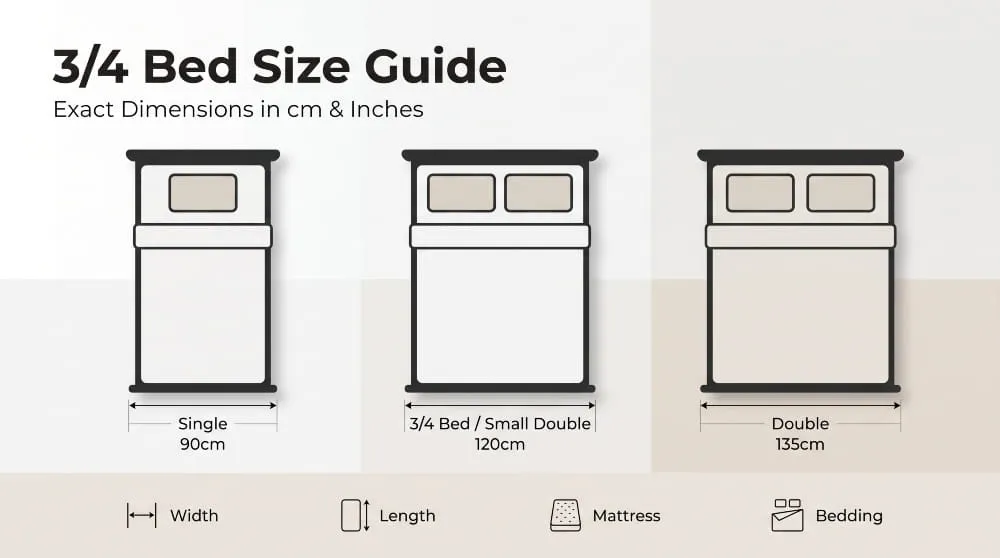
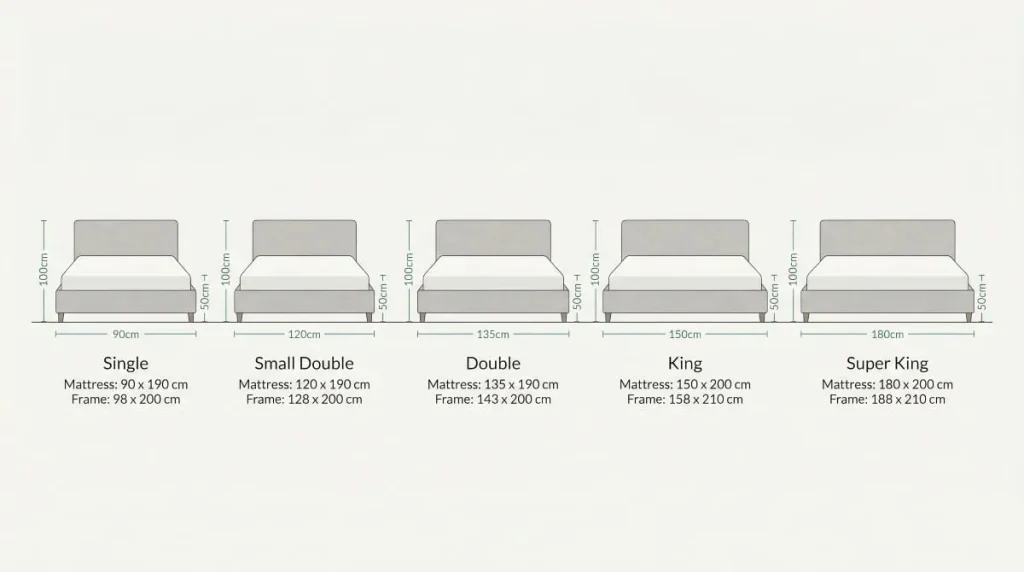
The UK works with five core mattress and bed frame sizes. A Single measures 90 x 190cm and suits a child’s room, guest room, or compact single-occupancy space. A Small Double, sometimes called a four-foot bed, measures 120 x 190cm and works well for solo sleepers who want extra room or for smaller box rooms that can’t accommodate a full double. The Double is the most common bed size in UK homes, at 135 x 190cm, offering enough width for two people in a standard-sized bedroom. The King size measures 150 x 200cm, giving couples significantly more shoulder room. In contrast, the Super King, at 180 x 200cm, is the largest standard option and typically requires a bedroom of at least 3.6m x 3.6m to accommodate comfortably alongside other furniture. Industry data consistently shows the double and king are the two best-selling bed frame sizes in the UK, together accounting for the majority of bed frame purchases each year.
Beyond the standard five, two less common sizes come up regularly in bed frame searches. An emperor bed frame is oversized beyond super king, typically 200 x 200cm, and is aimed at buyers who want maximum sleeping space. It is often in a primary bedroom built specifically to house it. This is a niche but growing category as buyers prioritise space and comfort over standard proportions. A 3/4 bed frame, also called a three-quarter bed, generally refers to sizes that sit between a single and a double, most often matching what’s now labelled as small double at 120cm wide. The “3/4” terminology is older and less standardised, so it’s worth checking the exact centimetre measurement rather than relying on the name alone when comparing frames.
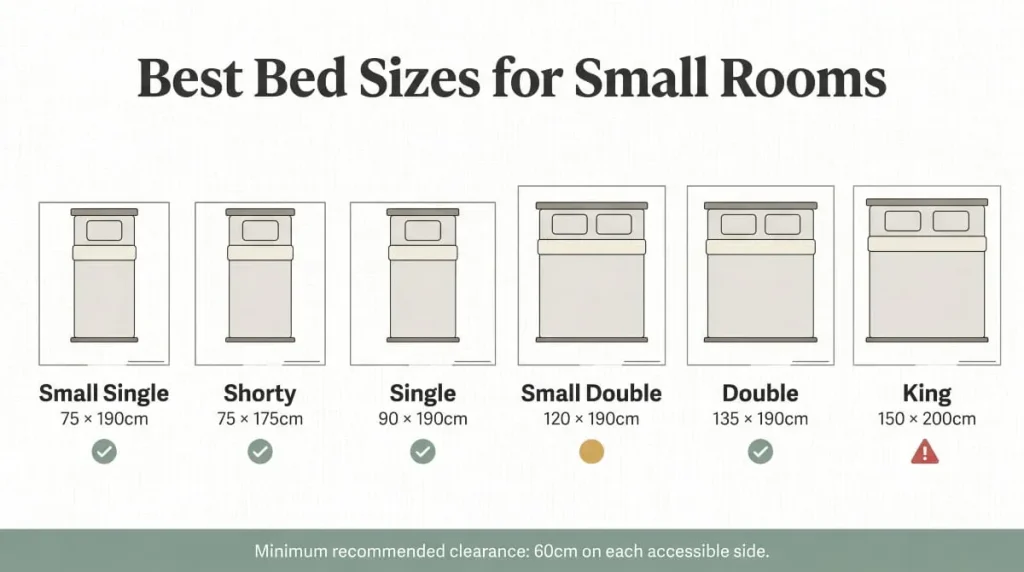
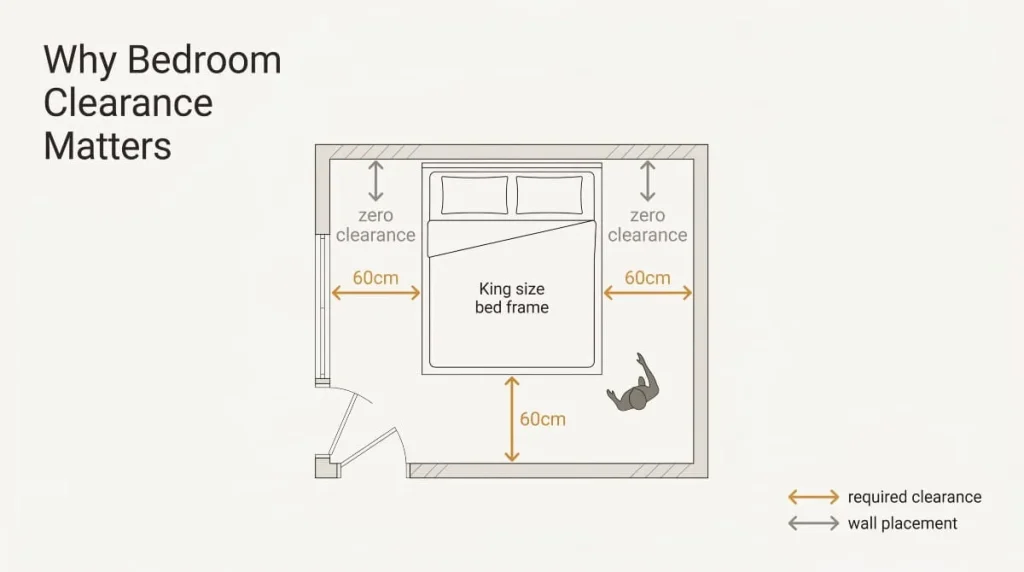
Getting the size right starts with measuring the room, not the bed. As a baseline, leave at least 60- 70 cm of clearance on each accessible side of the bed for walking space, and a similar allowance at the foot of the bed if there’s a wardrobe or chest of drawers facing it. Measure wall to wall in both directions, then subtract the footprint of any other furniture that has to share the room, such as wardrobes, bedside tables, and chests of drawers, before deciding on a bed frame size. It’s also worth measuring doorways, staircases, and landings in advance, since larger frames, such as king and super-king sizes, can be awkward to manoeuvre into the upstairs bedrooms of older UK properties.
For box rooms and compact bedrooms, a Single or Small Double frame is usually the practical choice, but the frame style matters just as much as the size in a small space. Low-profile and floating bed frame designs make a compact room feel less crowded by reducing visual bulk. In contrast, Ottoman storage frames help compensate for limited space elsewhere in the room by replacing the need for a separate chest of drawers. Choosing a frame with slim, tapered legs rather than a heavy boxed base can also make a small bedroom feel more open, even at the same physical footprint.
Bed frames fall into several distinct types, each defined by its structure and silhouette rather than just its material or colour, and understanding these categories makes it far easier to narrow down a style before shopping. From dramatic four-poster frames to space-saving ottoman designs, the type of frame you choose shapes both the room’s character and how the bed functions day-to-day.

A four-posterfour-poster bed frame features a post at each corner, traditionally connected by a canopy rail. It remains one of the most recognisable statement styles in bedroom furniture, well suited to larger rooms with higher ceilings, where the frame has room to breathe. A sleigh bed frame takes its shape from the curved, scrolled head and footboards of traditional French sleigh design, giving a room a softer, more classic silhouette without the height and drama of a full four-poster. Both styles work best as a room’s focal point rather than blending into the background, so they suit bedrooms where the bed itself is the main feature.
Wingback bed frames take their name from wingback armchairs, with a tall headboard that curves or angles forward at each side, creating a cocooned, enclosed feel that’s particularly popular in upholstered fabric designs. Panelled bed frames use a structured headboard divided into vertical or geometric sections, giving a more tailored, architectural look that suits contemporary and transitional bedrooms alike. Both styles are usually available with adjustable headboard heights, which lets buyers scale the visual impact up or down depending on ceiling height and room proportions.
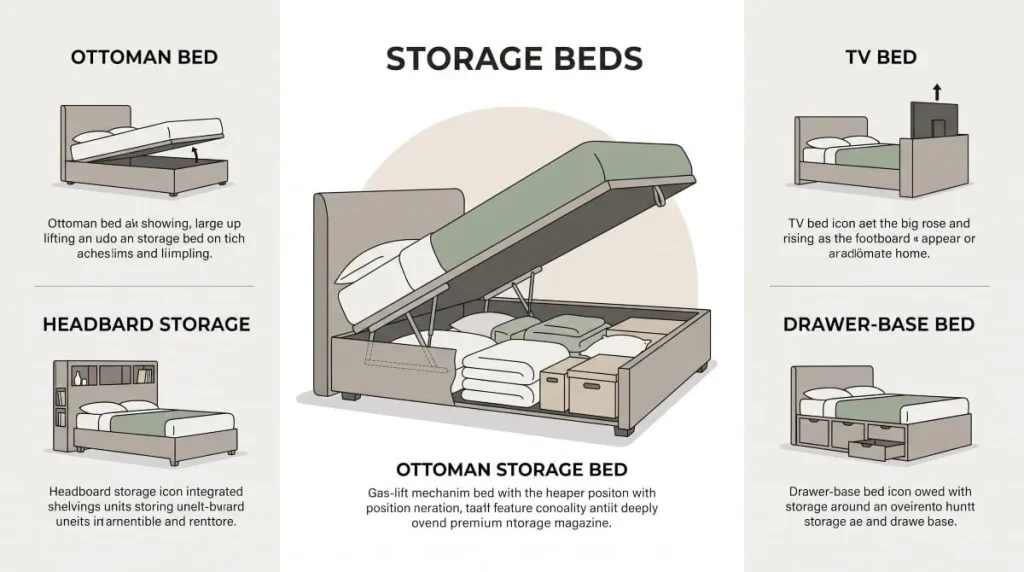
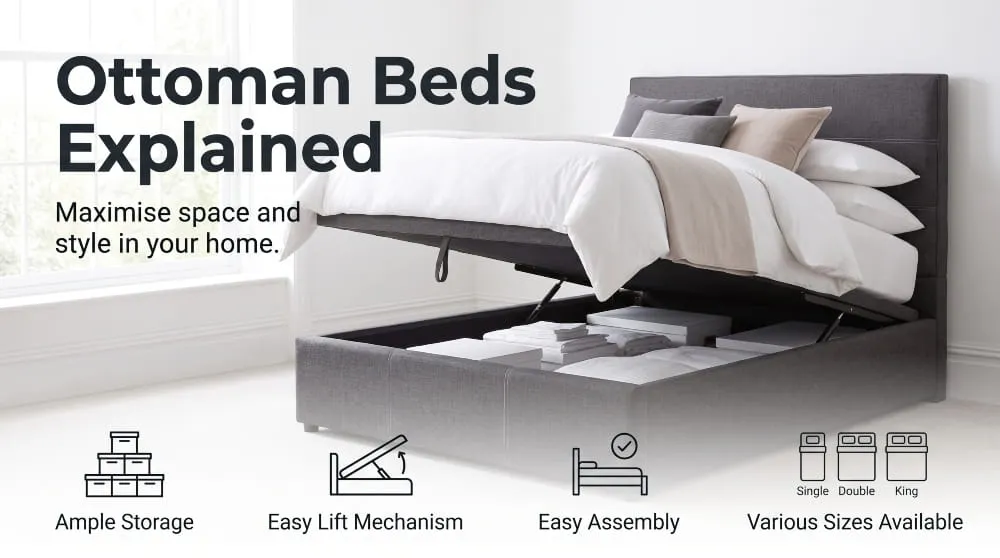
Ottoman bed frames combine a standard frame silhouette with a gas-lift storage base, allowing the entire mattress platform to lift and reveal storage space underneath, a practical solution for bedrooms without room for a wardrobe extension or chest of drawers. Ambassador bed frames are a specific style within the upholstered category, typically featuring a fuller, more substantial headboard shape designed to anchor a room. Because ottoman storage adds genuine functional value without increasing a room’s footprint, it’s become one of the fastest-growing categories in UK bed frame sales, particularly among buyers in smaller homes and flats.
A daybed frame is built for dual use as both a bed and a seating area, usually with raised sides that mimic a sofa silhouette, making it a practical choice for guest rooms, studies, or studio flats. A box frame is a simple, fully upholstered rectangular base without a distinct headboard shape, often used as a minimalist alternative or paired with a separate headboard. A bookcase bed frame integrates shelving directly into the headboard structure, combining storage and display space with the bed itself, a useful option for smaller rooms where a separate bookcase isn’t practical.
Floating bed frames use a recessed or hidden base. Hence, the mattress platform appears to hover slightly above the floor, creating a strong visual effect that works particularly well in modern, minimalist bedrooms. Low-to-floor bed frames sit close to the ground with minimal leg height, giving a room a more grounded, spacious feel and often suiting lower ceilings where a taller frame would feel cramped. Both styles reduce the visual bulk of the bed within a room, which is part of why they’ve become popular choices for smaller or more contemporary bedroom designs.
High-rise or elevated bed frames sit at the opposite end of the spectrum, using taller legs to lift the mattress well above floor level. This raised height makes getting in and out of bed easier for some users, creates extra visible under-bed storage space for boxes, and can also better suit a room’s proportions when the bed needs a bit more visual presence. Elevated frames are worth checking against total height requirements, particularly for rooms with lower ceilings or sloped roof lines, where an added headboard height on top of a raised base can bring the total closer to the ceiling than expected.
Bed frame styles are often defined as much by their era of inspiration as their physical structure, and choosing a style is really about deciding what character you want the bedroom to have. From ornate Victorian detailing to pared-back Scandinavian simplicity, each aesthetic pulls from a distinct design tradition that shapes everything from headboard shape to leg finish.
Victorian-style bed frames draw on 19th-century design, typically featuring taller, more ornate headboards with curved lines, decorative detailing, and a sense of formality suited to traditional or period-style homes. Gothic bed frames push this further with dramatic silhouettes, deeper button detailing, and darker tones, drawing on medieval and Gothic Revival architecture for a bolder, more theatrical look. Both styles tend to work best in bedrooms with higher ceilings and more traditional surrounding furniture, where the frame can sit comfortably alongside similarly weighted decor rather than looking out of place in a minimalist setting.
Scandinavian bed frames favour clean lines, light or neutral tones, and functional simplicity, reflecting the broader Scandi design philosophy of understated, liveable interiors. Mid-century modern bed frames take cues from 1950s and 60s furniture design, typically featuring tapered wooden legs, low-profile silhouettes, and a slightly more architectural headboard shape than Scandinavian designs. Both styles suit contemporary UK homes particularly well, since they tend to work across a range of room sizes without overwhelming smaller spaces the way more ornate styles can.
A Chesterfield bed frame borrows its signature deep-buttoned upholstery from the classic Chesterfield sofa, giving a headboard a distinctly tailored, textured look that pairs well with rich fabric choices like velvet. Rococo-style frames lean into more elaborate, curved detailing inspired by 18th-century French design, while antique-style bed frames more broadly reference period furniture through aged finishes, carved details, or traditional silhouettes without committing to one specific era. These styles suit bedrooms built around a more layered, collected interior look, where the bed frame acts as a statement piece rather than a neutral backdrop.
Industrial-style bed frames draw on raw, utilitarian materials and simple, structural silhouettes, often favouring darker tones and minimal ornamentation to fit within loft-style or exposed-brick interiors. Boho bed frames take a more relaxed, eclectic approach, often incorporating natural materials, textured fabrics, or slightly irregular shapes that suit a layered, personality-driven bedroom rather than a matched furniture set. Both styles have grown in popularity as UK buyers move away from strictly matched bedroom sets toward more individually curated interiors, where the bed frame is chosen to reflect a specific aesthetic rather than default to a standard showroom look.
The material a bed frame is made from affects its durability, comfort, maintenance, and overall style, and it’s one of the biggest factors separating a frame that lasts for decades from one that needs replacing within a few years. Upholstered, wooden, natural fibre, and metal frames each bring a different balance of warmth, texture, and practicality to a bedroom.
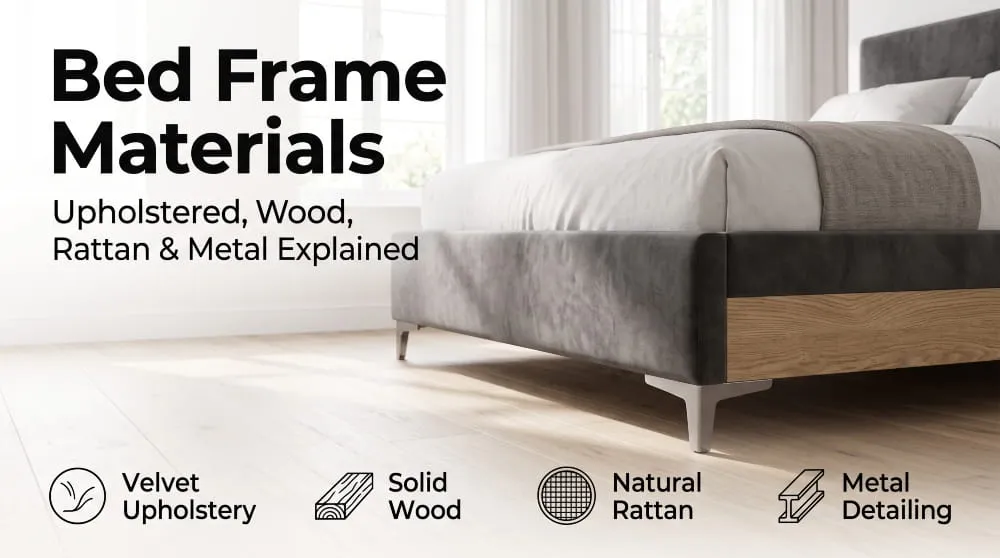
Upholstered bed frames feature a fabric-wrapped headboard and base, offering a softer, more tactile feel than wood or metal and typically providing better comfort when sitting up in bed. Velvet is one of the most popular upholstery choices in the UK market, prized for its depth of colour and soft texture. However, it also tends to show marks more easily than tougher weaves like linen or boucle, so it suits households prepared for slightly more maintenance. A well-upholstered frame relies heavily on the quality of the internal padding and frame construction beneath the fabric, which is why cheaper upholstered frames often lose their shape faster than well-built ones. The fabric is really just the finish, not the structure.
Wooden bed frames remain a durable, classic choice, with different timbers offering distinct looks and price points. Pine is a lighter, more affordable softwood that suits casual or Scandinavian-style bedrooms, while ash offers a similar light tone with slightly greater hardness and durability. Walnut and mahogany sit at the premium end, prized for their rich, dark tones and strength, making them well-suited to more traditional or formal bedroom designs. At the same time, teak brings a warmer mid-tone and naturally high resistance to wear, historically valued for its durability in furniture-making. Solid wood frames generally outlast engineered wood or veneer alternatives, though they typically come at a higher price point that reflects the cost of the raw material.
Rattan, wicker, and bamboo bed frames bring a natural, textured look to a bedroom and are often associated with coastal, boho, or relaxed interior styles. Rattan and wicker are both woven from natural fibres and share a similar visual language, typically featuring an open, textured headboard weave that adds visual interest without heavy visual weight. Bamboo frames tend to be lighter still and are valued as a fast-growing, more sustainable material compared to hardwood, which has made them increasingly popular among buyers prioritising eco-conscious furniture. These materials generally suit warmer, lighter-toned bedrooms rather than darker or more formal interiors, where their natural texture can feel out of place.
Metal bed frames in chrome, gold, silver, or brass finishes bring a sleeker, more contemporary edge and are often used for the frame structure, legs, or decorative trim rather than the entire headboard. Chrome and silver finishes suit modern, minimalist bedrooms with a cool colour palette, while gold and brass tones add warmth and tend to pair well with richer fabric choices like velvet or boucle upholstery. Metal detailing is increasingly used as an accent alongside upholstered or wooden frames, tapered brass legs on a velvet headboard, for example, rather than as the sole material, giving a frame a more tailored, considered look without committing to an entirely metal structure.
The colour and fabric of a bed frame set the tone for the entire bedroom, and getting this choice right often matters more than the frame’s shape or size for everyday visual impact. Neutral tones offer flexibility and longevity, bold colours create a statement focal point, and fabric detailing adds texture that changes how a frame reads in different lighting.
Cream, ivory, taupe, and mink remain the most consistently popular bed frame colours in the UK, largely because they’re easy to style against changing bedding, wall colours, and decor over time. A cream or ivory bed frame reflects light well, which makes it a strong choice for smaller or darker bedrooms that benefit from a brighter, more open feel. Taupe and mink sit slightly warmer and deeper, offering a softer alternative to pure grey that still reads as neutral enough to suit almost any interior style. Because neutral frames rarely date the way bolder colours can, they’re also the safer choice for buyers thinking about resale value or long-term flexibility in how a room is decorated.
Navy, teal, burnt orange, and red bed frames make a deliberate statement, anchoring a room’s colour scheme rather than blending into it. Navy is the most versatile of the bold shades, pairing well with both warm metallics like brass and cooler tones like silver, which makes it a popular middle ground for buyers who want colour without committing to something more saturated. Teal and burnt orange lean into a richer, more characterful palette suited to bedrooms built around a specific design direction, while red is the boldest option of the group, typically reserved for bedrooms where the frame is meant to be the clear centrepiece rather than one element among many. Bold-coloured frames generally suit velvet or boucle upholstery best, since the depth of these fabrics tends to carry saturated colour more convincingly than flatter weaves.
Beyond colour, the texture and detailing of a fabric headboard change how a bed frame feels in a room, even when the base colour is the same. Scalloped headboards use a wavy, rounded edge detail that softens the overall silhouette and adds a slightly more decorative, feminine touch. Buttoned detailing, most associated with Chesterfield-style frames, creates a deep, tailored texture through evenly spaced tufting, giving a headboard more visual depth and a tactile, upholstered look. Striped fabric is the least common of the three but offers a more graphic, directional pattern that suits contemporary bedrooms looking for something beyond a plain block colour. These details are largely a matter of personal taste. Still, they’re worth viewing in person or, where possible, via detailed product imagery, since texture is one of the hardest qualities to judge accurately from a small thumbnail image online.
Finding a good-quality bed frame on a budget comes down to knowing which features actually affect durability and which ones are purely cosmetic, so money goes toward construction rather than surface finish. A well-built affordable bed frame will outlast a poorly constructed expensive one, which makes understanding the underlying build quality more useful than shopping by price point alone.
A good-quality bed frame comes down to a handful of structural fundamentals rather than price or brand name. Solid joinery, metal brackets and bolts rather than glued or stapled connections, is the single biggest factor in how long a frame lasts, since these are the points that bear the most repeated stress over years of daily use. A centre support rail and middle leg matter just as much, particularly on double, king, and super king frames, where an unsupported centre span is the most common cause of sagging over time. Beyond the frame itself, upholstered designs also depend on the density of the foam or padding beneath the fabric, since thin padding tends to flatten and lose shape within a year or two. In contrast, denser foam holds its structure for considerably longer. None of these details are especially visible in a product photo, which is why checking a retailer’s specifications and warranty terms tells you more about build quality than the image does.
A squeaky or unstable bed frame is almost always a symptom of loose joinery rather than a fault with the frame’s design, and it’s usually preventable with the right build and setup. Wood-on-wood or wood-on-metal contact points are the most common source of noise, particularly where slats sit against a frame rail without any cushioning between them, so frames with rubberised slat caps or firmly bolted connections tend to stay quieter for longer. Loose bolts are the other major cause, and checking and re-tightening them every few months, particularly in the first year, when a new frame settles under regular use, prevents most squeaking before it starts. Weakness typically comes down to the same centre-support issue mentioned above: a frame without a middle leg on larger sizes is more likely to develop movement and noise over time, regardless of how solid the outer frame feels when new.
Bed frames built for heavier adults or higher weight capacities typically use thicker-gauge steel or hardwood in the frame and slats, along with additional centre and cross supports beyond those of a standard frame. Weight ratings vary significantly between manufacturers, so it’s worth checking a specific frame’s stated maximum load capacity rather than assuming all frames within a size category are built to the same standard. Frames marketed specifically as heavy-duty or reinforced generally use a higher slat count with reduced slat spacing, which distributes weight more evenly across the base and reduces pressure on any single point of the frame. This detail matters more for long-term durability than most buyers realise when comparing options primarily on appearance.
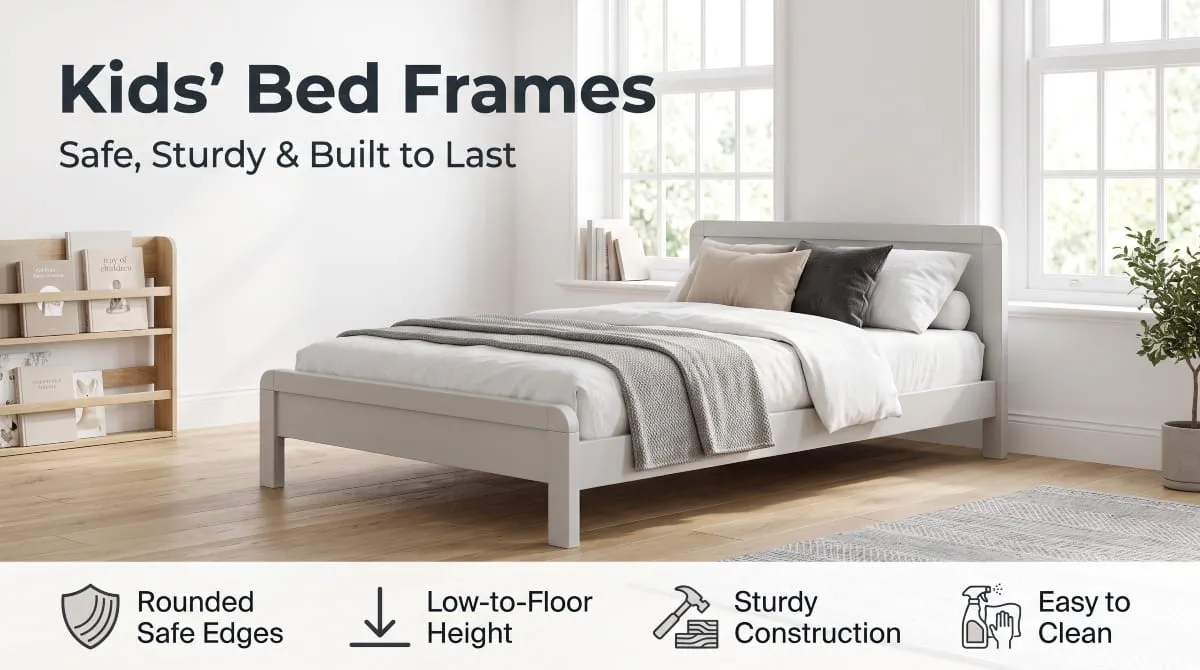
A kids’ bed frame needs to prioritise safety and durability over style, since it’s likely to face more daily wear from jumping, climbing, and general rough use than an adult bed. Rounded edges and corners reduce the risk of injury, while a lower overall height makes it easier and safer for a child to get in and out independently. Sturdy joinery matters even more here than in adult frames, since children’s beds tend to absorb more repeated impact, and a frame with a solid centre support will hold up far better over years of use than a lightweight budget option. Themed or character-style frames, such as princess-style designs, are popular for younger children. Still, it’s worth checking that decorative elements don’t compromise the structural basics, since a well-built plain frame will always outlast a decorative but poorly constructed one.
A bed frame is a raised structure with legs, typically allowing airflow beneath the mattress and offering exposed under-bed space. At the same time, a divan is a solid, upholstered base that sits directly on the floor, often with built-in storage drawers or a lift-up ottoman mechanism. The core difference comes down to structure and function: a bed frame generally works with a wider range of headboard styles and offers a more visually open, elevated look, while a divan prioritises storage and a lower, more compact silhouette. Divans tend to suit buyers who need the extra storage space a drawer or ottoman base provides, while bed frames suit buyers prioritising airflow, style flexibility, and a more traditional bed silhouette.
An inflatable or air bed can be paired with a frame designed specifically to raise it off the floor, which prevents punctures from contact with the ground and makes the bed easier to get in and out of, similar to a standard mattress setup. These frames are generally intended for temporary, guest, or camping use rather than as a long-term bed frame solution, since inflatable mattresses don’t offer the same durability or support as a sprung or foam mattress over regular nightly use. For anyone using an air bed regularly rather than occasionally, transitioning to a standard mattress and bed frame setup will generally provide better long-term comfort and support.
Most bed frames arrive flat-packed and are assembled by connecting the headboard, side rails, footboard (where included), and centre support with the supplied bolts and brackets, then adding slats across the base. The general order is to build the frame’s perimeter first, headboard and rails, then footboard if there is one, followed by the centre support rail and leg, and finally the slats, which typically rest in pre-fitted caps or clips along the side rails. Assembly time varies with frame complexity and size, with larger frames like king and super king taking noticeably longer due to the additional bolts, slats, and centre support required. It’s generally recommended to have a second person available to lift and align the headboard and rails during assembly.
An upholstered bed frame can be reupholstered rather than replaced once the fabric shows significant wear, provided the underlying frame and padding are still structurally sound. This typically involves removing the existing fabric, checking the foam or padding beneath, and re-covering with new material, either as a DIY project or through a professional upholsterer. Wooden bed frames can similarly be repainted or refinished to update their look without replacing the frame entirely, which is often the more cost-effective option when the joinery itself is still solid. In both cases, the decision to restore rather than replace comes down to the condition of the frame’s structure. Cosmetic wear is generally worth fixing, but a frame with loose joints, sagging support, or persistent squeaking is usually better replaced than refreshed.
The most common UK bed frame sizes are double (135 x 190cm) and king (150 x 200cm), which together account for the majority of bed frame sales in the UK. Other standard sizes include single (90 x 190cm), small double (120 x 190cm), and super king (180 x 200cm), with emperor sizes available for buyers wanting something larger still.
A bed frame is a raised structure on legs that allows airflow beneath the mattress, while a divan is a solid, upholstered base that sits directly on the floor, typically with built-in storage. Bed frames generally offer more headboard and style flexibility, while divans prioritise storage capacity and a lower, more compact profile.
Squeaking is almost always caused by loose bolts or wood-on-wood contact points, so start by tightening every bolt and bracket, particularly around the centre support and slats. Adding felt or rubberised caps between the slats and the frame rail, especially in the first year while a new frame settles under regular use, helps prevent most noise before it becomes a persistent issue.
Upholstered bed frames offer better comfort for sitting up in bed and a softer, more tactile finish than wood or metal frames, but their long-term value depends heavily on build quality rather than on fabric alone. A well-constructed upholstered frame with dense foam padding and solid joinery will hold its shape and support for years. At the same time, a cheaply built one can flatten and loosen within a couple of seasons regardless of how good the fabric looks initially.
Assembly time depends on frame size and complexity: standard single or double frames typically take under an hour with two people. In contrast, larger king and super king frames, with additional bolts, slats, and centre supports, generally take longer. Having a second person to help lift and align the headboard and rails makes the process noticeably faster and reduces the risk of misaligned brackets.
Browse our full range of handcrafted upholstered bed frames, built in our Yorkshire workshop with a 3-year warranty and a 30-night trial on every order.