+Guide+2026+|+Exact+Dimensions+in+cm,+Inches+&+Feet)
+Guide+2026+|+Exact+Dimensions+in+cm,+Inches+&+Feet&description=&image=https://stylebeds.co.uk/wp-content/uploads/2026/07/Single-Bed-Size-1024x576.webp)
Bed Frame Dimensions Every UK Size Explained (cm, inches & feet)
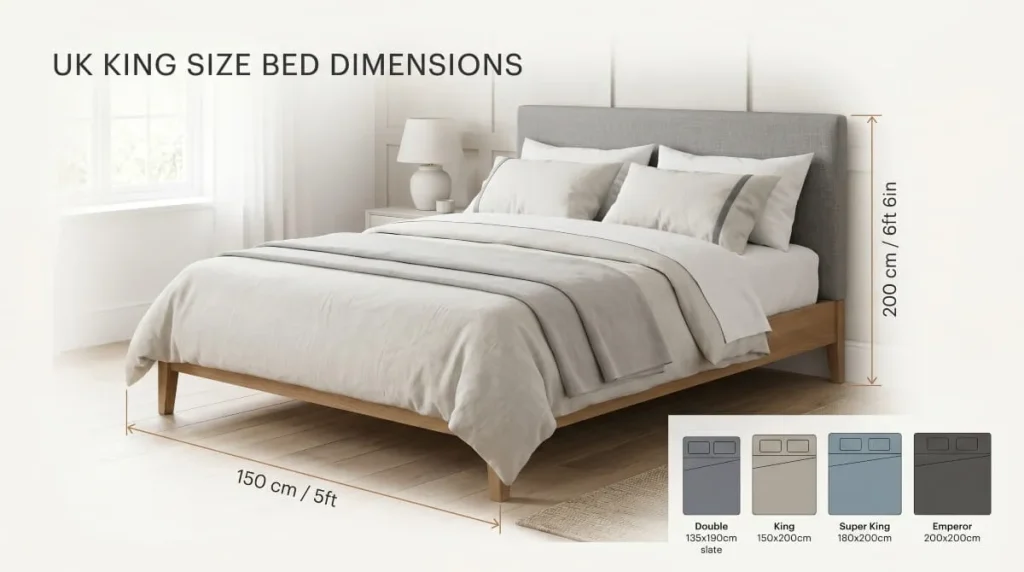
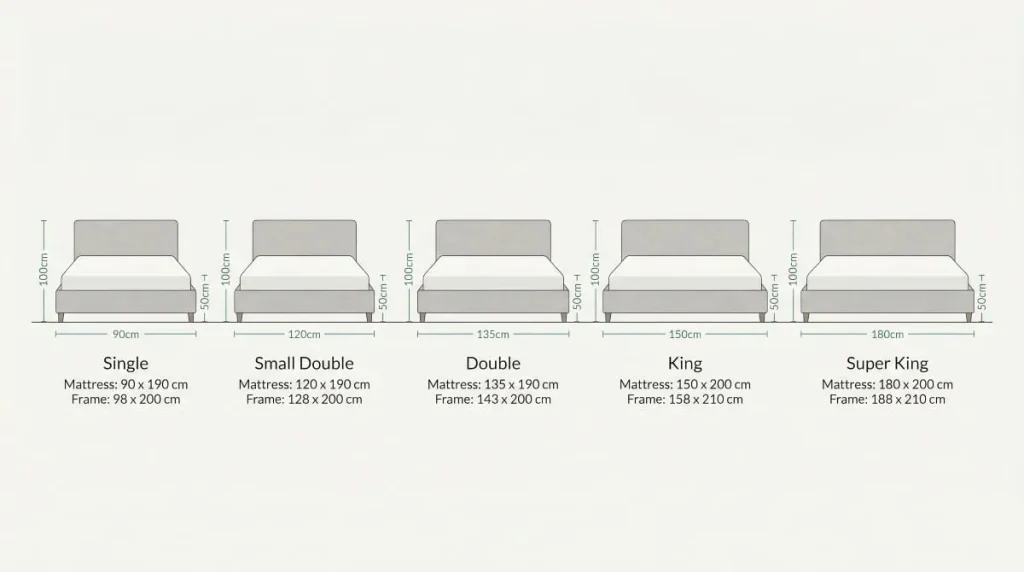
A king size bed frame in the UK measures 150cm wide by 200cm long (5ft × 6ft 6in), that’s the frame’s external footprint, not just…
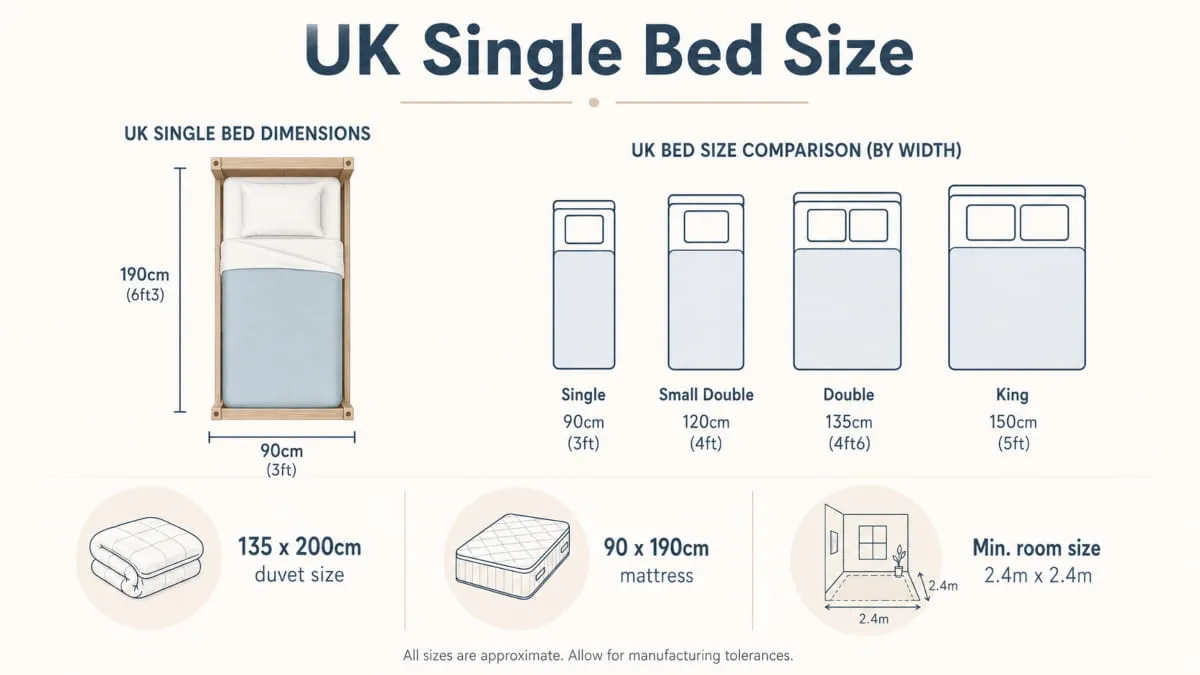
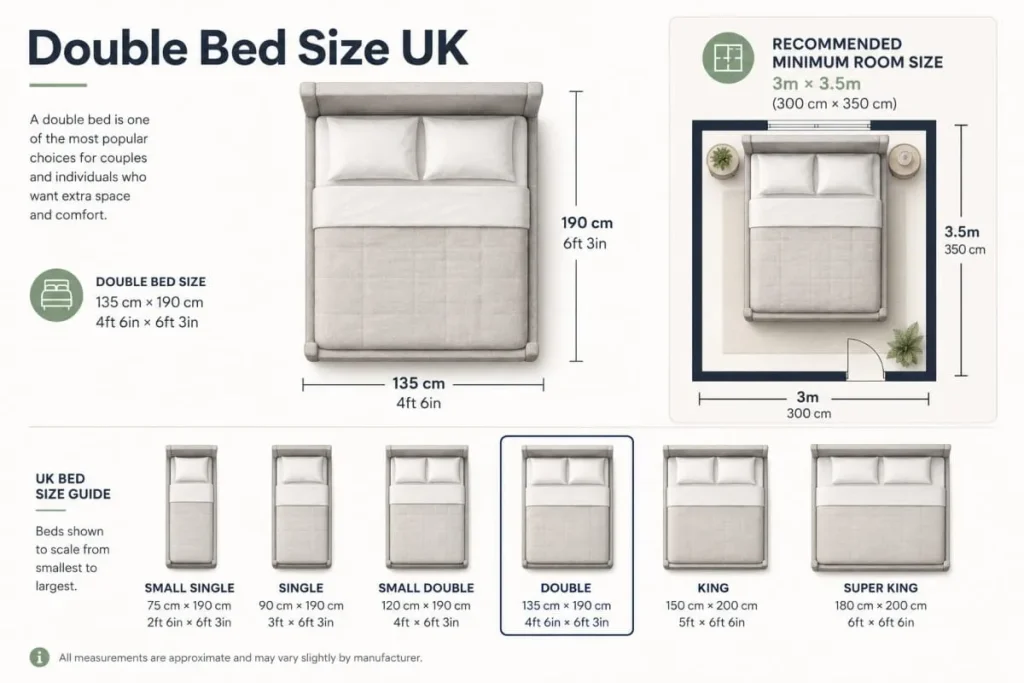
The standard UK single bed size is 90cm x 190cm (3ft x 6 ft 3 in), making it the most compact of the four standard UK bed sizes and the go-to choice for children’s rooms, guest bedrooms, and box rooms. This single bed size has remained the UK’s benchmark since British Standard bedding sizes were formalised, which is why single duvets, sheets, and mattress protectors sold across the UK are all cut to fit this exact 90 x 190cm frame.
Whether you’re measuring up a small bedroom, ordering bedding, or comparing a single against a small double before you buy, this guide covers every dimension you need, in cm, inches, feet, and mm, along with how a single compares to every other UK bed size.
A standard UK single bed measures 90cm wide by 190cm long, the fixed benchmark that every single mattress, duvet, and fitted sheet sold in the UK is manufactured to fit. Some single bed frames extend the sleeping surface to 200cm to comfortably suit taller adults, so it’s worth checking the exact frame length before you buy, but 90 x 190cm remains the standard you’ll see quoted across nearly every UK retailer.
In centimetres, a UK single bed is 90cm wide and 190cm long. This is the measurement used on nearly every UK product listing, so it’s the figure to check first when comparing bed frames, mattresses, or bedding across different retailers.
Converted to imperial, a single bed is 3ft wide and 6 ft 3 in long, often rounded to 3ft x 6 ft 4 in in older listings. The “3ft bed” is such a common shorthand in the UK furniture trade that “single” and “3ft” are used interchangeably on most product pages, including headboards and mattresses.
For precise measuring, a single bed is 900mm x 1900mm, or 0.9m x 1.9m. This level of detail is most useful when you’re planning exact room layouts, checking doorway clearances, or confirming a frame will fit alongside other furniture with only centimetres to spare.
A standard single bed mattress measures 90cm x 190cm, matching the UK single bed frame exactly so that duvets, mattress protectors, and fitted sheets sized for a single fit without gapping or overhang. Some mattresses are made 200cm long rather than 190cm, so it’s worth confirming the exact length against your frame before ordering bedding.
The standard single mattress is 90cm wide and 190cm long (3ft x 6ft3), the same footprint as the frame it sits on. This consistency is what makes single bedding universally sized across UK retailers; a 90 x 190cm single duvet or fitted sheet will fit any standard single mattress, regardless of brand.
A mattress and its frame aren’t always the same size, even though they’re both labeled “single.” Frames are typically designed with a few millimetres of tolerance around the mattress to allow it to sit snugly without rubbing against the frame’s inner edge, and some frames are built to accommodate a 200 cm mattress for extra legroom rather than the standard 190cm. Always check the manufacturer’s stated internal frame dimensions against your mattress length before buying, particularly if you’re pairing a mattress with a frame from a different retailer.
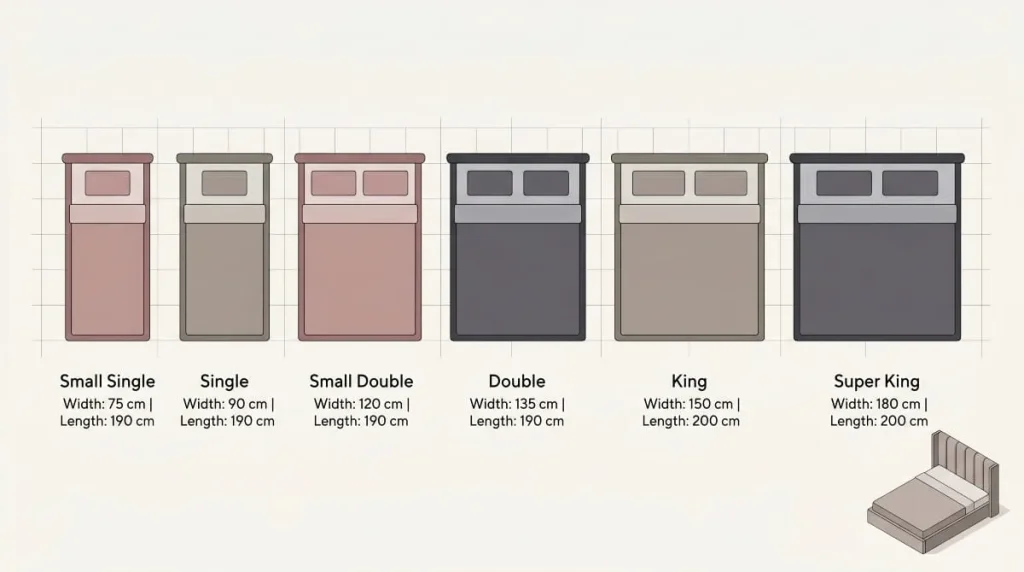
A small single mattress measures 75cm x 190cm (2ft6 x 6ft3), 15cm narrower than a standard single. It’s a popular choice for box rooms, bunk beds, and children’s bedrooms where every centimetre of floor space counts, though bedding sold as “single” won’t fit it; small single mattresses need their own 2ft6-specific sheets and duvet covers.
A standard single bed frame measures 90cm x 190cm to match the mattress it holds, though the overall footprint is usually a little larger once you account for the frame’s outer edges and headboard. Storage and ottoman single frames add depth to the lifting mechanism but keep the same 90cm sleeping width, so they’ll fit the same room layout as a standard single.
The internal frame size on a standard single is built to 90 x 190cm, matching the mattress precisely so there’s no shifting or gapping at the sides. The external footprint, including the frame’s side rails and base, typically adds a few centimetres in both directions, which matters if you’re measuring a tight box room or checking clearance around a doorway.
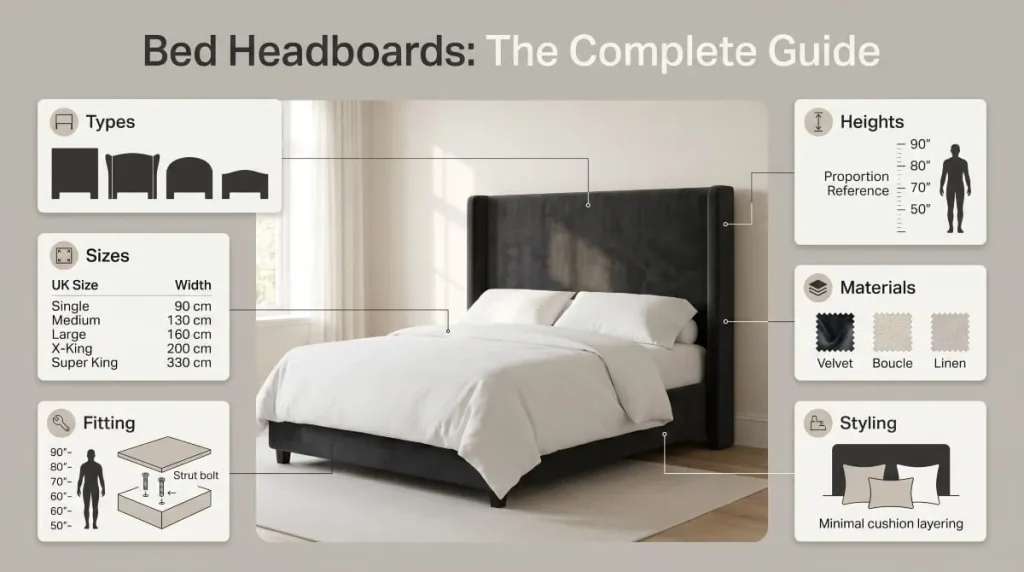
Single bed frames are commonly available with headboard heights ranging from 50 to 90 inches, giving a noticeably different look depending on whether you want a low-profile frame for a small room or a statement headboard for a more traditional bedroom feel. Taller headboards don’t affect the sleeping area at all; the 90cm x 190cm mattress size stays constant regardless of which height you choose.
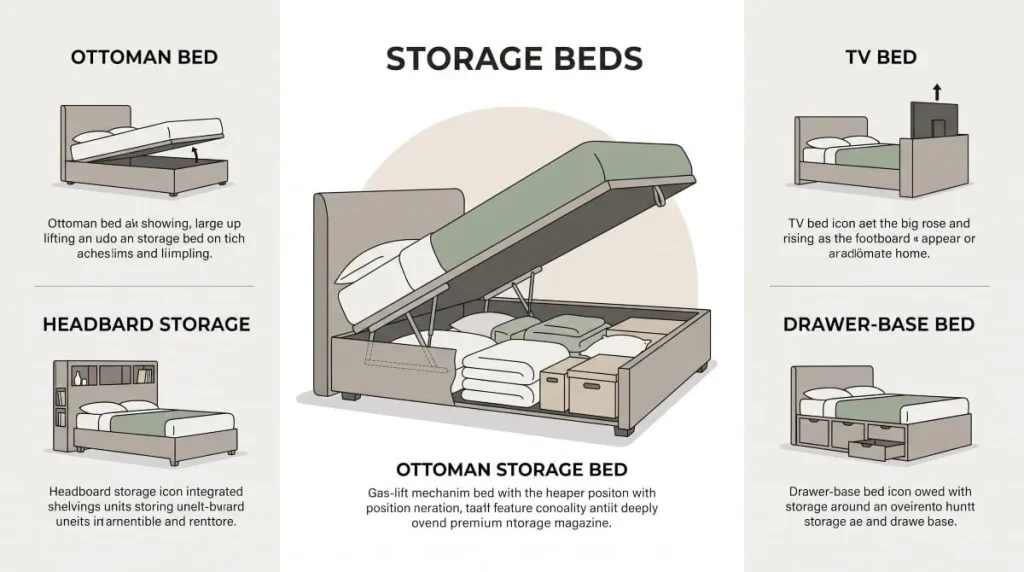
An ottoman or storage single bed frame keeps the same 90cm x 190cm sleeping surface as a standard single, with the extra size coming from the gas-lift base beneath the mattress rather than the bed’s footprint. This makes ottoman singles a practical choice for the space-conscious buyer, since built-in under-bed storage adds capacity without taking up any additional bedroom floor space, a genuine advantage in the smaller rooms, box rooms, and guest bedrooms a single bed is typically bought for.
A single duvet measures 135cm x 200cm, giving enough overhang on a 90cm-wide mattress to tuck in comfortably on both sides without leaving cold spots. This sizing is standard across UK bedding retailers, so a single duvet cover, quilt, or throw bought from any brand will fit a UK single bed.
The standard single duvet size is 135cm x 200cm, roughly 45cm wider than the mattress itself to allow for proper tuck-in on both sides of the bed. TOG rating matters as much as size: a 4.5 TOG duvet suits summer use, 10.5 TOG works for spring and autumn, and a 13.5 TOG or higher is best for winter, with many UK shoppers opting for a 10.5 TOG as an all-year compromise.
A single quilt is typically the same size as a single duvet, at around 135cm x 200cm. However, decorative throws are usually smaller, often 150cm x 200cm, since they’re designed to drape over the top third of the bed rather than fully cover it. If you’re buying a throw purely for styling rather than warmth, checking it against your headboard height matters more than matching it exactly to mattress width.
A fitted sheet for a single bed needs to match the mattress at 90cm x 190cm, with most sheets including 25–30cm of wall depth to accommodate deeper mattresses without pulling loose at the corners. Standard housewife pillowcases measure around 50cm x 75cm and fit a single bed’s usual one or two pillows, making them universally compatible with any single mattress depth.
Not every bed is the same size; the standard UK single is 90cm (3ft) wide, but small single, wide single, and long single variants adjust the width or length to suit different rooms and sleepers. Knowing which variant you’re looking at matters because bedding, mattress protectors, and even some frames aren’t interchangeable between them.
A small single measures 75cm x 190cm (2ft6 x 6ft3), 15cm narrower than the standard single’s 90cm width. That difference is enough to fit a small single into a box room or bunk bed configuration where a standard single wouldn’t leave enough walking space. Still, it also means small single mattresses need their own dedicated bedding rather than sheets sized for a standard single.
A wide single typically extends the standard 90cm width out to around 100–120cm, giving extra shoulder room for taller or larger sleepers without moving up to a small double. A long single, meanwhile, keeps the 90cm width but stretches the length to 200cm or more, which suits taller teenagers and adults who find the standard 190cm length too short, a genuinely common issue given the average UK adult male height now exceeds 175cm.
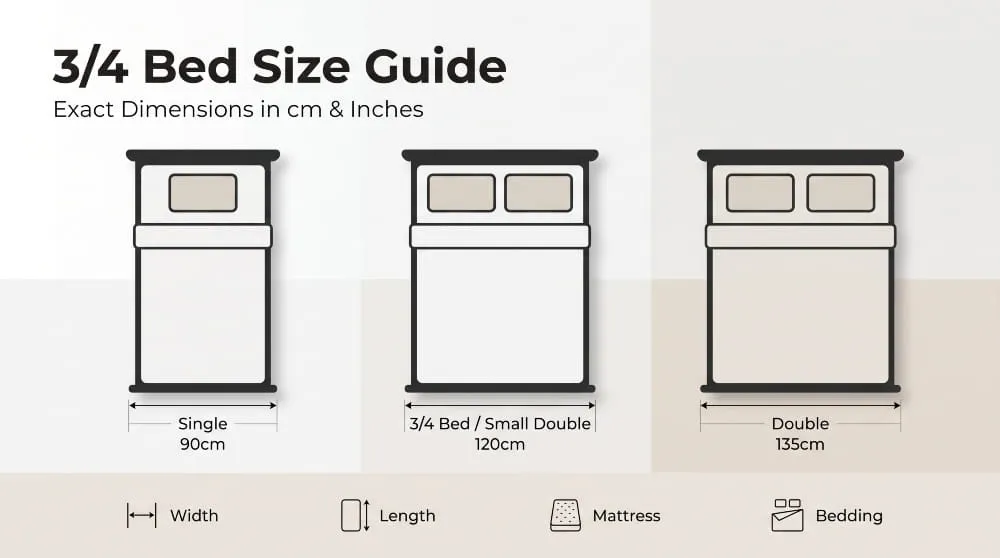
A three-quarter bed sits between a single and a double at roughly 120cm x 190cm, giving noticeably more width than a standard single’s 90cm without the full footprint of a double. It’s a less common size in UK retail than the single, small double, or double, so buyers considering one should expect a smaller selection of ready-made bedding and mattress options than with the standard sizes.
A single bed’s 90cm x 190cm footprint is the smallest of the standard UK sizes, which makes it the natural comparison point whenever shoppers are deciding between a single, a small double, or pushing two singles together for a larger sleeping area. Understanding how these sizes stack up against each other makes it much easier to choose the right bed for a specific room or sleeping arrangement.
Two single beds pushed together create a sleeping area roughly 180cm x 190cm, close to a UK king-size at 150cm x 200cm but not an exact match in either dimension. It’s a popular flexible solution for guest rooms or growing families, since the beds can be separated back into two singles whenever needed. However, the join down the middle means it won’t feel identical to a single king-size mattress.
A small double measures 120cm x 190cm, 30cm wider than a standard single, and is generally the better choice once a room can spare the extra floor space for a single adult who wants more room to move at night. A single remains the stronger option for children’s rooms, guest rooms, or genuinely tight box rooms, where that extra 30cm of width would eat into space needed for wardrobes, desks, or walking room, as reflected in the fact that single beds are the most commonly bought size for UK rooms under 3 metres wide.
A super single sits between a UK standard single and a small double, generally measuring around 107cm x 190cm, though the exact dimensions vary by manufacturer since it isn’t one of the four standardised UK bed sizes. It’s a less common option in UK retail, so buyers should always check a specific retailer’s measurements rather than assuming super single bedding or mattresses are interchangeable between brands.
Each step up adds meaningful width for shared sleeping comfort. At the same time, length stays fairly consistent from single through double before extending further at king and super king, worth factoring in if you’re upgrading from a single and want more legroom as well as width.
A single bed suits any room where floor space is limited or where the sleeper is a child, teenager, or single adult who doesn’t need the extra width of a double, which is why it remains the standard choice for kids’ rooms, guest rooms, and box rooms across the UK. Its 90cm width is compact enough to leave room for other furniture without making the space feel cramped.
A single bed’s 90cm x 190cm size gives children and teenagers a genuine step up from a toddler bed while still leaving enough floor space for a desk, wardrobe, or play area in a typical UK bedroom. Many parents choose an ottoman or a single-frame storage unit specifically for kids’ rooms, since under-bed storage helps manage toys, bedding, and clothing without adding extra furniture that would eat up more space.
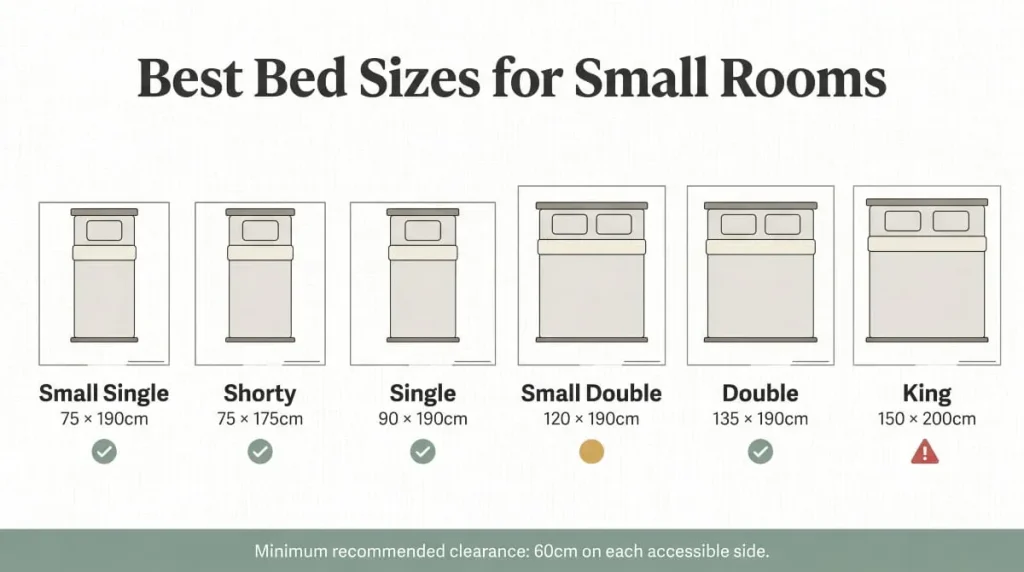
For guest rooms and box rooms, a single bed’s compact footprint is often the only size that fits comfortably alongside a wardrobe and bedside table, particularly in older UK homes where box rooms can measure well under 3 metres in any direction. A single also keeps the room flexible for other uses between guest stays, since it takes up noticeably less visual and physical space than a small double or double.
A single bed is a practical choice for adults in smaller flats or box rooms who want to free up floor space for storage, a desk, or simply room to move, rather than prioritising a wider mattress. Pairing a single with an ottoman storage base is a particularly effective way to reclaim space in these rooms, since it adds meaningful storage capacity without increasing the bed’s footprint, a genuine advantage when every square metre of a small bedroom counts.
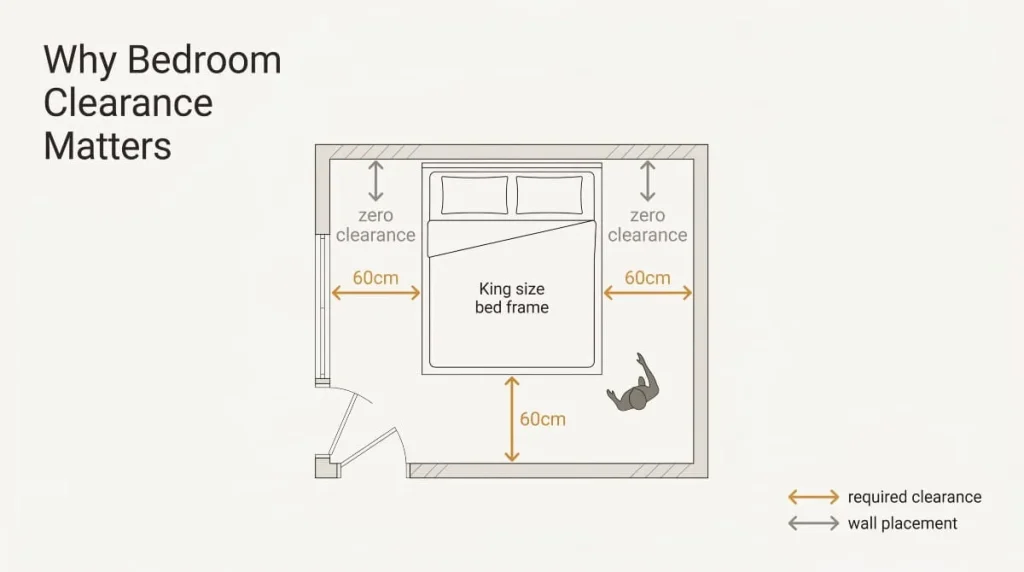
As a general guide, a single bed needs a room at least 2.4m x 2.4m to fit the bed itself comfortably, plus basic walking space, and a small piece of additional furniture, such as a bedside table. Rooms smaller than this can still take a single bed, but will typically only allow for the bed and minimal clearance, which is worth factoring in before choosing frame style or headboard height.
The standard UK single bed size is 90cm x 190cm (3ft x 6 ft 3 in). This is the fixed measurement used across nearly every UK bed frame, mattress, and bedding retailer.
No, single bed sizes vary by country; a UK single is 90 x 190cm, while US, European, and Japanese single sizes all differ slightly. Always check the specific measurements rather than assuming “single” means the same size internationally.
A single bed needs a 135cm x 200cm duvet, which gives enough overhang to tuck in comfortably on both sides. This size is standard across UK bedding brands so that any single duvet will fit a standard UK single bed.
A small single bed measures 75cm x 190cm (2 ft 6 in x 6 ft 3 in), 15cm narrower than a standard single. It suits box rooms and bunk beds but needs its own 2ft6-specific bedding rather than standard single sheets.
Not exactly: two single beds together create an area roughly 180cm x 190cm, close to, but not identical to, a UK king size at 150cm x 200cm. It’s a flexible option for guest rooms, though the central join means it won’t feel like one solid mattress.