

Bed Frame Dimensions Every UK Size Explained (cm, inches & feet)
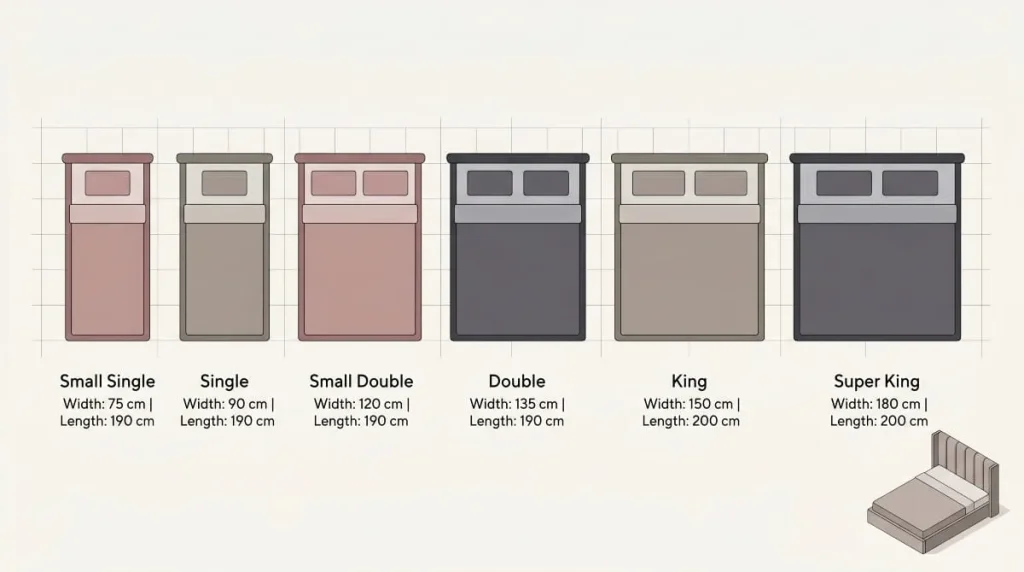
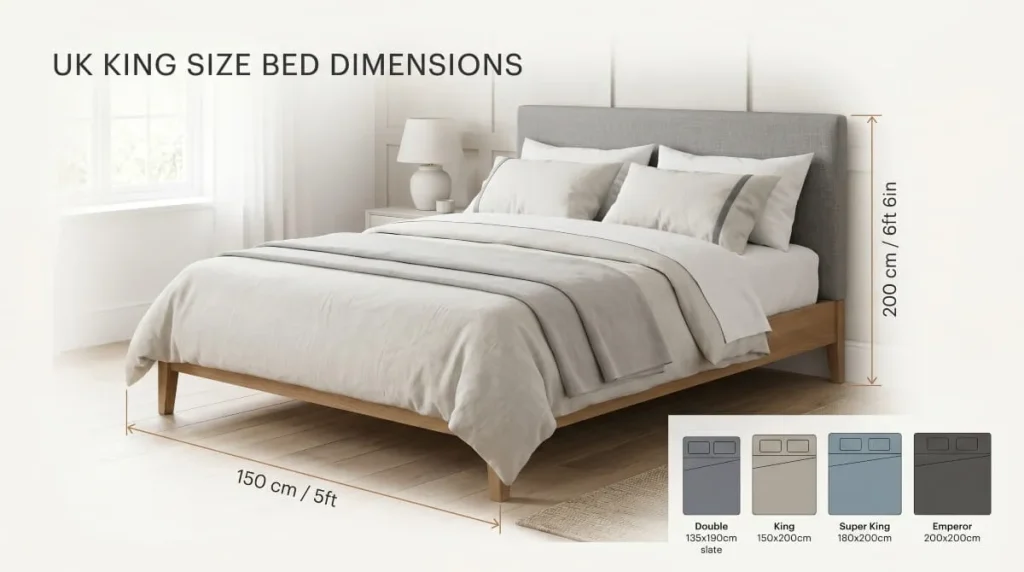
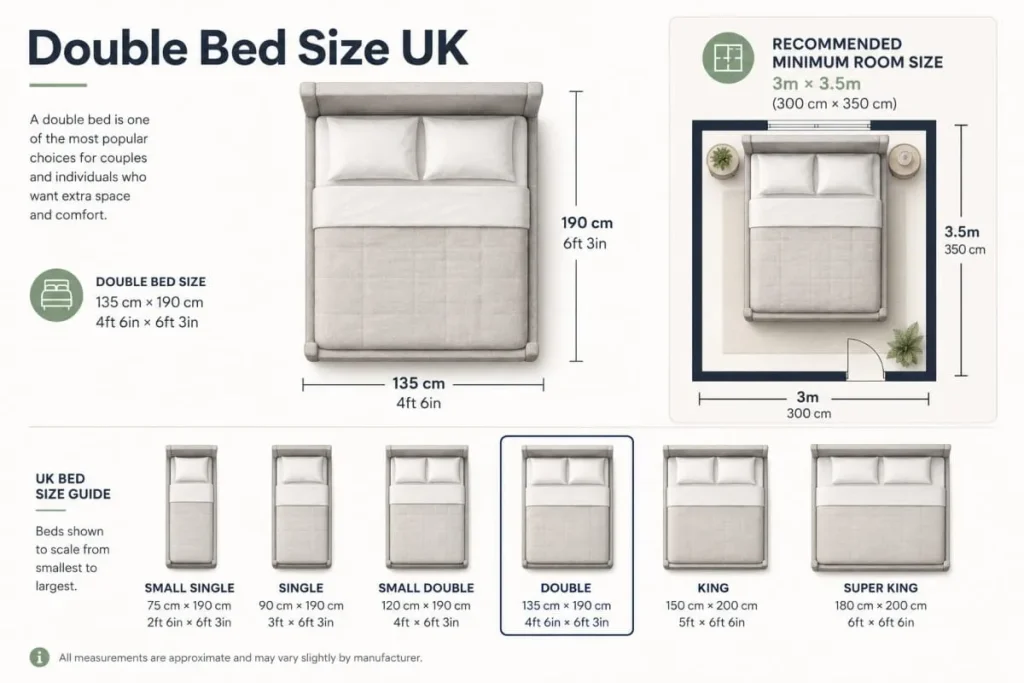
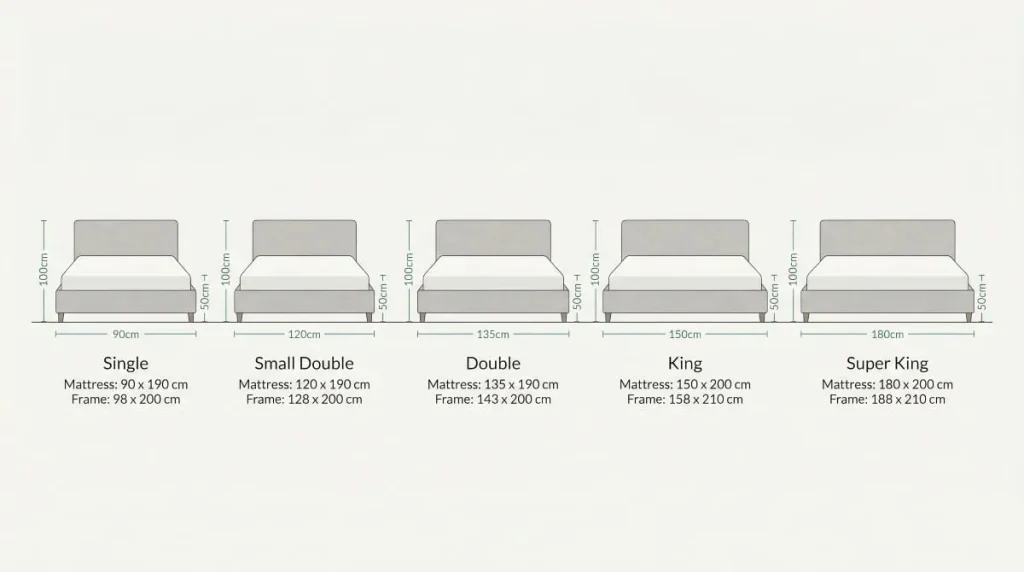
A king size bed frame in the UK measures 150cm wide by 200cm long (5ft × 6ft 6in), that’s the frame’s external footprint, not just…
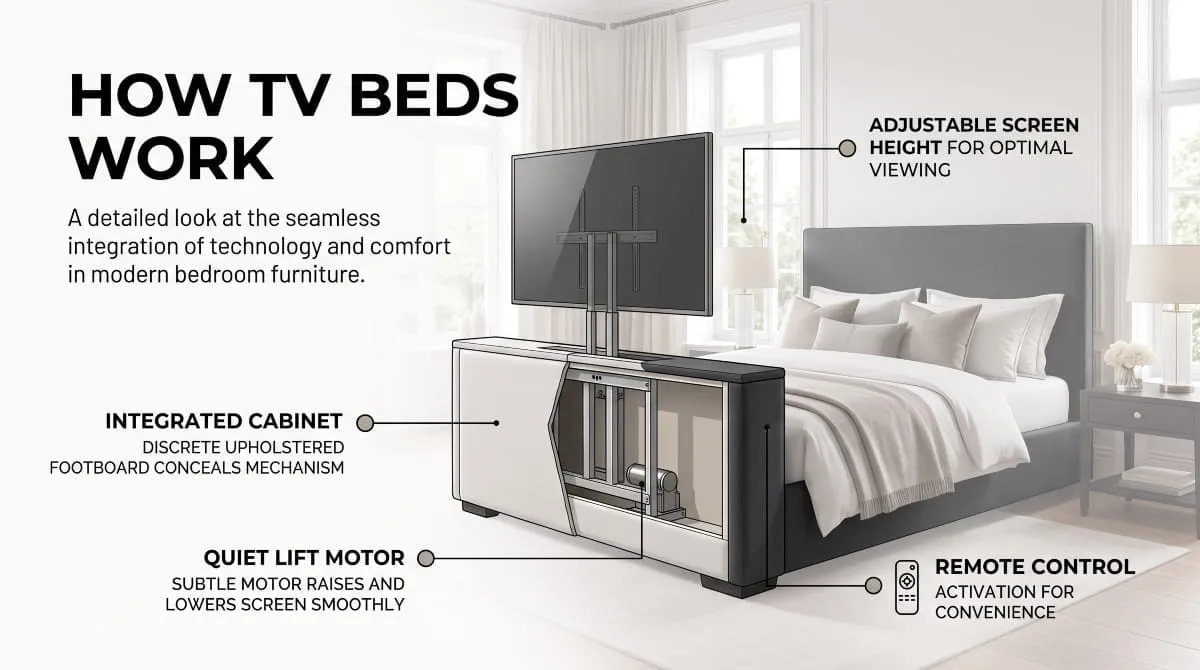
A TV bed is an upholstered bed frame with a built-in mechanism, usually a motorized lift cabinet at the foot of the bed, that raises or reveals a television at the touch of a remote, then hides it away flush with the footboard when not in use. Instead of a separate TV stand competing for space in a bedroom, the television becomes part of the bed itself, rising smoothly from a hidden cabinet and retracting out of sight once you’re done watching.
The appeal is practical as much as aesthetic. UK bedrooms are getting smaller; the average new-build bedroom has shrunk to around 11.5 square meters over the past few decades, and a TV bed removes the need for a bulky stand or wall-mounted bracket altogether, freeing up floor space while still delivering the “hotel suite” feel of a screen positioned at the perfect viewing height and distance from the pillow.
TV beds vary widely in how they work, what sizes and TVs they accommodate, and whether they come with storage or a screen included, which is exactly what this guide walks through, from the mechanics of the lift cabinet to choosing the right size, fabric, and configuration for your bedroom.
A TV bed is a bed frame built with a concealed compartment, typically housed in or behind the footboard, that holds a television and raises it into view using a motorized lift, or reveals it through a hinged or sliding panel. The result is a bedroom where the TV is fully integrated into the furniture rather than sitting on a separate stand, appearing only when you want it and disappearing completely when you don’t.
Most TV beds use a simple electric lift system: the television sits on a metal bracket or tray inside a cabinet built into the footboard, connected to a quiet motor that raises and lowers it on command. A handheld remote controls the movement, so the screen glides up to eye level from a seated or lying position in seconds, then retracts fully out of sight into the cabinet when switched off. The mechanism runs on standard mains power, and the cabinet itself is usually finished in the same upholstery as the rest of the bed frame, so it reads as a design feature rather than a visible piece of tech.
The terms “pop-up,” “footboard-mounted,” and “end-of-bed” TV beds mostly describe the same core mechanism, a lift cabinet at the foot of the bed, but differ slightly in how the television is housed and revealed. A pop-up TV bed typically raises the screen vertically out of a compartment built into the base or footboard, giving the effect of the TV rising from within the bed itself. A footboard-mounted version integrates the cabinet directly into a taller, paneled footboard, so the TV sits at a fixed height once raised. End-of-bed TV cabinets are the broadest category, covering any configuration, lift, slide, or hinge, positioned at the foot of the bed rather than on a wall or freestanding stand. In practice, the choice comes down to footboard height and how much the mechanism should be part of the bed’s visual design versus tucked away.
Not always, and this is the most common point of confusion when shopping for a TV bed. Some TV bed frames are sold with the lift mechanism, cabinet, and bracket only, designed to fit a customer-supplied television within a specified size range; others are sold as a complete package with the TV included. It’s worth checking this detail carefully before ordering, since a “TV bed” listing can mean either, and the maximum screen size the cabinet supports (commonly up to 50″ or 55″) will also determine which TVs will actually fit.
TV beds fall into a handful of distinct mechanism types, and the right one depends mainly on your footboard height, how much you want the TV visible when off, and whether you’re prioritizing a clean look or maximum flexibility. Each variation achieves the same outcome, a screen that appears on demand and vanishes when not needed, but the engineering behind it differs enough to affect price, footboard depth, and how the bed looks day to day.
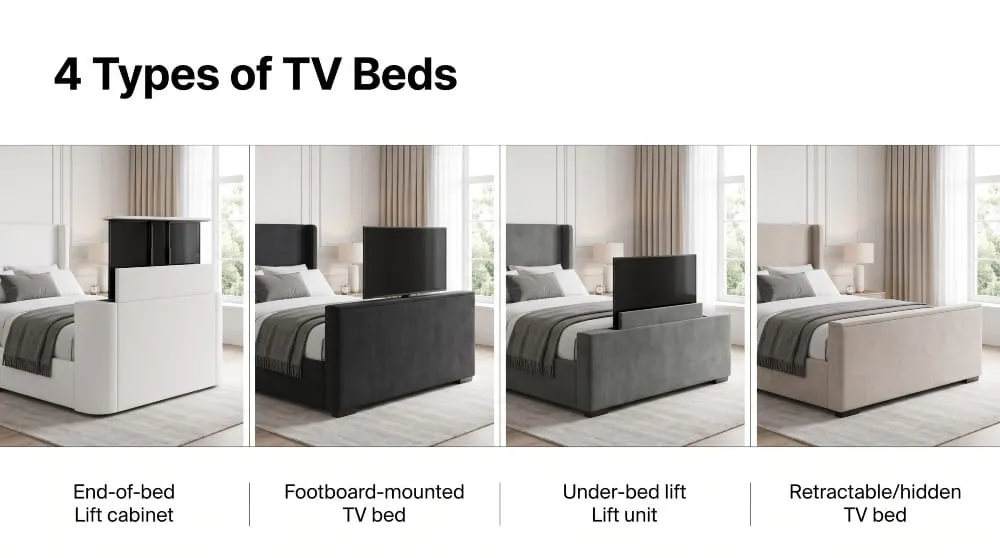
This is the most common and versatile TV bed format: a self-contained cabinet built into the foot of the bed frame, with a motorized bracket that lifts the television up and out on command. Because the cabinet is a distinct unit rather than part of the footboard’s core structure, it tends to accommodate a wider range of TV sizes. It can often be finished to match the bed’s fabric, making it the standard choice for most upholstered TV bed frames on the market.
In this configuration, the lift mechanism is built directly into a taller, reinforced footboard rather than a separate cabinet section. As a result, the television rises to a fixed viewing height that’s usually set slightly above the mattress line for comfortable viewing from a seated or reclined position. This style suits bedrooms where a lower-profile silhouette matters less than having the TV sit at a consistent, predictable height every time it’s raised, and it typically pairs with the same wingback or paneled headboard styles used elsewhere in the frame for a coordinated look.
Rather than housing the television in the footboard, under-bed lift units store the screen horizontally beneath the bed base and raise it vertically through a slot or opening at the foot of the frame. This approach is less common in upholstered UK bed frames than footboard or end-of-bed cabinets, since it requires a deeper base and can reduce available underbed storage space, a trade-off worth weighing if storage capacity is a priority alongside the TV feature.
Retractable and hidden TV beds cover any design where the screen is fully concealed when not in use, whether through a lift, a sliding panel, or a hinged compartment. Hence, the bed reads as a standard upholstered frame with no visible technology at all. This is largely a design distinction rather than a separate mechanism: the goal is a footboard that gives no indication a television is built in, which typically means slightly deeper cabinetry to enclose the screen and its bracket when retracted fully. For buyers who want the convenience of a built-in TV without it becoming a visual focal point of the room, this is the category to look for specifically.
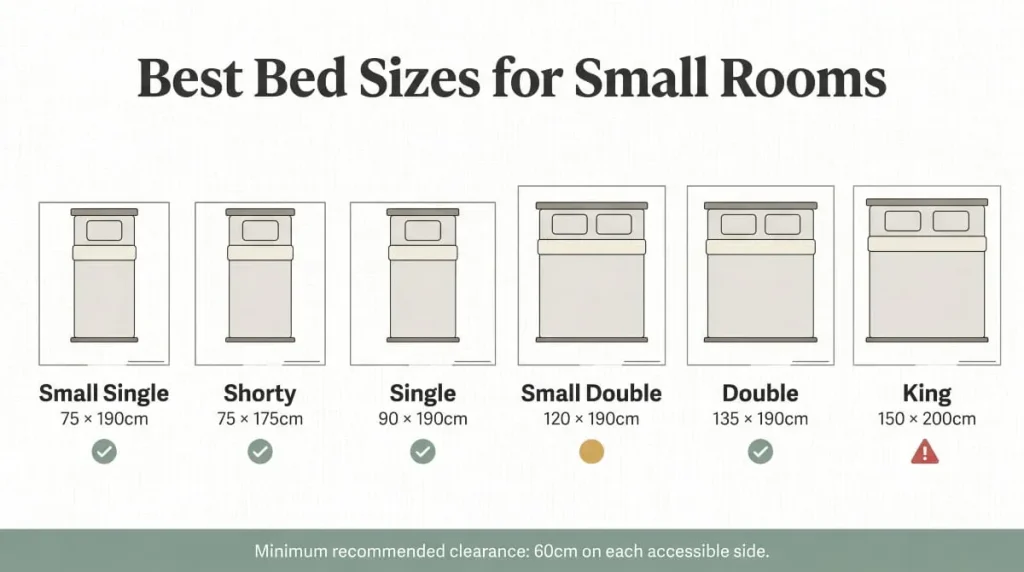
TV beds are available across the standard UK bed size range, from a 3ft single up to a 6ft super king, and the size you choose affects not just the mattress but the footboard depth and cabinet capacity available for housing the television. Larger frames generally support bigger screens and taller lift cabinets, so matching bed size to intended TV size early on avoids ordering a frame that’s technically a “TV bed” but too narrow to comfortably fit the screen you actually want.
King (5ft) and super king (6ft) are the most popular sizes for TV beds, largely because their wider footboards give the lift cabinet more room to house a larger screen without looking disproportionate to the frame. A super king TV bed in particular suits buyers prioritizing a genuine “home cinema” feel, since the extra footboard width comfortably accommodates a 50″ or 55″ television alongside the cabinet’s internal bracket and motor housing. Smaller sizes, 3ft single and 4ft6 double, can still house a TV lift mechanism. Still, the screen size supported is usually more limited, making king and super king the go-to choice when a larger television is the priority.
Most TV bed cabinets are built to accommodate screens up to 50″ or 55″, which covers the vast majority of televisions suited to bedroom viewing distances. The exact maximum depends on the internal dimensions of the lift cabinet and the bracket’s weight and width capacity, both of which vary by bed frame and manufacturer, so it’s worth checking the specified maximum TV size against your own television’s dimensions, not just its screen size in inches, but its bracket mounting pattern (VESA), before ordering. As a general guide, a 50″ TV suits most standard bedroom viewing distances of around 2 to 3 meters from the foot of the bed, while 55″ gives a noticeably larger picture in bigger rooms without overwhelming the space.
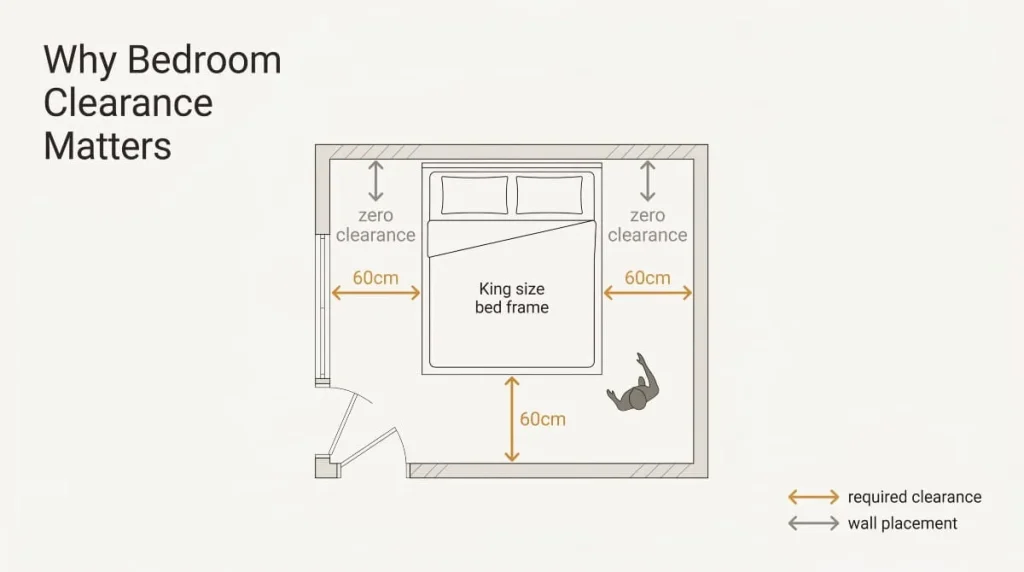
Because the television rises directly from the foot of the bed, the room needs enough clear floor space beyond the footboard for the screen to lift fully and remain comfortably viewable, typically at least the same distance you’d allow between a wall-mounted TV and the bed. This makes TV beds especially well suited to bedrooms where a separate stand or wall mount would otherwise eat into already limited floor space, since the mechanism uses no additional footprint beyond the bed frame itself. In smaller rooms, a king-size TV bed with a 50″ screen often strikes the best balance between picture size and comfortable viewing distance, while super king frames with 55″ screens are better reserved for larger, more open bedrooms.
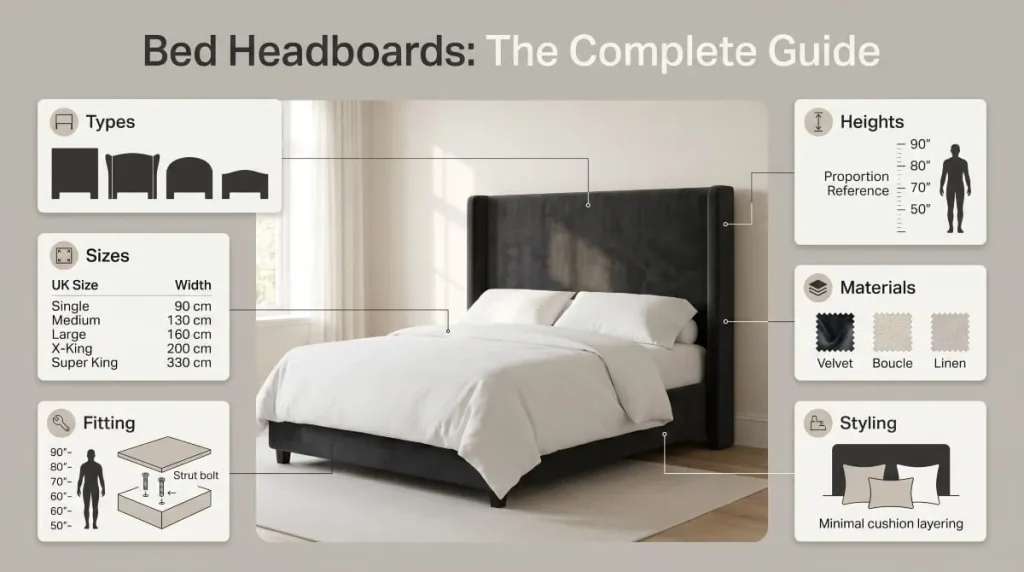
TV beds are available in the same upholstery fabrics used across standard bed frames, so choosing a finish comes down to matching the bed to the room’s décor rather than any technical limitation from the built-in TV mechanism. Because the lift cabinet is typically upholstered to match the rest of the footboard, the fabric you choose carries through the entire frame, including the section housing the television, for a look that reads as a single cohesive piece of furniture rather than a bed with an add-on unit attached.

Velvet is one of the most popular choices for TV beds, prized for the way it catches light across the deep buttoning and paneling typical of wingback and Chesterfield-style footboards. Crushed velvet in particular adds a subtle textured shimmer that suits a more statement, hotel-luxury bedroom aesthetic, and its durability holds up well on the cabinet section of a TV bed, which sees more regular contact than a standard footboard due to the lift mechanism opening and closing.
Boucle has become a fast-growing choice for TV beds, offering a soft, looped texture that suits more relaxed, Scandinavian-influenced bedroom schemes than the formal sheen of velvet. Its tactile, tufted appearance works particularly well on paneled or wingback footboard designs, where the texture adds visual depth to the cabinet housing without requiring bold color to make an impact, a practical advantage for buyers wanting the TV mechanism to blend into a neutral, understated frame.
Cream and beige remain the most requested neutral tones for TV beds, largely because they suit the widest range of bedroom color schemes and don’t compete visually with the television screen when it’s raised. A lighter neutral finish also tends to make the footboard and lift cabinet read as a natural extension of the bed frame rather than a distinct technical unit, which matters most for buyers specifically seeking a “hidden TV” look where the mechanism should disappear into the design rather than stand out.
A smart or gaming TV bed is simply a standard TV bed frame paired with a smart television or games console setup, rather than a distinct type of mechanism; the lift cabinet, motor, and remote work the same way regardless of what’s connected to the screen. What changes is the surrounding setup: buyers looking for a gaming or smart TV bed typically prioritize power access, cable routing, and sound quality alongside the core lift function, since these are the details that make the built-in screen genuinely usable for streaming or gaming rather than just a novelty feature.
Most TV bed cabinets can accommodate a soundbar or compact surround sound unit alongside the television bracket, either mounted within the cabinet itself or positioned separately at the foot of the bed once the screen is raised. Because the TV sits closer to the bed than a wall-mounted alternative, sound quality tends to matter more in this setup; a soundbar-equipped TV bed noticeably improves the viewing experience over relying on a television’s built-in speakers, particularly in larger bedrooms where sound has more room to disperse before reaching the pillow.
For gaming, a TV bed offers a genuine practical advantage: the screen rises to a fixed position at the foot of the bed, giving a consistent viewing distance and angle that suits console gaming from a seated or reclined position far better than a wall-mounted TV positioned for general bedroom use. Cable management is the main consideration; routing power and HDMI leads from a console to the lift cabinet neatly, ideally through a bed frame with a dedicated cable channel or accessible cabinet space, keeps the setup tidy rather than leaving trailing wires each time the TV is raised or lowered.
Smart TVs work in a TV bed exactly as they would on any stand or wall mount, since the lift mechanism only controls the screen’s physical position, not its internal software or connectivity. Wi-Fi signal strength is worth checking specifically, though, as some cabinet designs use a metal-lined compartment that can slightly weaken a wireless signal when the TV is fully retracted; this rarely causes a problem in modern homes with strong bedroom Wi-Fi coverage, but it’s a reasonable detail to test during setup if streaming apps are the main use case for the screen.
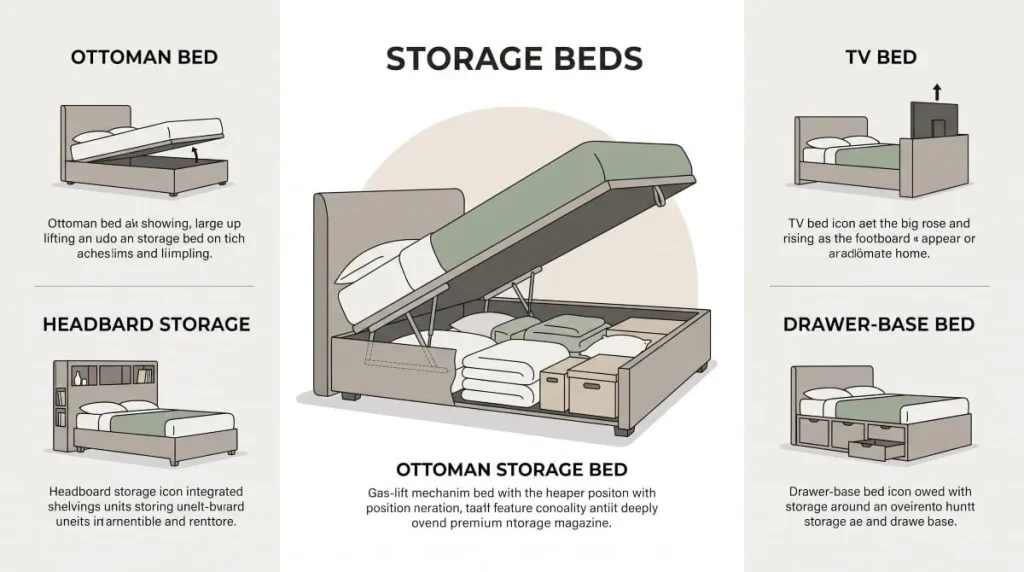
A TV bed with storage combines a gas-lift ottoman base with a built-in TV cabinet at the footboard, giving buyers both a hidden television and full under-mattress storage in a single frame. The two features work independently of each other: the ottoman base lifts to reveal storage space beneath the mattress. At the same time, the TV mechanism operates separately within the footboard, so choosing storage doesn’t compromise how the television lift functions, or vice versa.
Pairing ottoman storage with a TV lift cabinet is a natural fit, since both features are built around maximizing what a single bed frame can do rather than relying on separate furniture pieces for storage and entertainment. The ottoman base typically uses a gas-lift mechanism to raise the entire mattress platform, revealing a deep storage compartment underneath. At the same time, the TV cabinet remains a distinct section at the foot of the bed with its own motor and bracket, meaning the two mechanisms can be used entirely independently of one another. This combination particularly suits smaller bedrooms, where fitting a wardrobe, TV stand, and storage chest alongside the bed simply isn’t practical.
A TV bed with ottoman storage removes the need for at least two separate pieces of furniture, a TV stand and a chest of drawers or storage box, which matters most in bedrooms where floor space is already tight. Given that the average UK new-build bedroom has shrunk to roughly 11.5 square metres, a combined frame like this is less about a nice-to-have feature and more a practical response to genuinely limited space: bedding, seasonal clothing, or spare linens go into the ottoman base, while the television disappears into the footboard, leaving the rest of the room free for a wardrobe or seating rather than furniture dedicated to storage and entertainment alone.
A TV bed is worth considering if bedroom space is limited, if a clean, cable-free look matters more than a freestanding TV stand, or if you’re already replacing a bed frame and want the television built into the purchase rather than sourced separately. It’s less suited to buyers who prioritize flexibility, since repositioning a wall-mounted TV or moving a stand is far simpler than relocating a screen that’s integrated into the bed frame itself.
A TV bed typically costs more upfront than buying a standard bed frame and a separate TV stand or wall mount individually, since the price reflects the motorized lift mechanism, reinforced cabinet, and bracket engineered into the frame. Whether that premium is worthwhile comes down to what you’re comparing it against: a quality TV stand alone can run to a meaningful sum, and a TV bed replaces that cost entirely while also freeing up the floor space the stand would have occupied, a genuine trade-off rather than a straightforward extra cost, particularly in smaller bedrooms where an additional piece of furniture isn’t really optional.
This is the detail most worth checking before ordering, since “TV bed” listings vary between frames sold with the lift mechanism and cabinet only, designed to fit a customer-supplied television, and frames sold as a complete package including the screen itself. Neither approach is better outright; buying the mechanism only makes sense if you already own a suitable TV or want to choose the exact model yourself, while an included-TV package suits buyers who’d rather have everything arrive as one complete, ready-to-use product. Either way, confirming the maximum supported screen size and VESA bracket compatibility against your own television is essential if the TV isn’t included.
Because TV beds involve more moving parts than a standard frame, a motor, lift bracket, and cabinet wiring alongside the usual frame assembly, professional assembly is generally worth choosing over self-assembly, both for correct installation of the lift mechanism and for warranty peace of mind. Warranty terms are also worth checking specifically for the electrical components, since some manufacturers cover the frame and the TV lift motor under different terms or durations; a bed backed by a solid multi-year warranty on both the upholstery and the mechanical parts offers meaningfully more reassurance than one covering the frame alone.
Style Beds offers a handcrafted range of upholstered TV beds, each built with a fitted lift cabinet at the footboard and finished in the same premium fabrics used across the full bed frame collection. Every frame is made to order in the UK, so the TV cabinet, upholstery, and size are finished as one integrated piece rather than a standard bed frame with a mechanism bolted on afterward.
The full TV bed collection is available in king and super king sizes, with a choice of fabrics and headboard heights to match any bedroom scheme, alongside optional ottoman storage for buyers wanting both a hidden television and additional under-mattress space in one frame. Each bed is built to order, so the cabinet, upholstery, and size work as a single cohesive piece rather than separate components assembled.
Every Style Beds frame is handcrafted in Dewsbury, West Yorkshire, using traditional upholstery techniques applied to a modern build, including the reinforced cabinetry needed to house a TV lift mechanism safely and durably over years of daily use. Choosing a British-made frame also means shorter supply chains and more direct quality control than mass-produced imports, backed by a 3-year warranty and a 30-night trial, so buyers can test the fit and function of the TV mechanism in their own bedroom with the reassurance of a straightforward return if it isn’t right.
No, TV bed listings vary between frames sold with just the lift mechanism and cabinet, designed to fit a customer-supplied television, and complete packages that include the screen itself. It’s worth checking this detail on any specific listing before ordering, since the two options suit different buyers depending on whether you already own a suitable TV.
A TV bed uses a small electric motor to raise and lower the television on a bracket within the footboard cabinet, controlled by a handheld remote. The motors used in quality TV beds run quietly, comparable to an electric recliner chair or adjustable bed base, and produce no noticeable noise during operation.
Most TV bed cabinets are built to accommodate screens up to 50″ or 55″, which covers the majority of televisions suited to typical bedroom viewing distances. The exact maximum depends on the specific bed’s cabinet dimensions and bracket capacity, so it’s best to check both the screen size and VESA mounting pattern of your TV against the manufacturer’s specification before ordering.
Yes, TV beds are commonly available with a gas-lift ottoman base, giving full under-mattress storage in addition to the built-in TV cabinet at the footboard. The two mechanisms operate independently, so choosing ottoman storage doesn’t affect how the TV lift itself functions.
Yes, and super king is one of the most popular sizes for TV beds specifically, since the wider footboard gives the lift cabinet more room to house a 50″ or 55″ screen comfortably. King and super king together account for the bulk of TV bed sales, though smaller sizes with more limited screen capacity are also available.