)
&description=&image=https://stylebeds.co.uk/wp-content/uploads/2026/08/King-Size-Mattress-Dimensions-UK-1024x572.webp)
UK Bed Mattress Sizes Guide (All Sizes in cm, Inches & Feet)
UK bed mattress sizes follow a standardised set of dimensions, from the 90 × 190 cm single up to the 180 × 200 cm super…
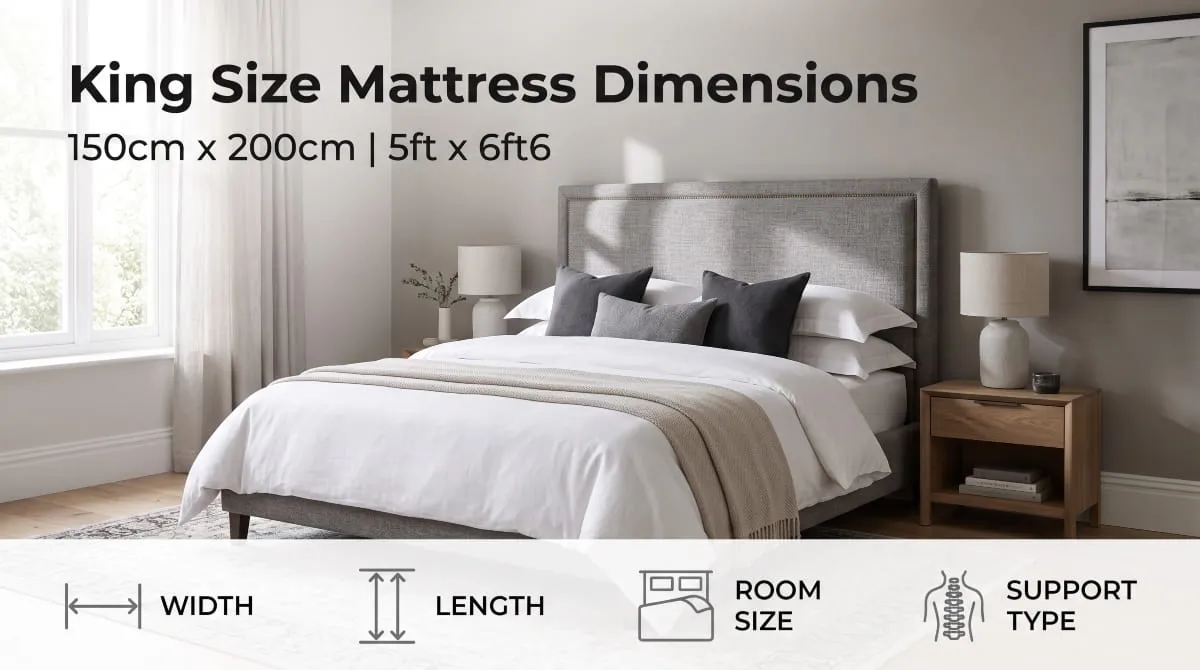
A UK king size mattress measures 150cm x 200cm (5ft x 6ft6), while a super king measures 180cm x 200cm (6ft x 6ft6), both 20cm longer than a double mattress, giving taller sleepers genuine legroom without needing a custom size. That extra 30cm of width between king and super king is the equivalent of an extra 12 inches of shoulder room each night, which is often the deciding factor for couples who keep waking each other up on a double.
If you’ve searched for king mattress dimensions, chances are you’re doing one of two things: measuring up a room before you buy, or trying to work out whether king or super king is the better fit for your space. This guide covers both, in centimetres, inches, and feet, so you’re not left converting figures on your phone mid-shop. We’ll also clear up a common source of confusion: UK king sizing isn’t the same as US or European king, so if you’ve seen wildly different numbers elsewhere, that’s likely why.
A UK king size mattress measures 150cm wide by 200cm long, the standard size used by every major UK bed and mattress manufacturer, from budget brands to hotel suppliers. It’s the most common upgrade from a double, adding 30cm of extra width for couples while keeping the same footprint length as most UK bed sizes.
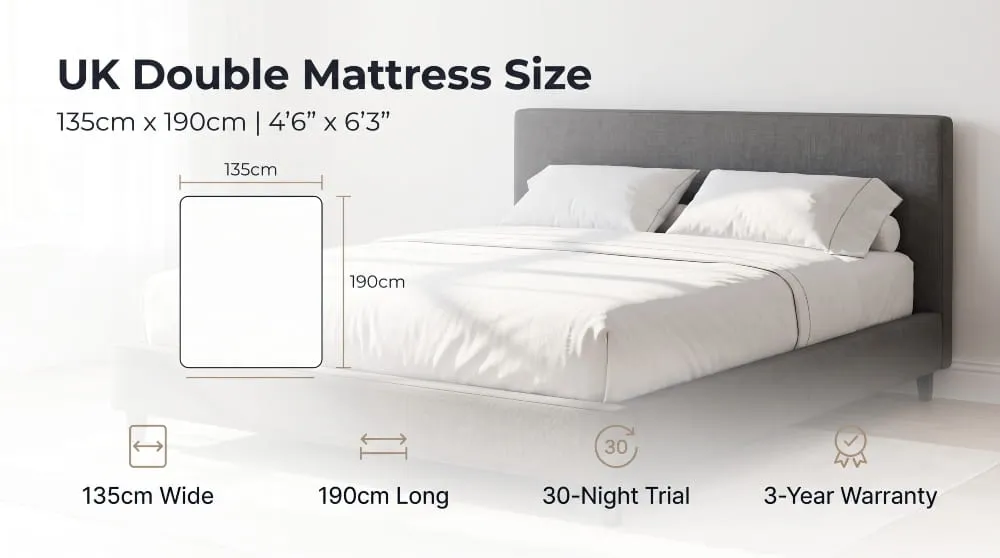
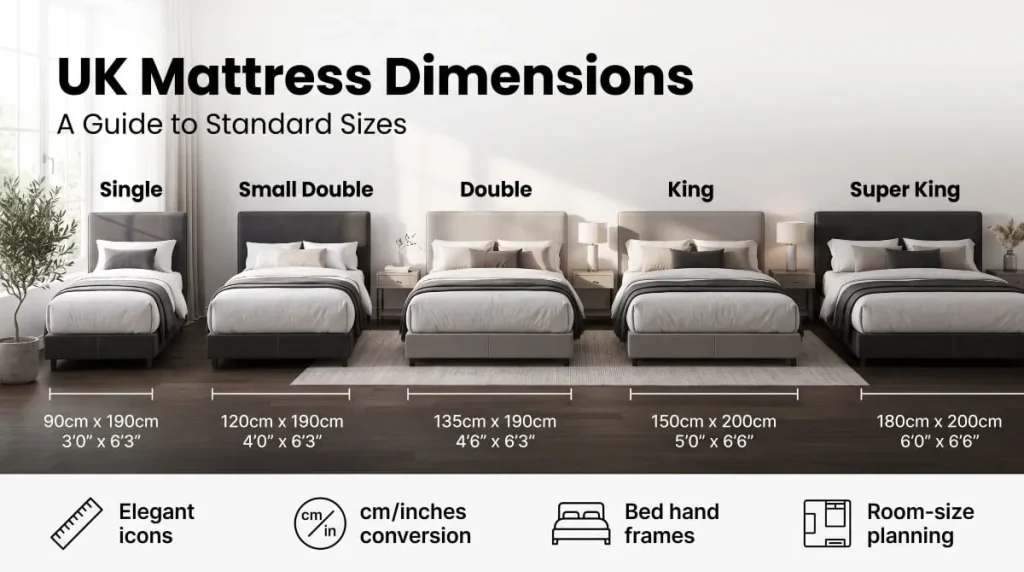
In centimetres, a UK king mattress is 150cm x 200cm. That’s 30cm wider than a double (135cm x 190cm) and 20cm longer, which matters more than it sounds; most double mattresses are actually too short for anyone over 6ft tall to lie flat without their feet hanging off the end. The 200cm length on a king solves that, making it a common choice for taller households even when the extra width isn’t strictly needed.
Converted to imperial, a UK king mattress is 5ft wide by 6ft 6in long, or roughly 59 inches by 79 inches. UK retailers and manufacturers almost always list king mattresses in feet first (5ft x 6ft6) rather than inches, so if you’re comparing spec sheets across sites, that’s the figure to check against; inch measurements are usually just a rounded conversion underneath.
A UK king is not the same as a US king or a European king, and mixing these up is the single biggest cause of “wrong size” confusion when people shop internationally or check dimensions on US sites. A US king measures 193cm x 203cm, noticeably wider than a UK king but slightly shorter, while a European king is typically 160cm x 200cm. If you’re buying a mattress, frame, or fitted sheet in the UK, always confirm the measurement is listed in UK standard sizing (150cm x 200cm), not a US or EU equivalent, since even a small mismatch means bedding and frames won’t fit properly.
A UK super king mattress measures 180cm wide by 200cm long, the largest standard mattress size sold in the UK, offering 30cm more width than a king while keeping the same 200cm length. It’s the go-to choice for couples who want hotel-level space to spread out, or for anyone sharing a bed with children or pets.
In centimetres, a super king mattress is 180cm x 200cm. That’s a significant jump from king size; each side of the bed effectively gains 15cm of personal space, which is often enough to eliminate the disturbed sleep that comes from a partner moving around during the night. The length stays at 200cm, matching the king, so the extra size is purely in width.
Converted to imperial, a super king mattress is 6ft wide by 6ft 6in long, or approximately 71 inches by 79 inches. As with king size, UK retailers list this in feet first (6ft x 6ft6) rather than inches, so it’s worth checking that figure specifically when comparing bed frames or mattresses across different sites, since inch conversions can be rounded slightly differently between manufacturers.
The honest answer is that super king needs meaningfully more floor space, so the right choice comes down to room size rather than preference alone. As a rough guide, a king size bed comfortably suits a room of 3.5m x 3.5m or larger, while super king is better suited to rooms of 4m x 4m or more, once you account for space to walk around the bed and fit other furniture like wardrobes or bedside tables. If your room is on the smaller side, a king with an ottoman base is often a better trade-off than squeezing in a super king; you get storage space back rather than losing floor space you didn’t have.
The simplest way to measure your room for a king or super king bed is to add at least 60- 70 cm of clearance on each accessible side of the mattress, then check that figure against your room’s total width and length. This accounts for walking space, wardrobe doors opening, and getting in and out of bed comfortably, not just the mattress footprint itself.
For a king size bed (150cm x 200cm), a room of at least 3.5m x 3.5m is the practical minimum, though 3.7m x 3.7m gives noticeably more breathing room once a bedside table and wardrobe are factored in. Anything smaller and the bed tends to dominate the room, leaving narrow walkways on either side that make the space feel cramped rather than restful.
A super king bed (180cm x 200cm) needs a room of roughly 4m x 4m to feel properly proportioned, since the extra 30cm of width eats into walking space faster than most people expect. In a smaller room, a super king can technically fit but often leaves only 40- 50 cm of clearance on each side, workable, but tight enough that getting past the bed to reach a wardrobe can feel like a squeeze.
If floor space is limited, the better fix is often not to downsize the mattress but to upsize the storage underneath it. An ottoman base uses the existing footprint of a king or super king bed to store bedding, out-of-season clothes, or spare linens, which frees up the wardrobe and floor space you’d otherwise need for extra furniture. It’s a particularly effective trade-off in older UK homes, where bedrooms are often smaller than in new-builds but still need to accommodate a larger mattress for two people.
The three most common king size mattress types are pocket sprung, memory foam, and orthopaedic (firm support), each suited to a different sleep style rather than one being universally “better.” Choosing between them comes down to how you sleep and what kind of support your body needs, not just personal preference on feel.
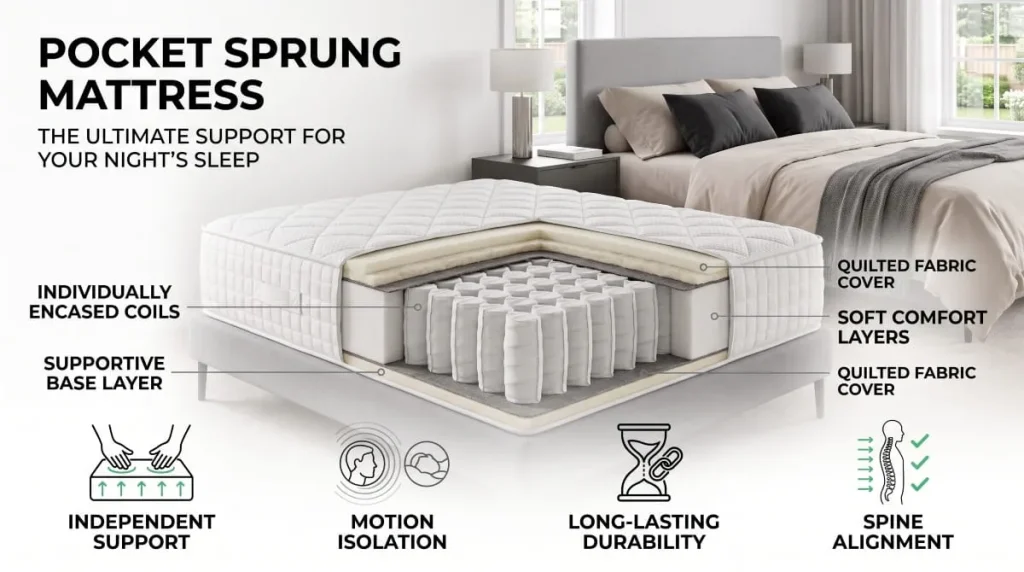
A pocket sprung king mattress uses hundreds or thousands of individually wrapped springs, each responding to pressure independently rather than as one connected unit. In a king size, this matters more than in smaller mattresses, with two people sharing 150cm of width; individual springs mean movement on one side doesn’t ripple across to disturb the other. Pocket sprung is generally the pick for couples with different weights or sleep positions, since each side of the mattress adjusts to the sleeper on it rather than compromising on a single feel.
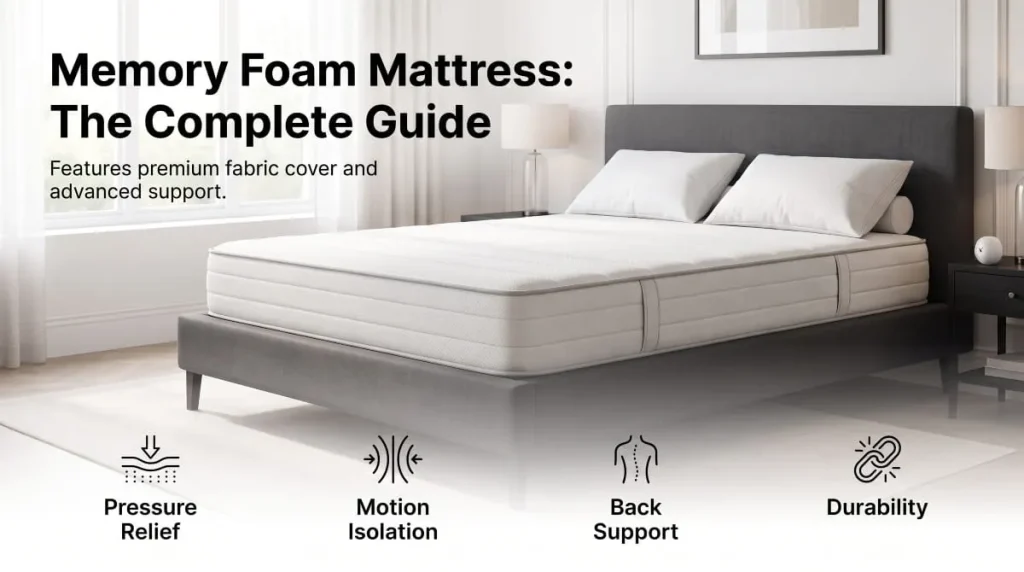
A memory foam king mattress contours to the body’s shape, softening under pressure points like hips and shoulders while providing more even support along the spine. It’s particularly well suited to side sleepers, who tend to need more cushioning at the shoulder and hip to keep the spine aligned. The trade-off is heat retention; traditional memory foam sleeps warmer than pocket sprung. However, most UK king size memory foam mattresses now include cooling gel or open-cell layers specifically to offset this.
An orthopaedic king mattress prioritises firm, even support across the full width of the bed, designed to keep the spine in a neutral position rather than sinking at the hips. It’s the standard recommendation for back or joint pain, and for anyone who sleeps predominantly on their back or front, where a softer mattress can allow the lower back to arch out of alignment overnight. On a king-size specifically, firm support also helps reduce the “roll together” effect some couples get on softer mattresses, where both sleepers gradually sink toward the middle of the bed.
Choosing the right bed frame comes down to matching the internal frame dimensions exactly to your mattress size, since even a few centimetres out means the mattress either won’t fit or won’t be properly supported at the edges. King and super king frames aren’t interchangeable, so the frame needs to be bought for the specific mattress size, not estimated by eye.
A king size bed frame is built to hold a 150cm x 200cm mattress snugly within its internal frame, with upholstered frames typically adding padding and structure around that footprint rather than extra sleeping space. Beyond just holding the mattress, the frame choice also affects the room; a divan or ottoman base on a king frame keeps the visual footprint compact while adding underbed storage, which matters more on king size than smaller beds simply because there’s more surface area to make use of.
A super king bed frame is built for the 180cm x 200cm mattress size, and because of the extra width, frame construction tends to matter more here than on smaller beds. A well-built super king frame needs stronger central support to prevent sagging in the middle over time. This is worth checking when comparing frames, since cheaper super king builds sometimes reuse a king size frame’s support structure, which isn’t designed to bear the extra width without additional reinforcement.
Headboard height is a separate decision from mattress size, but it has a bigger visual impact on a king or super king bed simply because there’s more headboard width to fill. Taller headboards (typically from 100cm upward) tend to suit rooms with higher ceilings and larger overall proportions, which is often the case in rooms big enough for a super king in the first place. In comparison, lower headboards keep a king-size bed feeling proportionate in a more standard-height room. Since headboard height is usually chosen independently of mattress size, it’s worth deciding on room proportions and personal style first, then fitting the frame and mattress size around that.
No, Style Beds doesn’t currently offer a mattress in standalone king size (150cm x 200cm). Our mattress range covers Single, Small Double, Double, and Super King, so if you’re set on king size specifically, the closest match is sizing up to Super KingSuper King, which pairs with our full range of King size bed frames for anyone who prefers the smaller frame footprint with a larger mattress.
If you’re after the extra sleeping space a king size search usually points to, our super king mattresses are built with the same 200cm length and offer the wider 180cm sleeping area that most people upgrading from a double are actually looking for. Every mattress in the range is handcrafted at our Dewsbury workshop, with options across pocket sprung, memory foam, and orthopaedic support to match whichever sleep style suits you best.
If your room or budget favours the king size footprint, our king size bed frames are built for the standard 150cm x 200cm mattress and available across our full range of upholstered styles, headboard heights, and ottoman storage options. This is a common combination for smaller rooms; a king frame keeps the visual footprint compact while still giving the full-length 200cm sleeping space that makes a real difference for taller sleepers.
A UK king size mattress measures 150cm x 200cm, or 5ft x 6ft6 in imperial. This is the standard size used across all major UK bed and mattress manufacturers, so it’s consistent whether you’re buying a mattress, frame, or fitted sheet.
Super king is 30cm wider than king (180cm compared to 150cm), while both share the same 200cm length. That extra width gives each person roughly 15cm more personal space per side, which is often the deciding factor for couples who feel cramped on a king.
It can, but comfortably needs a room of at least 4m x 4m to avoid feeling cramped once walking space and furniture are accounted for. In smaller rooms, a king-size with an ottoman storage base is usually a better trade-off, since it keeps the footprint smaller while still adding storage space back.
UK king (150cm x 200cm) is narrower and longer than a US king (193cm x 203cm), and a different shape entirely from a California king. Always check the mattress is listed in UK sizing before buying, since US and EU equivalents won’t fit UK frames or bedding.
Pocket sprung suits couples with different sleep styles, since each side responds independently to movement. Memory foam works well for side sleepers needing pressure relief, while orthopedic/firm support is best for back pain or those who sleep on their back or front.
Upgrade your bedroom with bespoke Ottoman storage beds & luxury velvet frames. Made to order with gas-lift storage, 50+ fabric choices, and direct-from-factory pricing.