)
&description=&image=https://stylebeds.co.uk/wp-content/uploads/2026/07/UK-Double-Mattress-Size-.webp)
UK Bed Mattress Sizes Guide (All Sizes in cm, Inches & Feet)
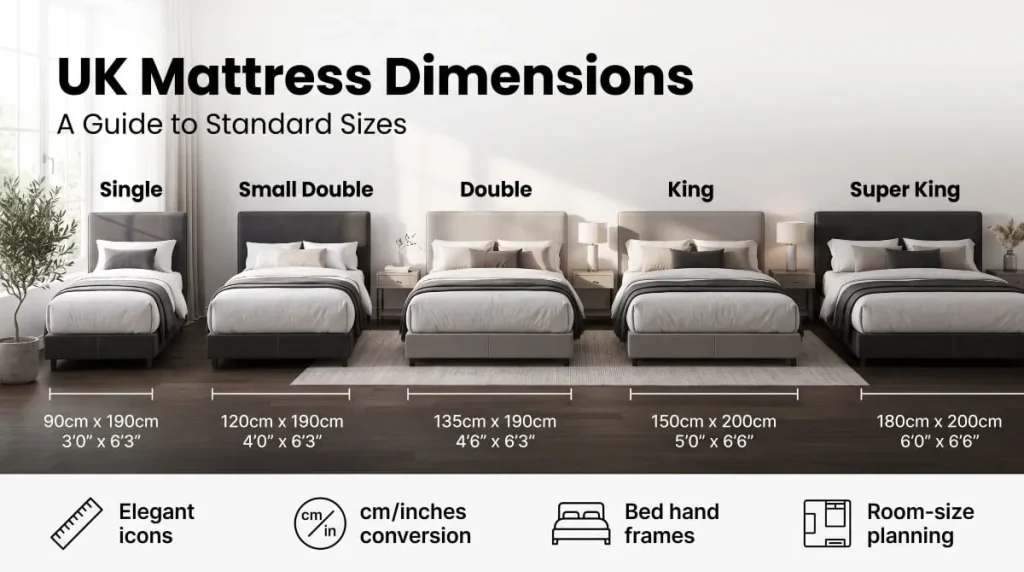
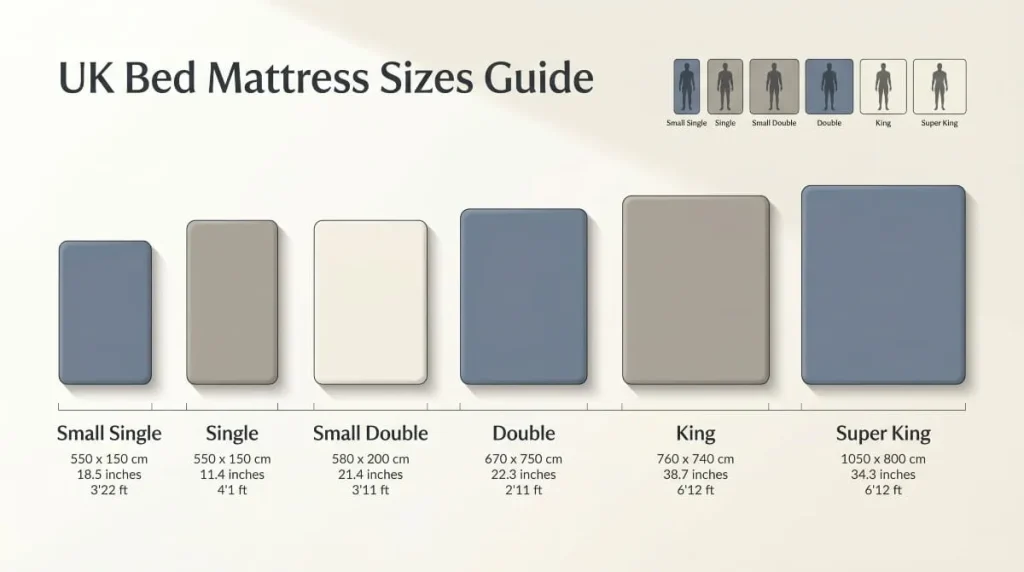
UK bed mattress sizes follow a standardised set of dimensions, from the 90 × 190 cm single up to the 180 × 200 cm super…
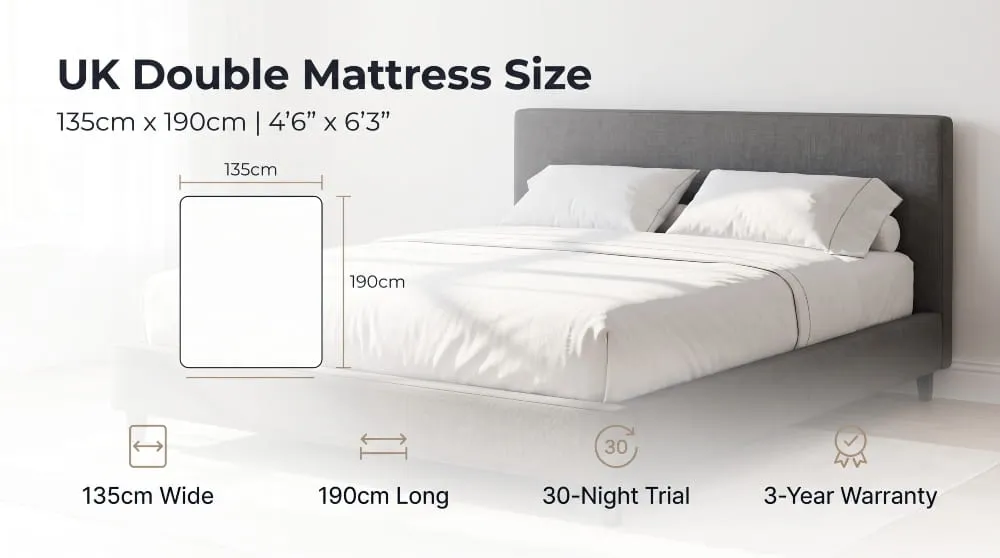
A UK double mattress measures 135cm x 190cm (4’6″ x 6’3″), making it the most popular mattress size in the country for couples and single sleepers who want extra room to stretch out. It’s roughly 45cm wider than a single mattress, giving two people around 67.5cm of personal space each, similar to a single bed per person.
The standard UK double mattress size is fixed across the industry, so whether you’re buying a mattress, a bed frame, or fitted sheets, “double” always refers to the same footprint: 135cm wide by 190cm long. This consistency is what makes a double such a safe, easy size to shop for; bedding, frames, and mattress toppers are all built to the same spec.
A UK double mattress is 135cm wide and 190cm long. Some manufacturers round this up to 135cm x 191cm or 135cm x 192cm, but 135 x 190cm is the recognized industry standard and the figure you should use when measuring your bedroom or checking bedding compatibility.
In imperial measurements, a double mattress measures 4’6″ wide by 6’3″ long, or 54 inches by 75 inches. This is where the “double” naming convention comes from in the UK bed trade; it’s shorthand for the 4’6″ width.
For anyone working from architectural plans or fitting a bed into a tight recess, the exact millimeter measurements are 1350mm wide by 1900mm long. It’s worth adding a few centimeters of clearance around these figures when measuring a room, since headboards and bed frames typically add extra width and length beyond the mattress itself.
A double and a small double are often confused, but they’re genuinely different sizes, not just a marketing label. A small double is narrower, making it a common choice for single sleepers who want more room than a single bed without committing to the full width of a double.
A standard double is 135cm (4’6″) wide, while a small double measures 120cm (4′) wide, a difference of 15cm. Both share the same 190cm (6’3″) length, so the gap is purely in width, not overall bed size.
If your bedroom comfortably fits a 135cm-wide mattress plus space to walk around the bed on at least one side, a double is the better long-term choice, especially for couples. If floor space is tight, a small double preserves more room to move without sacrificing much sleeping surface. For exact-fit guidance, see our small double bed size guide and our double bed size guide.
Understanding how a double sits between single and king size helps put the dimensions in context, particularly if you’re upgrading or downsizing a bed.
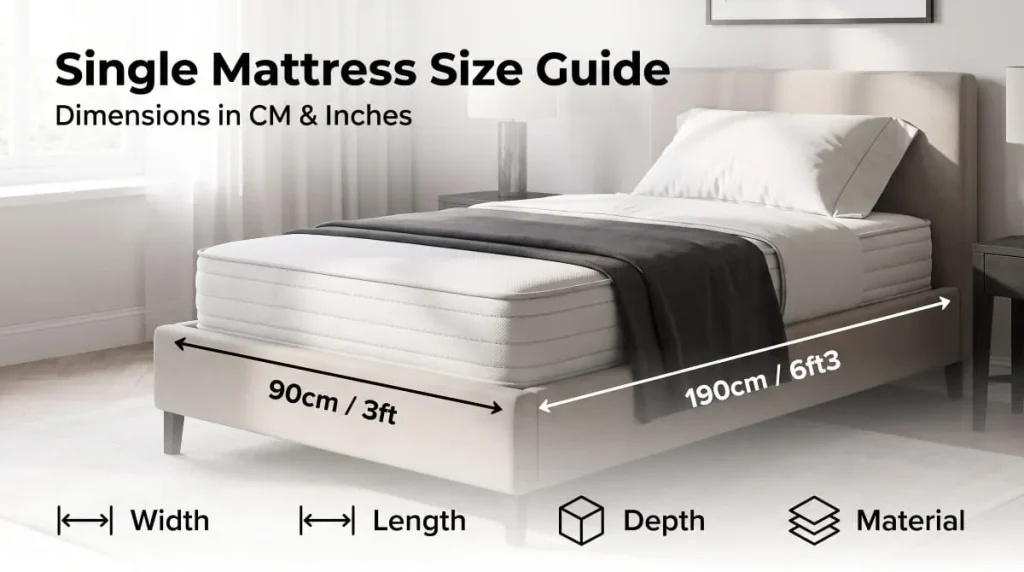
A single mattress is 90cm (3′) wide by 190cm (6’3″) long, so a double adds 45cm of extra width while keeping the same length. That’s enough additional space for two people to sleep side by side, or for one person to sleep with significantly more room to move.
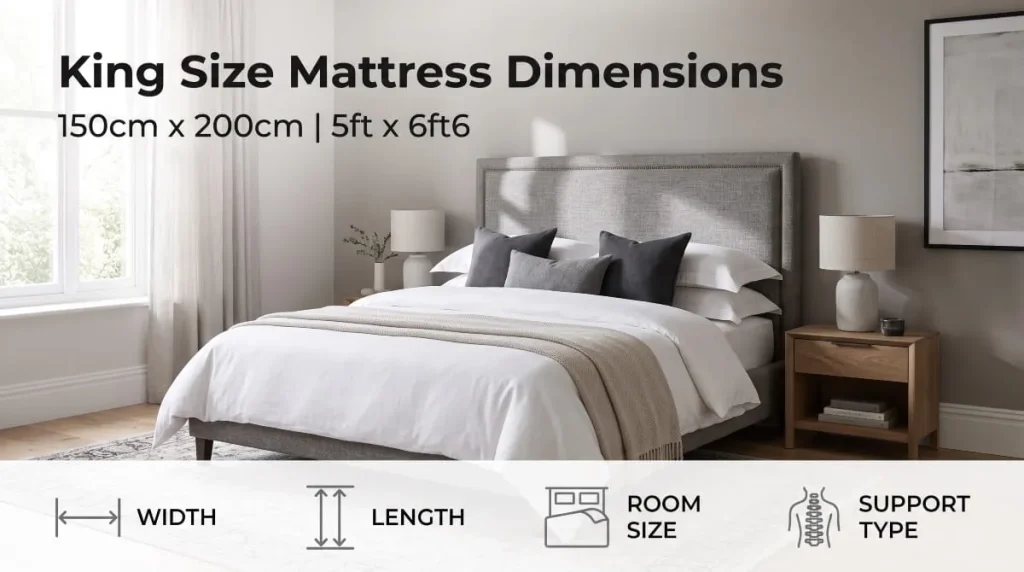
A king size mattress is 150cm (5′) wide by 200cm (6’6″) long, 15cm wider and 10cm longer than a double. For couples who find a double feels cramped, a king offers noticeably more shoulder and legroom in both directions. Full-size dimensions are covered in our king-size bed guide.
A double works well for single sleepers who want extra space, for couples with smaller bedrooms, or as a guest room bed. A king-size suit is ideal for couples prioritizing comfort over floor space, or for anyone over average height who needs the extra 10cm of length. If you’re sleeping alone and space is limited, our single-bed size guide is worth comparing, too.
Beyond the mattress footprint itself, you need clearance around the bed for walking space, wardrobe doors, and furniture, generally at least 60-70cm on at least one side and at the foot of the bed.
A double bed frame typically needs a room of at least 3m x 3m to fit the bed comfortably plus basic furniture like a wardrobe and bedside tables, though it can work in slightly smaller rooms with careful layout planning.
Fitting a double comfortably is a real concern in the UK, where the average new-build bedroom has shrunk to around just 11.5 square meters. In a room that size, an ottoman double bed frame with built-in storage is worth considering, since it replaces the need for a separate chest of drawers or wardrobe overspill without taking up any additional floor space.
Once you’ve settled on the size, the mattress type determines how it actually feels to sleep on, and this matters just as much as the dimensions.
Orthopedic double mattresses use denser support layers to keep the spine aligned, making them a common choice for people with back pain or those who prefer a firmer sleeping surface. They tend to offer less give than softer mattresses but stronger long-term support.
Soft and medium-feel double mattresses use more cushioning in the upper layers, contouring closer to the body. These suit side sleepers and anyone who prefers a plusher feel over a firm, supportive one.
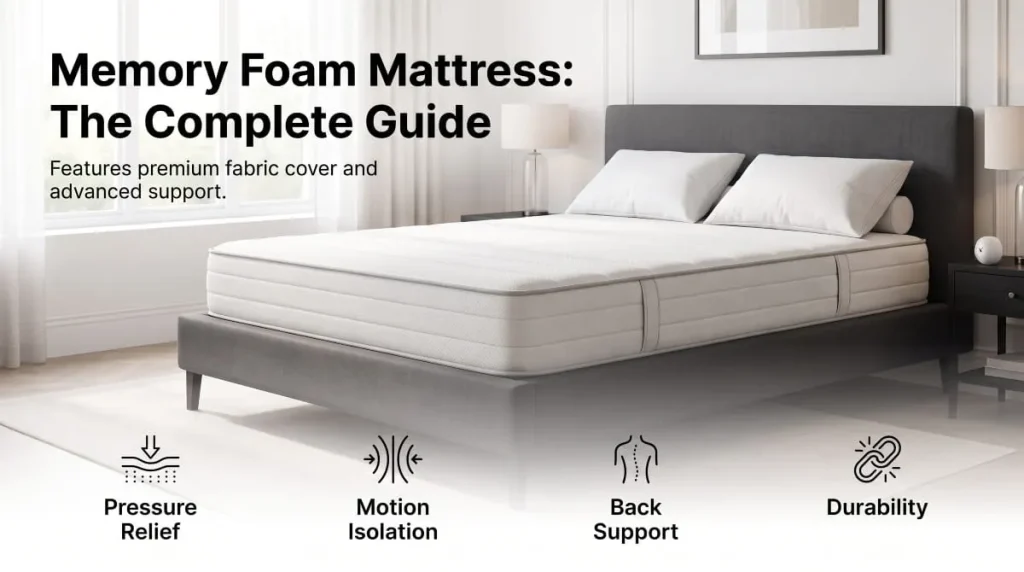
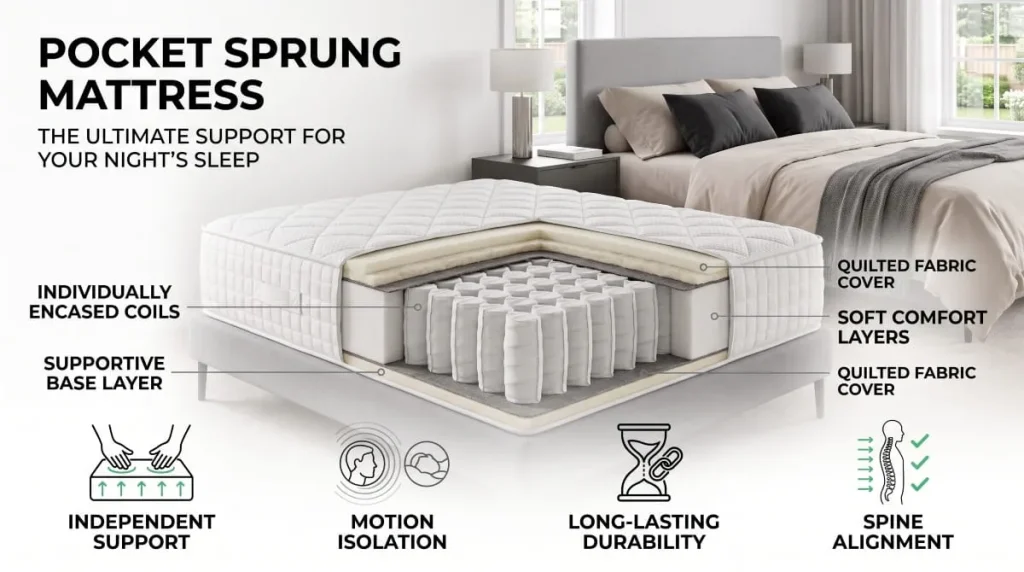
Memory foam molds to the body’s shape and reduces motion transfer, making it a strong option for couples who disturb each other’s sleep. Pocket-sprung mattresses use individually wrapped springs for targeted support and better airflow. In contrast, open-coil (sprung) mattresses use a single connected spring system, offering a more budget-friendly, traditional bounce. Browse our full range across Memory Foam, Pocket Sprung, Foam, and Open Coil/Sprung mattress types to compare feel and price point.
Double mattress prices vary widely depending on the materials, construction, and brand, so it’s worth understanding what actually drives the cost before comparing options.
The main cost factors are the type of support system (pocket-sprung mattresses generally cost more than open-coil), the depth and quality of the comfort layers, and any added features like cooling covers or edge support. Handmade, British-manufactured mattresses also tend to be priced higher than mass-produced imports, reflecting the quality of materials and construction.
The best-value double mattress isn’t always the cheapest one; it’s the one matched correctly to your sleeping position and weight. Overpaying for a firmness level that doesn’t suit you wastes money just as much as underpaying for a mattress that wears out in a year or two.
The right double mattress comes down to three practical factors: how you sleep, what it’s made of, and how confident you are in your purchase before committing.
Side sleepers generally benefit from a softer or medium mattress that cushions the shoulders and hips. In contrast, back and front sleepers usually need firmer support to keep the spine properly aligned. Couples with different preferences often do best with a pocket-sprung or hybrid mattress, since individually wrapped springs respond to each sleeper’s weight.
British homes tend to run cooler and more humid than average, so mattresses with breathable covers and natural fillings often perform better in the long term than fully sealed foam constructions, which can trap heat and moisture.
A mattress is impossible to fully judge in a showroom, which is why a genuine at-home trial period matters. Every mattress comes with a 30-night trial and a 3-year warranty, along with free UK delivery, so you can properly test the fit before deciding it’s the right one for the long term.
A double mattress measures 135cm x 190cm (4’6″ x 6’3″), making it 45cm wider than a single mattress while keeping the same length.
A UK double mattress is 135cm wide by 190cm long, sometimes listed as 135 x 191cm or 135 x 192cm depending on the manufacturer.
A UK double mattress is 135cm (4’6″) wide and 190cm (6’3″) long, the standard size used across the UK bed and mattress manufacturing industry.
No. A double is 135cm wide, while a small double is 120cm wide, 15cm narrower, though both share the same 190cm length.
Double mattress prices depend on the support system, comfort layers, and build quality, with pocket-sprung and handmade options typically costing more than open-coil or foam alternatives.