

UK Bed Mattress Sizes Guide (All Sizes in cm, Inches & Feet)
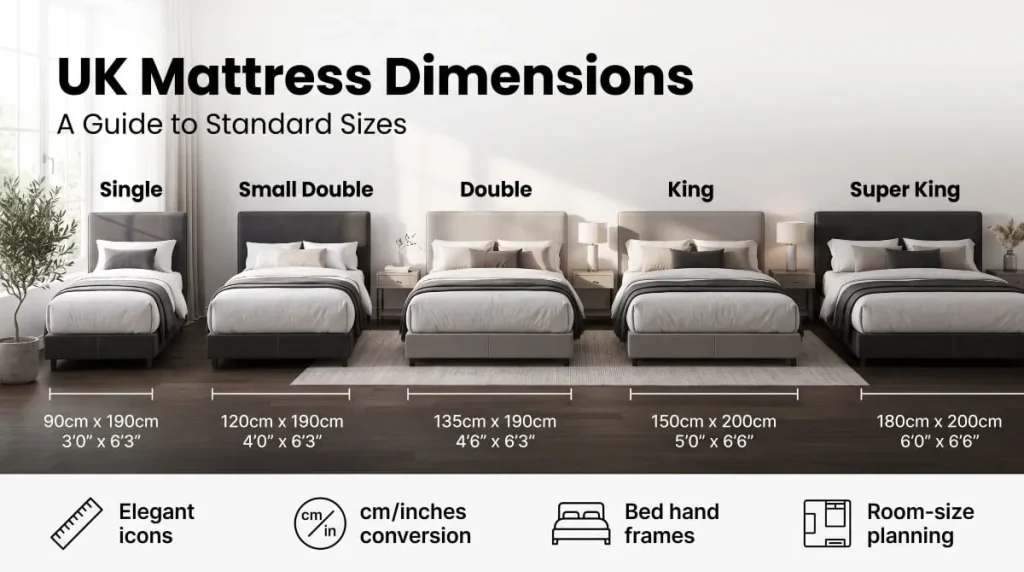
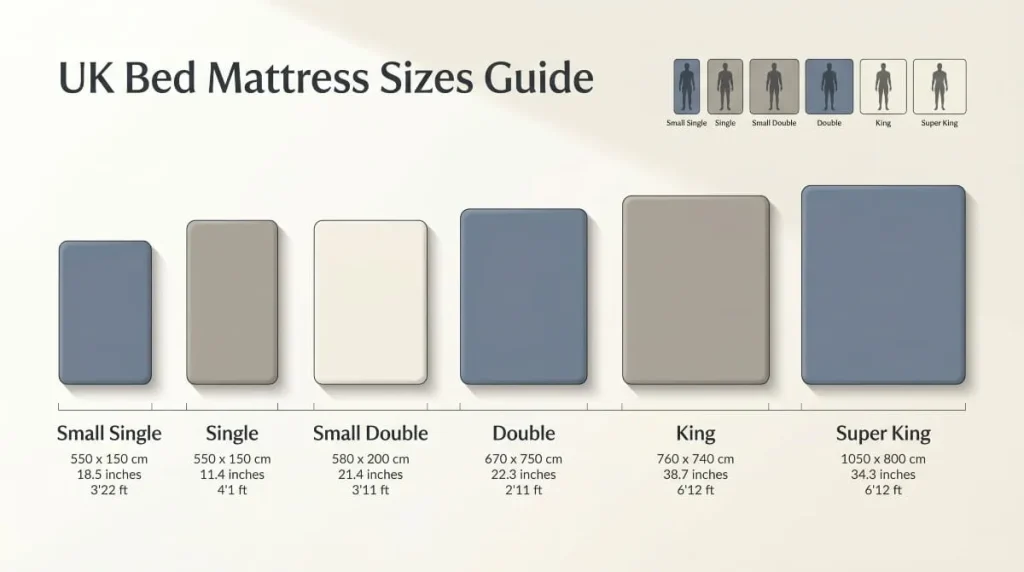
UK bed mattress sizes follow a standardised set of dimensions, from the 90 × 190 cm single up to the 180 × 200 cm super…

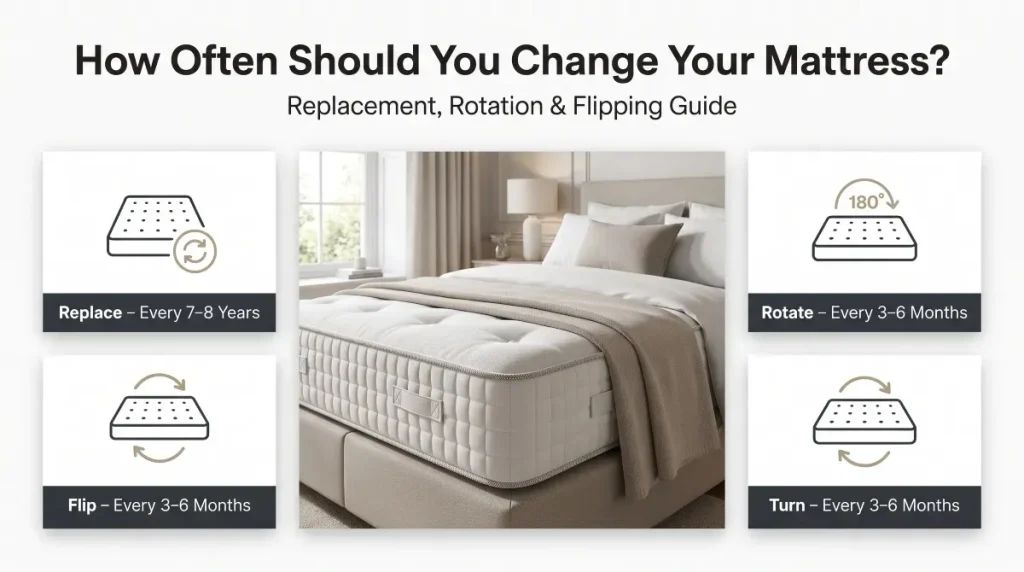
Choosing the right mattress comes down to two decisions: the construction inside it- spring, hybrid, or memory foam- and how firm it feels underneath you. Get either one wrong and even a well-made bed frame won’t deliver a good night’s sleep, which is why sleep specialists generally recommend replacing a mattress every 7 to 8 years, regardless of how well it’s held up cosmetically, since materials compress. Support breaks down long before fabric wears through.
This guide breaks down exactly how each mattress type is built, which firmness suits which sleeping position, how to measure your current mattress correctly, and what to do with the old one once you’ve upgraded. Whether you’re pairing a new mattress with one of our handcrafted bed frames or simply replacing what you have, understanding these fundamentals means you’ll buy once and buy right, backed by a 3-year warranty and a 30-night trial on every Style Beds mattress, so you can test the feel at home before committing.
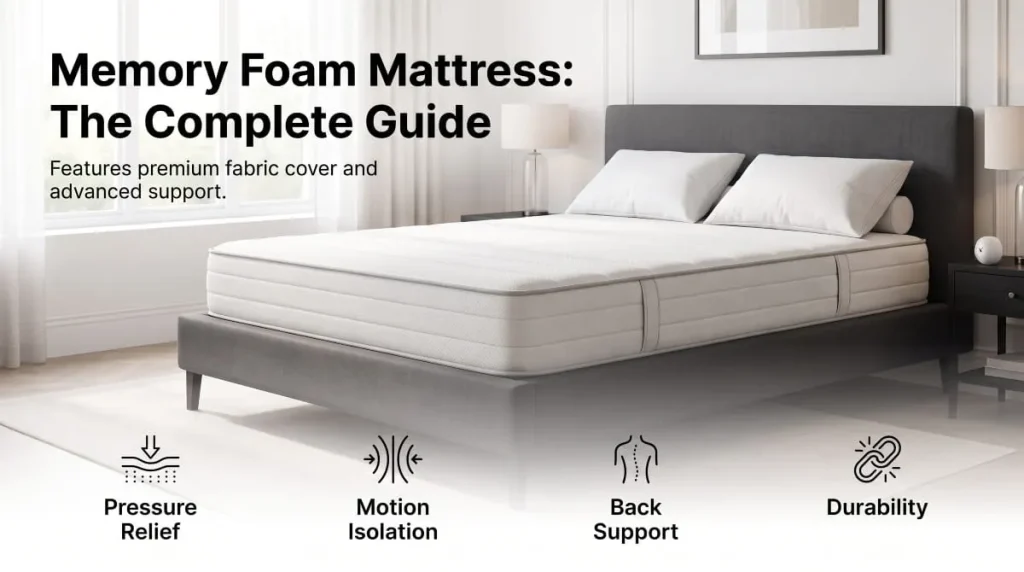
The three main types of mattresses are spring, hybrid, and memory foam, each built around a different core structure that determines how much support, bounce, and pressure relief you get. Spring mattresses rely on a network of steel coils for support; hybrid mattresses combine those coils with a foam or latex comfort layer on top; and memory foam mattresses use no springs at all, relying entirely on dense foam that moulds to your body. The right choice depends less on brand and more on how each construction behaves under your weight and movement through the night.
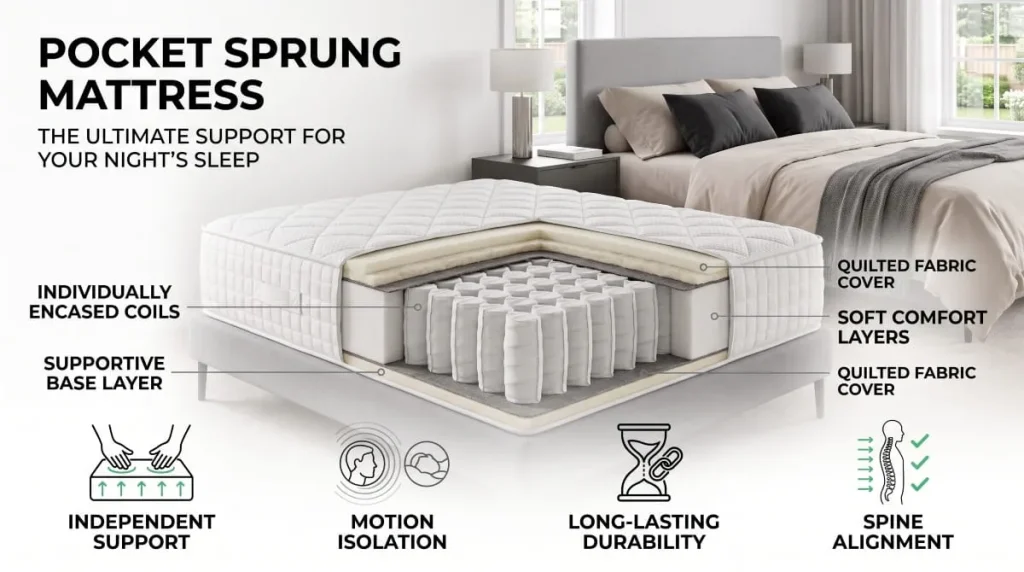
Not all spring mattresses are built the same way, and the type of coil system inside makes a real difference to comfort and durability. Open coil and Bonnell spring mattresses use a single interconnected wire framework, which keeps costs down but means the whole surface moves together, so if your partner shifts position, you’ll likely feel it too. Pocket-sprung mattresses solve this by housing each coil in its own fabric pocket, allowing springs to move independently and contour to the body’s specific pressure points. A higher pocket spring count, often ranging from 1000 to 2000 springs in a double mattress, generally means finer, more responsive support and less motion transfer between sleeping partners.
A hybrid mattress is defined by its two-part construction: a pocket-spring support base layered beneath foam or latex comfort layers, combining the responsiveness of springs with the pressure relief of foam. This matters because pure spring mattresses can feel firm on the shoulders and hips, while pure foam mattresses can trap heat and lack the edge support springs provide. Hybrids are built specifically to close that gap, giving sleepers a mattress that breathes and bounces like a spring model but cushions like foam where the body needs it most.
Each mattress type suits a different priority. Memory foam offers the deepest body contouring and the best motion isolation, making it a strong choice for light sleepers sharing a bed, but it retains more heat and has less edge support than the other two types. Spring mattresses sleep cooler and feel more traditionally bouncy, but offer less targeted pressure relief. Hybrid mattresses sit between the two, and for buyers who aren’t sure which camp they fall into, a hybrid is typically the lowest-risk starting point since it borrows the strengths of both constructions without their main drawbacks.
Mattress firmness describes how much resistance a mattress offers when you lie on it, and it’s rated on a scale that generally runs from soft through medium to firm, with medium-firm being the most universally comfortable option for the average adult. Firmness is separate from mattress type; a hybrid or spring mattress can be built soft or firm depending on the comfort layer used, so type and firmness are two independent decisions you need to make together.
A soft mattress allows the body to sink in noticeably, cushioning the shoulders and hips but offering less resistance under the lower back. A firm mattress does the opposite, keeping the sleeping surface level and offering strong support with minimal sinkage, though it can create pressure points for lighter sleepers. Medium and medium-soft mattresses sit between these extremes, allowing gentle contouring at the shoulders while still supporting the spine, which is why medium-firm is the most commonly recommended starting point for people unsure what they need.
Sleeping position changes which firmness actually works for your body. Side sleepers generally do best on a soft-to-medium mattress, since the shoulders and hips need some give to keep the spine aligned. Back sleepers tend to suit a medium-to-medium-firm feel, providing lower back support without flattening its natural curve. Front sleepers usually need a firmer mattress, since a softer surface lets the hips sink too deep and pulls the spine out of alignment. If you switch positions throughout the night, a medium hybrid mattress is typically the safest all-round choice, since it balances contouring and support rather than favouring one extreme.
Yes, to a degree, though it’s a temporary fix rather than a permanent one. Placing a firm mattress topper on top, adding rigid support underneath the mattress, or rotating the mattress regularly can all reduce excess softness and slow down sagging in high-pressure areas. What these methods can’t do is change the mattress’s core construction, so if a mattress has genuinely become too soft through wear, that’s usually a sign it’s reached the end of its supportive life rather than something to fix around. In that case, replacing it, ideally with a firmness suited to your sleeping position from the outset, is the more lasting solution.
Springs work by compressing under body weight and pushing back with equal force, and it’s this push-back that gives a mattress its support and bounce. The way those springs are arranged, as a single connected unit or as thousands of individually wrapped coils, determines almost everything about how a spring mattress feels and performs over time.

Coil count refers to the number of springs in a mattress, and as a general rule, more springs within the same surface area mean smaller, more numerous coils working together to contour the body more precisely. A 1000 spring mattress offers solid, dependable support and works well for buyers who want a firmer, more traditional feel at a lower price point. A 2000 spring mattress packs roughly twice as many coils into the same space, which typically means finer pressure distribution, quieter movement, and less motion transfer if you’re sharing the bed. Coil count isn’t the only factor in comfort, but it’s one of the clearest indicators of how responsive and body-conforming a spring mattress will feel.
The three main spring systems behave quite differently under the body. Open coil mattresses use a single length of wire twisted into connected coils, so the whole sleeping surface moves as one unit, durable and budget-friendly, but with noticeable motion transfer. Pocket spring mattresses house each coil in its own fabric sleeve, allowing springs to respond independently to different parts of the body and to each sleeping partner, which is why pocket-sprung constructions dominate the mid-to-premium end of the market. A box spring isn’t a mattress at all but a separate foundation unit, typically placed underneath a mattress to absorb shock and add height; it’s largely a US bed-building convention. It isn’t required with most UK bed frames, which are designed to support the mattress directly on a slatted base.
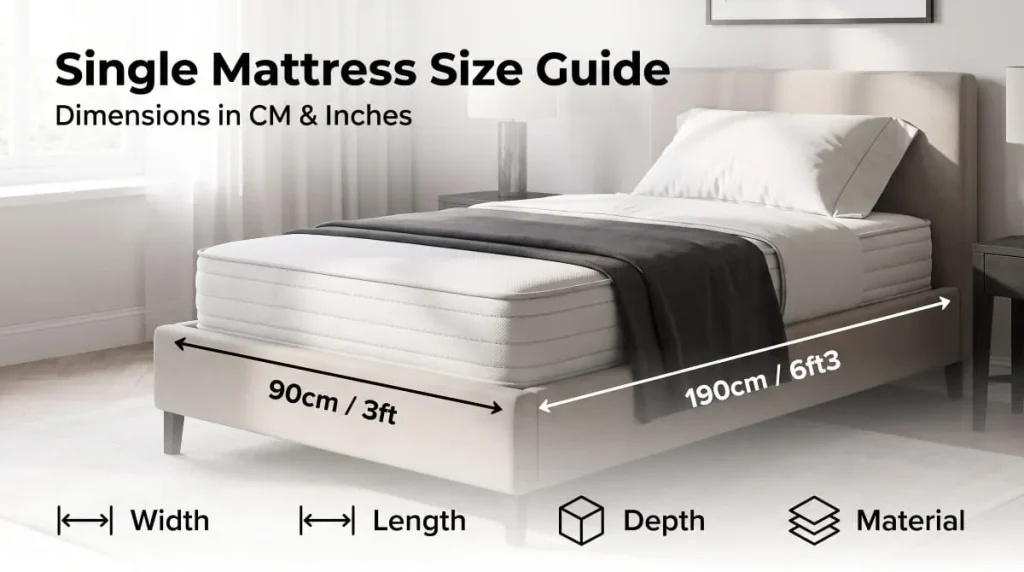
Measuring a mattress correctly means recording length, width, and depth in that order, with a tape measure run along the outer edges rather than across the sleeping surface, since even an inch of difference can mean a mattress won’t fit your frame properly. Getting this right before you buy, whether you’re checking an existing frame or sizing up a new one, is the difference between a snug, well-supported fit and a mattress that gaps at the edges or overhangs the base.
Start with the mattress flat on its base, ideally on the frame it will actually sit in, since a mattress can measure slightly differently once weight and support are applied. Measure the width first, running the tape from one outer edge to the other at the widest point, then measure the length the same way from head to foot. Finally, measure depth by standing the tape vertically alongside the mattress, from the base to the highest point of the topmost layer. Round down rather than up if you’re between measurements, since a mattress that’s marginally too small for a frame is a far easier fix than one that’s too large.
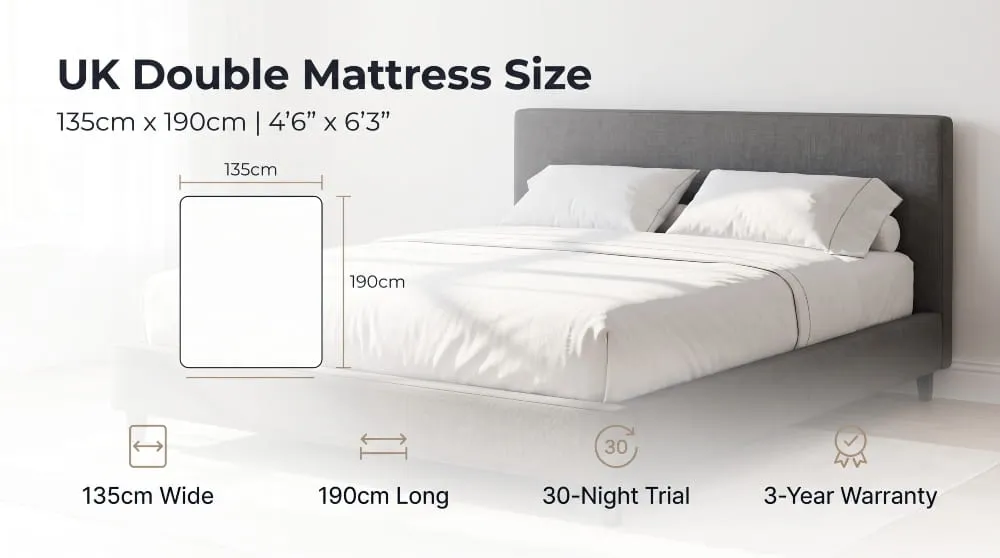
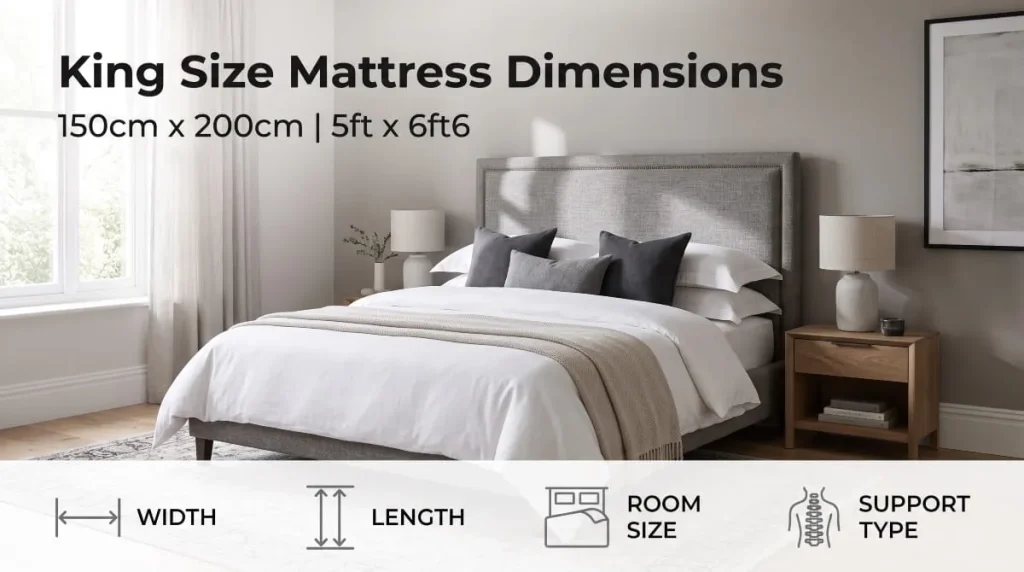
Once you’ve got your measurements, matching them to standard UK sizing takes the guesswork out of buying. For a complete breakdown of exact dimensions in centimetres across every size, Single, Small Double, Double, King, and Super King, see our full Mattress Dimensions in CM guide, which covers size charts, room-size guidance, and how UK sizing compares to EU and US equivalents.
A mattress typically lasts between 7 and 8 years before it needs replacing, though this varies depending on the build quality, how it’s cared for, and how much weight and use it takes on a nightly basis. That figure isn’t about the fabric wearing out; it’s about the internal support structure, whether springs or foam, gradually losing its ability to hold you properly, often well before any visible damage appears on the surface.
The clearest sign a mattress needs replacing is waking up with stiffness, aches, or pain that eases once you’re up and moving, since this usually points to a loss of support rather than anything else. Visible sagging, especially in the areas where you sleep most, is another reliable indicator, as is a mattress that feels noticeably softer or less responsive than it did when new. Sleeping better in a hotel bed or on a sofa than in your own bed is a smaller but telling signal too; it often means your mattress has quietly stopped doing its job long before it looks obviously worn.
Good care can extend a mattress’s usable life, but it can’t prevent replacement indefinitely. For a full breakdown of rotation schedules, cleaning methods, and how to spot early wear before it affects your sleep, see our complete Mattress Care & Replacement guide.
Most UK councils will accept a mattress at the local tip, but many now require a pre-booked slot rather than a walk-in drop-off, and some charge a small fee for bulky items like mattresses. Skips are a workable alternative if you already have one on-site for a renovation. Still, mattresses aren’t accepted by default at every skip hire company, so it’s worth checking with the provider before assuming yours can go in.
Taking a mattress to the tip yourself is usually free or low-cost, but you’ll need to check your local council’s website first, as booking systems and accepted quantities vary by area. Putting a mattress in a skip is allowed with most hire companies, though a handful exclude mattresses because of the space they take up, so confirming in advance saves a wasted trip. If neither option is convenient, most councils also offer a bulky waste collection service, where they’ll take the mattress directly from your home for a set fee, typically cheaper than a private removal firm but with a longer wait time than a tip run.
Mattresses are largely recyclable, with the steel springs, foam, and fabric components separated and reused rather than sent straight to landfill. Specialist mattress recycling firms now operate in most UK regions specifically for this purpose. Many new mattress purchases, including those from Style Beds, can also include old mattress removal as part of delivery, so it’s worth checking whether removal is available at checkout before arranging disposal separately. For anyone replacing a bed frame at the same time, coordinating the mattress and the removal of old furniture into a single collection is usually the most efficient option.
The right mattress type comes down to three things: how you sleep, who you share the bed with, and how much you’re willing to spend upfront. There’s no single best construction; a spring mattress and a memory foam mattress can both deliver a great night’s sleep; they just do it in different ways and suit different priorities.
Every mattress we pair with our bed frames is built to the same standard as the frames themselves, handcrafted in Dewsbury, West Yorkshire, rather than mass-produced off a factory line. We favour pocket-sprung and hybrid constructions specifically because they hold up better over years of nightly use than open-coil alternatives, and because they suit the widest range of sleepers without forcing a compromise between support and comfort. Every mattress comes with a 3-year warranty and a 30-night trial, so you can sleep on your choice at home and know it’s genuinely right for you before the trial period closes, not just on the showroom floor.