

UK Bed Mattress Sizes Guide (All Sizes in cm, Inches & Feet)
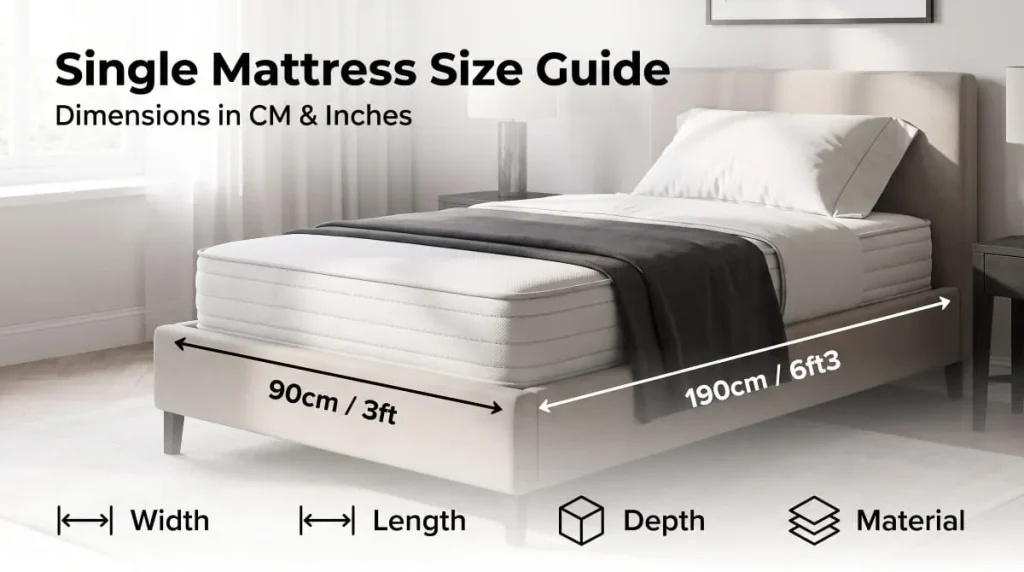
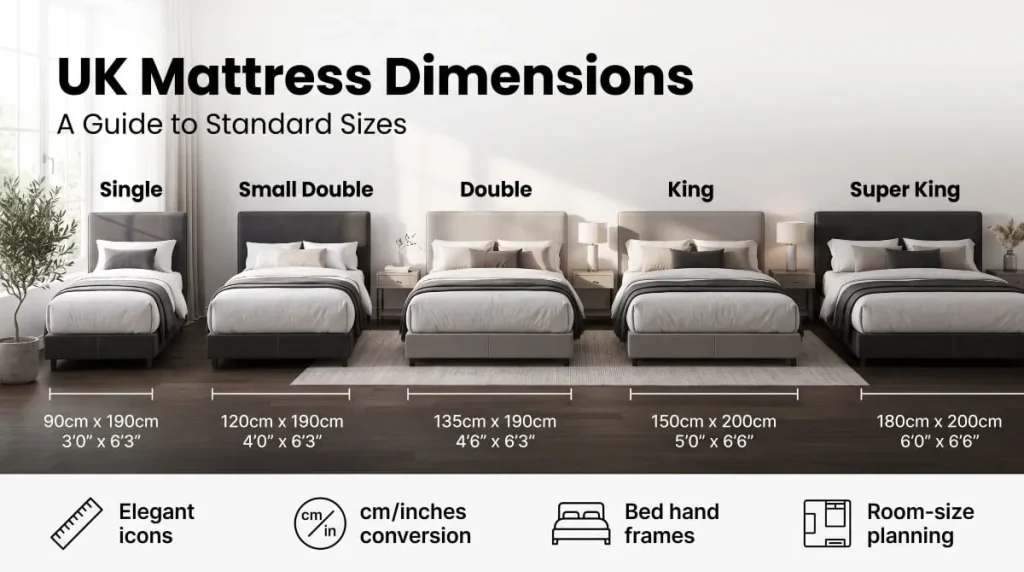
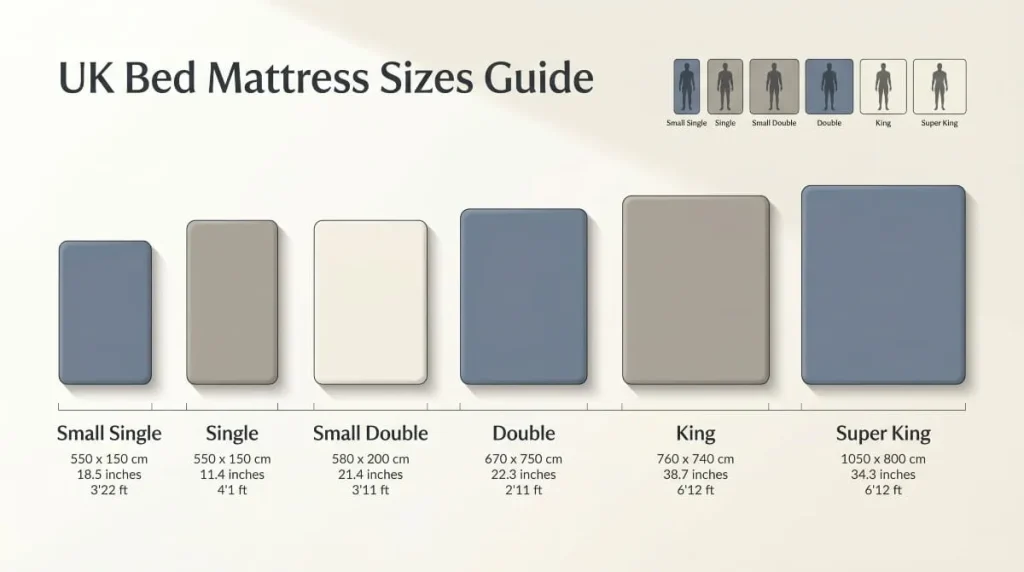
UK bed mattress sizes follow a standardised set of dimensions, from the 90 × 190 cm single up to the 180 × 200 cm super…
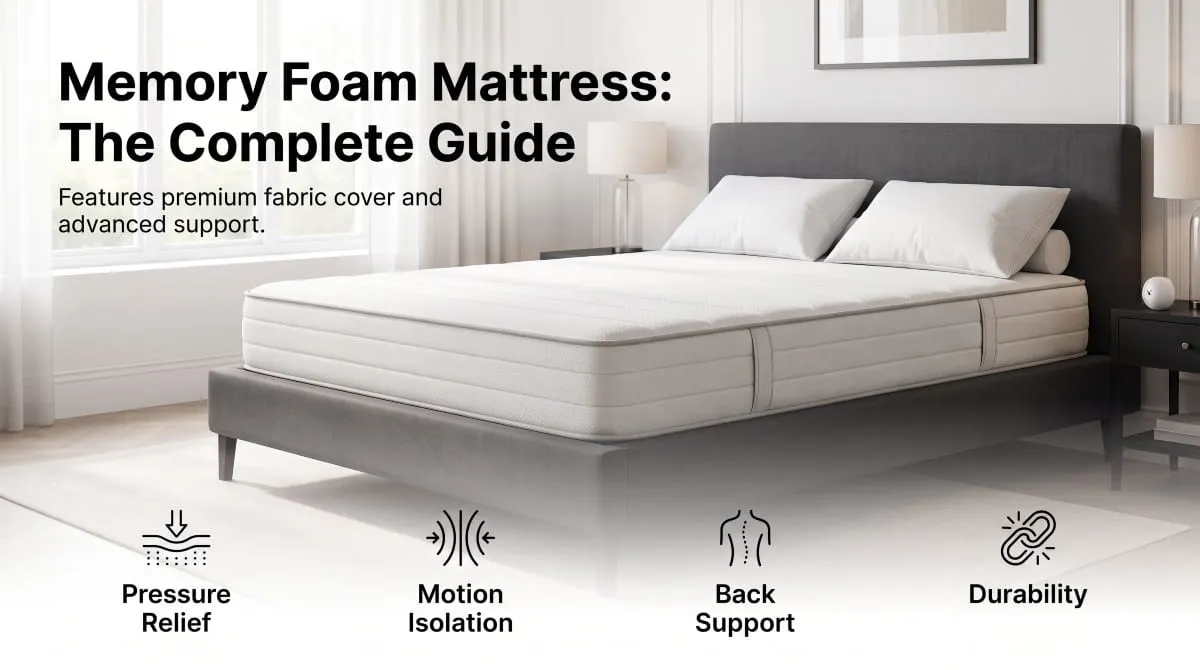
A memory foam mattress is a mattress built from viscoelastic foam that softens with body heat and moulds to your shape, spreading weight evenly and easing pressure on your hips, shoulders and lower back. Unlike a traditional spring mattress, which pushes back against you, memory foam sinks in. It holds its shape until you move, which is why it’s become one of the most searched mattress types in the UK, especially among back-pain sufferers and side sleepers.
The idea isn’t new. NASA originally developed the material in the 1960s to cushion astronauts during high-impact landings, and the same slow-recovery, pressure-relieving properties are what make it so effective in a bed today. Since then, it’s evolved into dozens of variations: gel-infused, hybrid, orthopaedic, high-density, each suited to a slightly different sleeper.
This guide covers everything you need to decide if memory foam is right for you: how it compares to spring and pocket-sprung mattresses, whether it genuinely helps with back pain, how long one should last, the firmness level to choose, and how to look after it once it’s on your bed.
A memory foam mattress is a mattress made from viscoelastic polyurethane foam, a dense, slow-recovery material that softens under body heat and pressure, then moulds closely to your shape. Instead of pushing back like a spring mattress, it sinks and cradles you, distributing weight evenly across the surface rather than concentrating it at your hips and shoulders. This is what gives memory foam its reputation for pressure relief and quiet, motion-free sleep.
Memory foam is temperature-sensitive by design. As your body warms the surface, the foam’s cell structure softens and slowly conforms to your outline, then springs back to its original shape once the pressure is removed. This “slow recovery” is the defining trait of the material; a standard foam mattress bounces back almost instantly, while memory foam takes a few seconds. That delayed response is what stops movement from one side of the bed transferring to the other, making it a strong choice for couples and light sleepers.
Not all foam mattresses are memory foam. Traditional (or “reflex”) foam is more uniform and springs back immediately, offering a bouncier, more responsive feel with less body-hugging contour. Memory foam, by contrast, uses an open-cell structure that responds to heat and weight, giving it that characteristic slow, cushioned sink. Reflex foam tends to sleep cooler and suits people who want support without the “sinking in” sensation, while memory foam is chosen specifically for its close-contouring pressure relief.
Memory foam isn’t a single material; it comes in several variations built to solve specific drawbacks of the original formula.
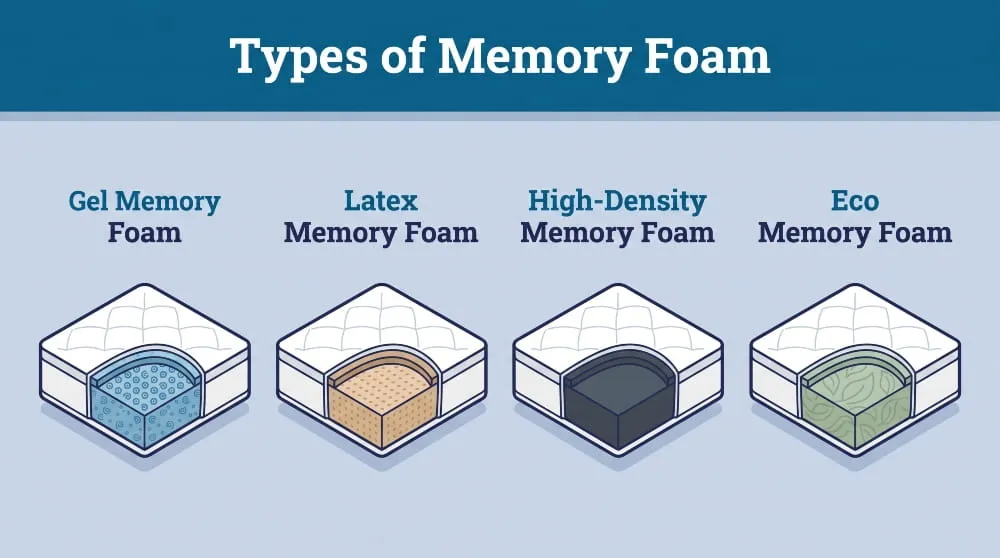
The main difference between a memory foam and spring mattress comes down to how each one responds to your body: memory foam moulds and cradles, while spring mattresses push back and bounce. Neither is universally “better”; the right choice depends on how you sleep, who you share a bed with, and how warm you tend to run at night.
Memory foam distributes body weight evenly across its surface, relieving pressure points at the hips, shoulders and lower back by contouring closely to your shape. Spring mattresses, particularly pocket-sprung designs, support weight through individually responding coils that flex under pressure and return to shape instantly. This gives springs a firmer, more buoyant feel with less sinkage. At the same time, memory foam offers deeper, more localised cushioning, a meaningful difference for anyone sleeping on their side, where hip and shoulder pressure builds up fastest.
Memory foam’s slow-recovery structure absorbs movement rather than transferring it, so if one person shifts position or gets in and out of bed, the other is far less likely to feel it. Spring mattresses, even pocket-sprung ones, transmit more movement across the surface because the coils are interconnected or closely packed. For couples with mismatched sleep schedules, or anyone who wakes easily, this is one of the most practical reasons memory foam gets recommended over spring.
Spring mattresses generally sleep cooler. Their open coil structure allows air to circulate freely underneath the top layers. At the same time, standard memory foam’s dense, close-cell structure traps heat as it moulds to the body, a common criticism of early memory foam designs. Gel-infused and hybrid memory foam mattresses have largely closed this gap, using cooling gel layers or spring-and-foam combinations to offset heat retention. However, a traditional all-foam mattress will still typically run warmer than an all-spring one.
Side sleepers and anyone managing joint or back pain tend to benefit most from memory foam, since it cushions pressure points without forcing the spine out of alignment. Back and stomach sleepers, or those who prefer a firmer, more supportive surface, often get on better with spring or pocket-sprung mattresses. Hot sleepers who like the contouring feel of foam but not the heat retention are usually best suited to a gel or hybrid memory foam mattress, which brings the two categories closer together than a straight foam-versus-spring comparison suggests.
A hybrid mattress combines a memory foam comfort layer with a pocket-sprung support base, giving you the pressure relief of foam and the airflow and bounce of springs in a single mattress. It’s designed to solve the two most common complaints levelled at each material on its own: the heat retention of all-foam mattresses and the lack of contouring in all-spring ones.
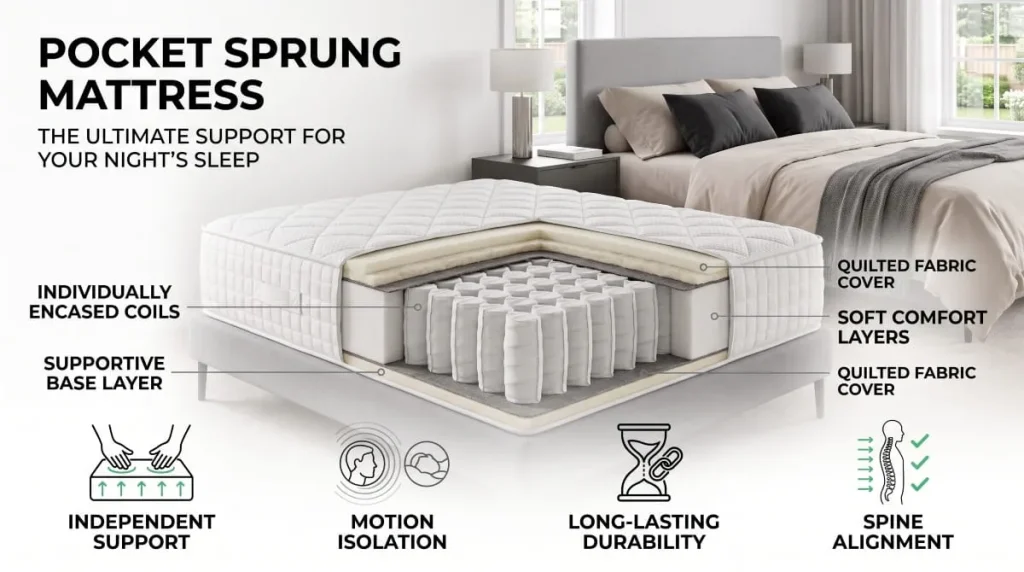
In a hybrid construction, individually wrapped pocket springs form the base layer, each coil responding independently to weight and movement for targeted support and better airflow than a solid foam core. On top sits a layer of memory foam, sometimes gel-infused, that contours to the body and cushions pressure points the way a foam mattress would on its own. Some hybrids, like a 4000-pocket-spring memory foam design, use a very high coil count for more precise support across the body, with the foam layer added purely for surface comfort. The result is a mattress that sleeps closer to spring in temperature but closer to foam in pressure relief.
A hybrid is worth considering if you like the contouring feel of memory foam but run warm at night, or if you and a partner have different firmness preferences that neither pure foam nor pure spring satisfies well. It also suits back and side sleepers who want more targeted lumbar support than an all-foam mattress typically provides, since the spring base responds more precisely to heavier areas of the body like the hips. If you’re mainly choosing between memory foam and spring because you can’t decide, a hybrid is often the practical middle ground rather than a compromise.
Memory foam can genuinely help with back pain because it distributes body weight evenly and cushions pressure points, reducing the twisting and misalignment that firmer surfaces can cause overnight. It isn’t a guaranteed fix for everyone, but for many back-pain sufferers, particularly side and back sleepers, it’s one of the more evidence-backed mattress choices available.
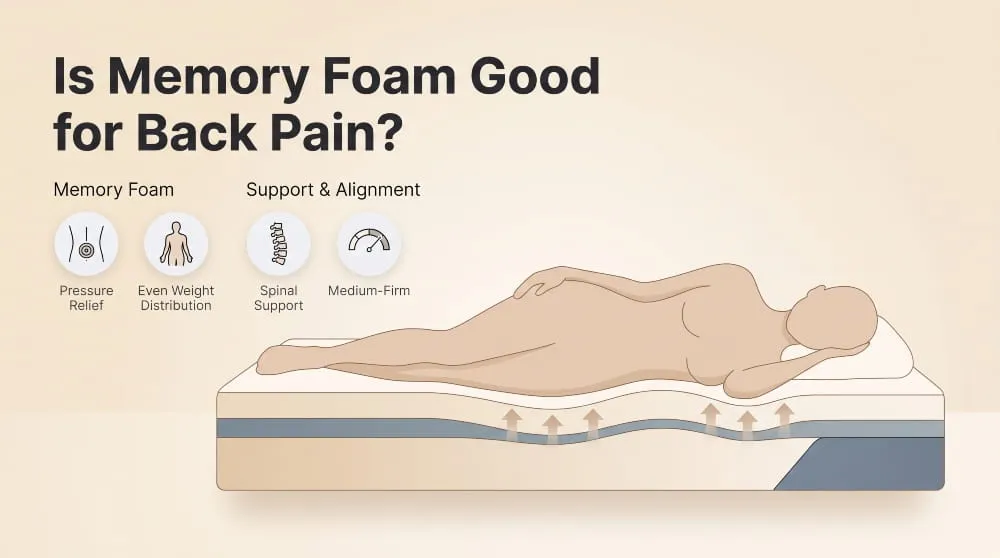
Back pain often gets worse overnight when a mattress is too firm to let the hips and shoulders sink slightly, forcing the spine out of its natural curve, or too soft to stop the body sagging out of alignment. Memory foam sits between the two: it contours closely enough to support the lower back and keep the spine roughly level, while still cushioning the heavier points of the body like the hips and shoulders. This even weight distribution is the main reason it’s so often recommended specifically for lower back pain rather than for sleep comfort alone.
Firmness matters more than the material itself. A medium-firm memory foam mattress is generally considered the sweet spot for back pain, firm enough to stop the hips sinking too deep and pulling the spine out of line, soft enough to relieve pressure at the shoulders and lower back. A hard memory foam mattress offers more support for heavier sleepers or those who sleep mainly on their back or front, but it can create pressure points for side sleepers, since there’s less give at the hip and shoulder. As a general rule, lighter and side-sleeping individuals tend to do better on medium-firm, while heavier and back/front sleepers often need the extra support of a firmer option.
The most detailed research on this comes from a widely cited clinical trial published in The Lancet, which compared medium-firm and firm mattresses in patients with chronic lower back pain and found that those sleeping on medium-firm surfaces reported significantly better pain and disability outcomes over 90 days. It’s one of the few controlled studies to test mattress firmness directly against back pain symptoms, and it’s a large part of why medium-firm memory foam is so consistently recommended by physiotherapists and sleep specialists rather than firm mattresses alone.
The right memory foam mattress comes down to matching firmness to your body weight and sleep position, then choosing a type- standard, gel, or orthopaedic- that solves for any specific issue like overheating or joint support. Getting firmness right matters more than any other single decision, since even the best-quality foam will feel wrong if it’s too soft or too firm for how you sleep.
A soft memory foam mattress gives the deepest contouring and works best for lighter side sleepers who need maximum cushioning at the hip and shoulder, but it can let heavier bodies sink too far and lose spinal support. Medium-firm is the most widely recommended option across sleep positions and body types, striking a balance between pressure relief and support that suits most sleepers, including those managing back pain. A hard or firm memory foam mattress limits sinkage and suits back and front sleepers, or heavier individuals who need more resistance to stay properly supported. However, it can feel unforgiving for side sleepers without enough give at the pressure points.
Standard memory foam has a well-known tendency to trap heat, since its dense cell structure limits airflow as it moulds to the body. Gel memory foam addresses this directly, using cooling gel beads or gel-infused layers to pull heat away from the sleeper and regulate surface temperature through the night. It’s the type to choose if you like the contouring feel of memory foam but have found standard foam mattresses too warm in the past; a hybrid design with a pocket-sprung base offers similar cooling benefits if you want airflow underneath the foam layer too.
Orthopaedic memory foam mattresses are built with firmer, higher-density foam specifically to support joint and spinal alignment, and they’re commonly recommended for people managing back, hip, or joint pain rather than for comfort preference alone. The higher density means less give under pressure, keeping the body better supported through the night without the sagging that lower-density foam can develop over time. These are generally a good fit for anyone whose mattress choice is being driven by a diagnosed back or joint condition. However, it’s worth checking with a GP or physiotherapist if pain persists regardless of mattress type.
A good-quality memory foam mattress typically lasts between 8 and 10 years, though this depends heavily on the density of the foam, how well it’s cared for, and how much weight it supports night after night. Higher-density memory foam tends to hold its shape longer than budget, low-density alternatives, which can start sagging within just a few years.
The clearest sign a memory foam mattress needs replacing is visible sagging or permanent body impressions that don’t spring back after you get up, since this means the foam has lost its ability to recover and support weight evenly. Waking up with new or worsening back, hip, or shoulder pain is another strong indicator, particularly if the discomfort wasn’t there when the mattress was newer. Reduced responsiveness, where the foam feels slower to contour or doesn’t cushion pressure points the way it used to, along with lumps, softening in specific areas, or a noticeable dip in the middle of the bed, all point to a mattress that’s reached the end of its useful life.
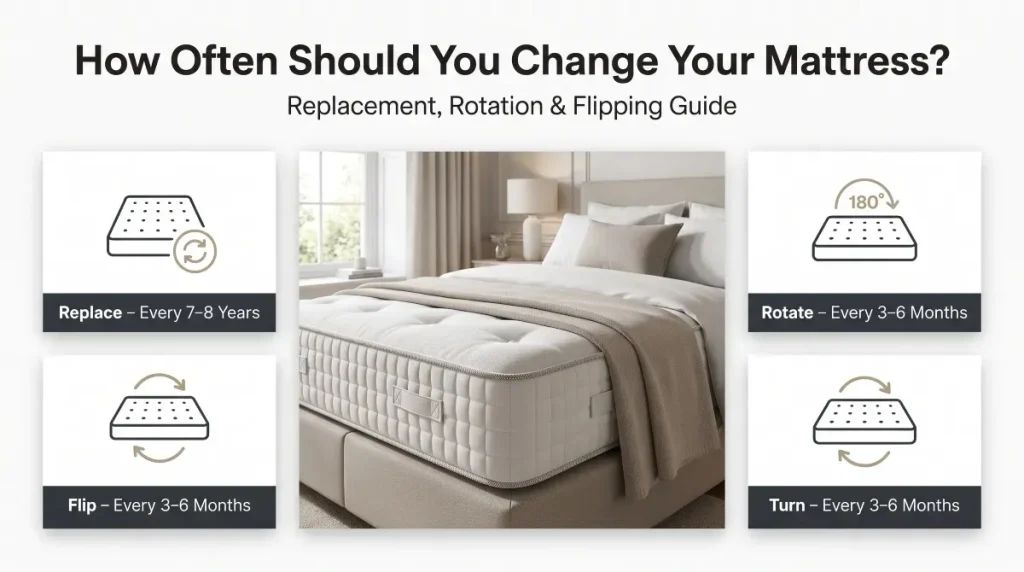
Rotating a memory foam mattress head-to-foot every few months helps distribute wear more evenly, since the areas under your hips and shoulders take the most repeated pressure. Using a supportive, well-fitted bed base is just as important as the mattress itself; a base with inadequate slat support can cause the foam to sag prematurely regardless of its quality. Keeping the mattress protected with a breathable cover guards against moisture and spills, both of which degrade foam faster than normal wear, and airing it out occasionally helps prevent the heat retention that can accelerate breakdown of the cell structure over time.
Caring for a memory foam mattress mainly comes down to keeping it clean, dry, and properly ventilated, since the material is more sensitive to moisture and heat damage than traditional spring mattresses. A little regular maintenance goes a long way toward protecting both its comfort and its lifespan.
Memory foam can’t be soaked or machine washed, so cleaning has to be done carefully on the surface rather than by saturating the foam itself. For general upkeep, vacuuming the mattress with an upholstery attachment removes dust and skin cells that build up over time. For stains, including urine, blot the area immediately with a clean cloth to lift as much moisture as possible, then apply a mixture of mild detergent and water (or a diluted vinegar solution for odour) with a cloth; never pour liquid directly onto the foam. Let it air-dry completely, ideally with a fan or in a well-ventilated room, before putting bedding back on, since trapped moisture inside the foam can lead to mould.
Electric blankets and memory foam don’t mix well, and most manufacturers advise against using one directly on top of a memory foam mattress. The concern is heat retention: memory foam already responds to warmth by softening and moulding, and the added, sustained heat from an electric blanket can cause the foam to break down faster than normal, degrading its structure and shortening its lifespan. If you want extra warmth, an electric blanket used under a fitted sheet on a mattress topper, or simply layering more bedding, is a safer approach than applying heat directly to the foam.
Turning a memory foam mattress head-to-foot every two to three months helps prevent the uneven wear that builds up under regularly used pressure points like the hips and shoulders. Unlike some spring mattresses, memory foam usually shouldn’t be flipped upside down unless it’s specifically designed to be dual-sided, so check the manufacturer’s guidance first. Airing the mattress out, stripping the bedding and letting it breathe for a few hours every so often, ideally near an open window, helps release trapped heat and moisture, which keeps the foam responsive and reduces the chance of odour or mould developing over time.
Choosing the right memory foam mattress in the UK comes down to three practical checks: the quality of the foam itself, the trial and warranty terms behind it, and getting the size right for your bed frame. Getting these right upfront saves the hassle of returns or an underperforming mattress a year or two in.
Foam density is the clearest indicator of how a memory foam mattress will perform over time, since higher-density foam holds its shape longer and resists sagging better than cheaper, low-density alternatives. Look for mattresses that state their foam density in kg/m³ rather than just describing it as “memory foam”; anything below around 50kg/m³ tends to break down faster. In comparison, 60kg/m³ and above generally indicates a longer-lasting, more supportive foam. It’s also worth checking for recognised certifications such as CertiPUR or OEKO-TEX, which confirm the foam has been tested for harmful substances and meets safety standards for UK homes.
A genuine sleep trial matters more with memory foam than with most other mattress types, since it can take several nights for your body to adjust to how the foam contours and supports you. Look for a trial period of at least 30 nights, along with a clear, straightforward returns process if the mattress doesn’t suit you. A warranty of several years is a reasonable minimum to expect, and it’s a useful signal of how confident a manufacturer is in the foam’s durability; a mattress that’s only guaranteed for a year or two is often a sign of lower-density, shorter-life foam.
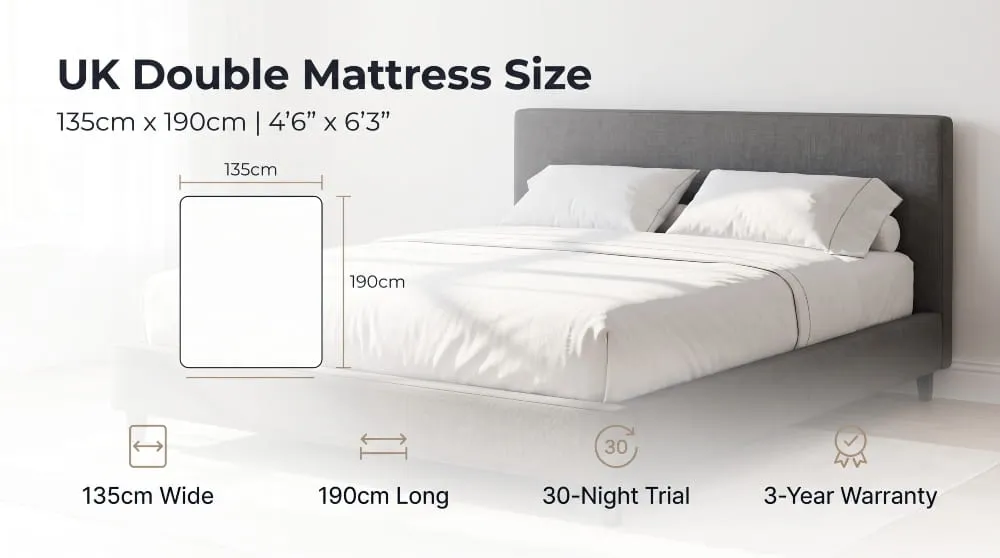
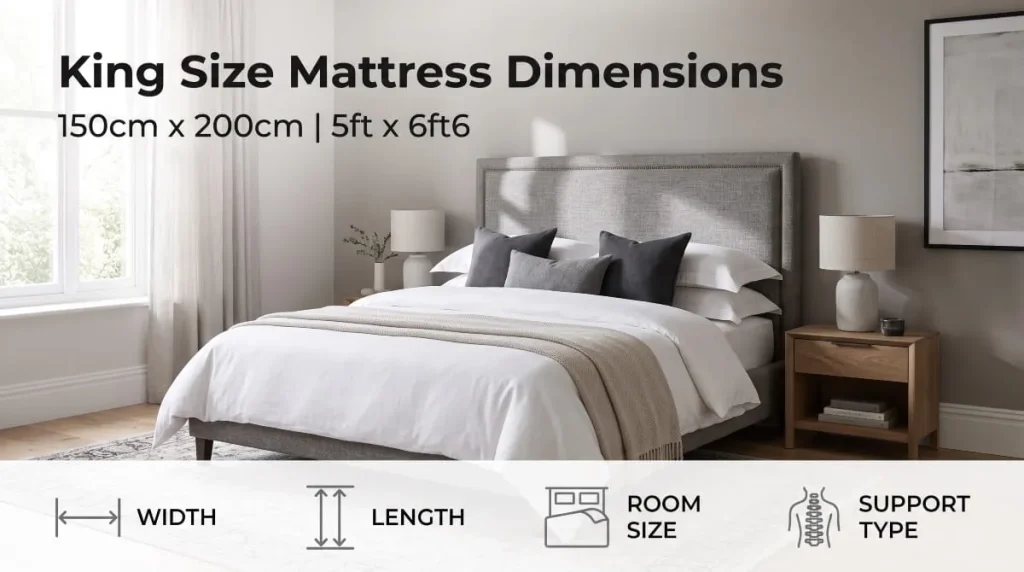
Memory foam mattresses in the UK are typically available across the standard range of sizes, so it’s worth confirming your measurements against your bed frame before ordering. Our size guides cover exact dimensions for Single, Small Double, Double, King, and Super King, so you can check the right fit before you buy.
If you’ve decided medium-firm memory foam is the right fit for your sleep style, the next step is choosing between our Pocket Sprung, Memory Foam, Foam, and Open Coil ranges, each handcrafted here in Dewsbury, West Yorkshire, and available across Single, Small Double, Double, and Super King sizes. Every mattress comes with a 30-night trial and a 3-year warranty, so you can test it in your own bed before committing.
Neither is universally better; memory foam offers deeper pressure relief and motion isolation, while spring mattresses sleep cooler and feel more responsive. The right choice depends on your sleep position, body weight, and whether you run warm at night.
A good-quality memory foam mattress typically lasts 8 to 10 years, depending on foam density and how well it’s cared for. Higher-density foam holds its shape longer than budget alternatives.
Yes, for most people, it distributes weight evenly and supports spinal alignment, particularly at medium firmness. A widely cited Lancet trial found medium-firm mattresses outperformed firm ones for chronic lower back pain.
It’s not recommended. Sustained heat can cause the foam to break down faster, shortening its lifespan and affecting its support.
Medium-firm suits most sleepers and body types, balancing support with pressure relief. Side sleepers often prefer softer, while back/front sleepers and heavier individuals usually need firmer.